
NASA Releases High-Resolution Before-and-After Images of SpaceX Impact Crater
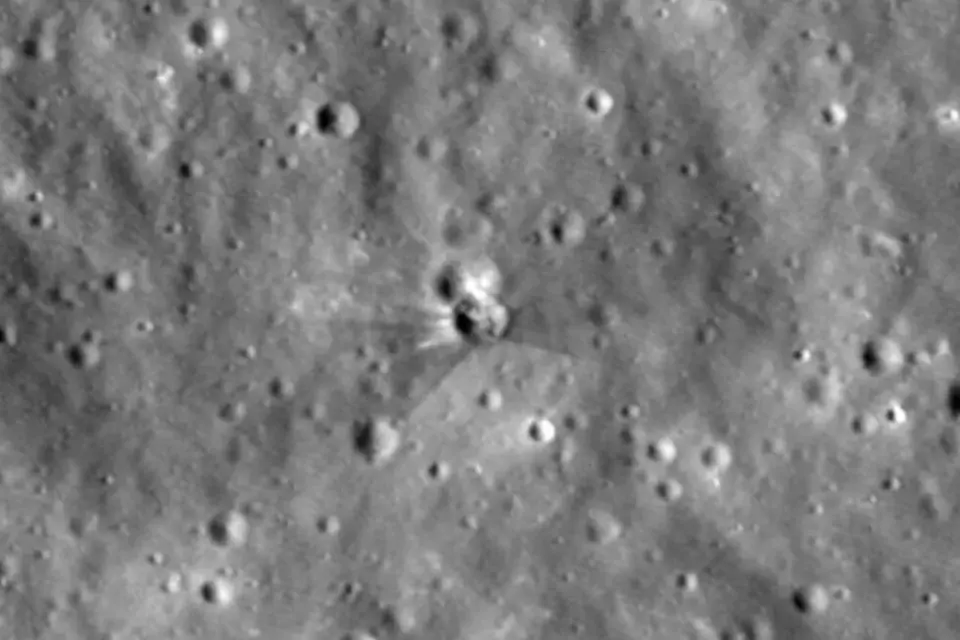
NASA has released the clearest images yet of the crater formed by a SpaceX Falcon 9 upper stage crash on the Moon. The Lunar Reconnaissance Orbiter captured before-and-after photos showing a roughly 60-foot-wide impact site with distinct ejecta rays. This confirms the August 5 collision, which occurred after the stage drifted for a year, and highlights ongoing concerns about space debris management.
Key points
- NASA released new before-and-after images of the lunar impact site on Tuesday, August 18, 2026.
- The images were captured by the Lunar Reconnaissance Orbiter, providing the sharpest views to date.
- The crater is approximately 60 feet wide and likely less than 10 feet deep.
- The impact site is located on the sunlit limb of the Moon, featuring bright and dark ejecta rays.
- The crater center is situated at an elevation of approximately 1,700 feet.
- The impact occurred on August 5, 2026, involving a SpaceX Falcon 9 upper stage.
Background
This development follows earlier reports in August 2026 confirming the crash of a SpaceX Falcon 9 upper stage on the Moon. Initial images from South Korea's Danuri orbiter and Chilean telescopes had already detected the impact, which occurred on August 5 after the stage drifted for approximately a year. Previous analyses estimated the crater to be around 3.6 meters deep and noted the impact energy was equivalent to about three tons of TNT. The current release by NASA provides higher-resolution confirmation of these earlier findings.
Why it matters
The release of high-resolution imagery by NASA provides definitive visual evidence of the impact, confirming the trajectory and outcome of the drifting rocket stage. This event underscores the growing challenge of space debris management, as uncontrolled objects from commercial space missions pose risks to lunar surfaces and potentially future missions. It highlights the need for improved disposal protocols and international cooperation to mitigate the long-term accumulation of space junk.
What to watch
NASA and other space agencies will likely continue to monitor the impact site for any further changes or secondary effects. The incident may prompt renewed discussions among space agencies and private companies regarding the development of safer disposal methods for rocket stages. Future missions, including those in the Artemis program, may need to account for such debris when planning lunar operations.
Want the full story? Read the original reporting
Read on AP News