Tag

Lunar Impact

All articles tagged with #lunar impact

SpaceX Upper Stage Predicted to Crash into the Moon in 2026
science14 days ago

SpaceX Upper Stage Predicted to Crash into the Moon in 2026

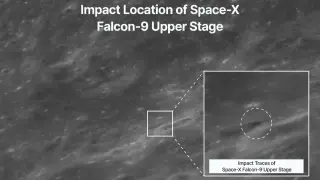
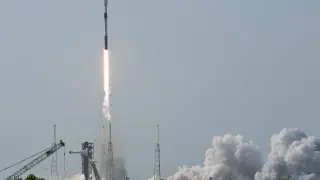
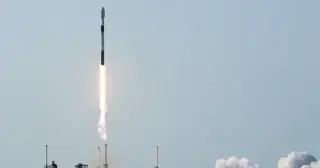
A spent SpaceX Falcon 9 upper stage is forecast to crash into the Moon (near Einstein crater) on August 5, 2026, at about seven times the speed of sound. The impact poses no danger to Earth but highlights growing space-debris concerns as lunar exploration resumes with missions like Artemis IV and other countries planning Moon activity. The event may leave a new crater and could be imaged later by NASA’s Lunar Reconnaissance Orbiter. The analysis stems from Bill Gray’s Project Pluto work; the source object remains in an Earth orbit that intersects the Moon’s path, and experts suggest safer disposal by placing spent stages on solar orbits to reduce future hits.

Moon to Host SpaceX Debris This August
space-exploration27 days ago

Moon to Host SpaceX Debris This August

A spent SpaceX Falcon 9 upper stage (designation 2025-010D) from a 2025 launch is on a trajectory to impact the Moon this August, likely near the sunlit limb and possibly visible from Earth with a telescope. It poses no danger to people or lunar assets, but highlights the ongoing issue of disposing leftover space hardware and could influence future mission planning, according to Project Pluto observers.

Moon’s Fresh Scar: 225-Meter Crater Reveals a Recent Impact
space-and-spaceflight1 month ago

Moon’s Fresh Scar: 225-Meter Crater Reveals a Recent Impact

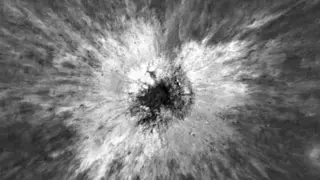
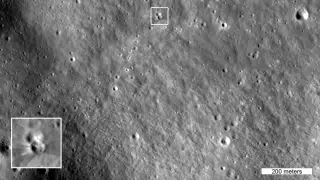
Scientists using NASA’s Lunar Reconnaissance Orbiter identified a fresh 225-meter crater on the Moon formed in late spring 2024, the largest crater created during the LRO mission; by comparing before-and-after images, researchers traced debris and observed dark glass-like rocks, indicating a high-energy impact and providing new insight into how recent impacts sculpt the lunar surface and crater formation across the solar system.

JWST-Driven update clears Moon-impact risk for asteroid 2024 YR4 in 2032
science2 months ago

JWST-Driven update clears Moon-impact risk for asteroid 2024 YR4 in 2032

NASA, aided by James Webb Space Telescope observations, has ruled out any lunar impact risk from asteroid 2024 YR4 in 2032, lowering the earlier 4.3% chance to zero and predicting a close approach about 13,200 miles from the Moon on December 22, 2032; the ~200-foot rock was discovered in 2024 by ATLAS, and concerns about a potential lunar collision have been put to rest.

2032 Moon Encounter Could Spark Earthbound Meteor Showers
science3 months ago

2032 Moon Encounter Could Spark Earthbound Meteor Showers

Astronomers say the near-Earth asteroid 2024 YR4 has a 4.3% chance of striking the Moon in December 2032, potentially releasing about 8 megatons of energy and producing a naked-eye flash with magnitude around -2.5 to -3; an infrared afterglow could last hours and the impact could fling up to 100 million kilograms of lunar rocks toward Earth, sparking days-long meteor showers. The finding is based on 10,000 simulations and a preprint, with follow-up observations around the 2032 flyby recommended to better constrain the timeline and likely impact location.

Moon Faces a 4% Chance of a 60-Meter Asteroid Hit in 2032
space3 months ago

Moon Faces a 4% Chance of a 60-Meter Asteroid Hit in 2032

A ~60-meter asteroid named 2024 YR4 could strike the Moon on December 22, 2032, with about a 4% probability, potentially creating a 1-kilometer crater and a moonquake of magnitude 5.0–5.1, offering a rare scientific 'natural experiment' as observers track optical, thermal, and seismic signals—while fallout debris could reach Earth and affect satellites.

2032 Moon Impact Could Unleash New Lunar Science from a Tiny Asteroid
space3 months ago

2032 Moon Impact Could Unleash New Lunar Science from a Tiny Asteroid

A 60-meter asteroid (2024 YR4) has about a 4% chance to strike the Moon on December 22, 2032. If it hits, it could form a ~1 km crater with a 100 m molten pool, trigger a magnitude-5.0 “moonquake,” vaporize rock, and loft up to 400 kg of debris that could reach Earth, potentially posing risks to satellites and even ground hazards. Yet scientists see this as a rare, invaluable chance to study lunar geology, interior structure, and crater formation in real time using telescopes and space assets, while some agencies consider deflection to prevent the impact. The piece notes Universe Today as the original source.

Chinese Rocket Crash on Moon Reveals Mysterious Double Crater and Secret Payload
space2 years ago

Chinese Rocket Crash on Moon Reveals Mysterious Double Crater and Secret Payload

Last year, a mystery object crashed into the Moon, leaving behind a double crater. Scientists initially believed it was a defunct Chinese rocket, but new evidence confirms its identity. However, the findings also reveal that the rocket likely carried an unknown payload. The object was first detected by researchers at the University of Arizona and was later identified as a Chinese rocket booster. The team observed variations in the light reflected off the rocket, indicating its identity. The rocket's unusual movement suggested the presence of another object on board. The double crater left by the impact is unique and requires two roughly equal masses. The identity of the object presumed to have created the second crater remains unknown, and it may never be disclosed unless China chooses to reveal it.

Debunking the Viral Video: Unmasking the Truth Behind the Moon Striking Object
science-and-technology2 years ago

Debunking the Viral Video: Unmasking the Truth Behind the Moon Striking Object

A viral video depicting an impact and explosion on the surface of the Moon has been debunked as fake. The video, originally posted on YouTube by user Diego Sinclair, was computer-generated and not an authentic event. While objects colliding with the Moon can create bright flashes of light, they are not caused by fire or combustion, as depicted in the video. Instead, the flashes are a result of the thermal glow of molten rock and hot vapors at the impact site. The video's creator admitted it was an edited video, leading to its rating as fake.