Tag

Lro

All articles tagged with #lro

SpaceX upper stage leaves 60-foot crater on the Moon, spied by NASA's LRO
space5 days ago

SpaceX upper stage leaves 60-foot crater on the Moon, spied by NASA's LRO

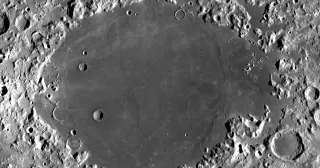
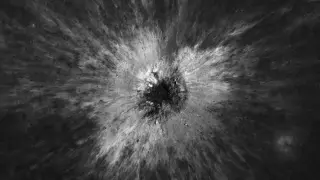
SpaceX’s Falcon 9 upper stage slammed into the Moon on Aug. 5, 2026, carving a roughly 60-foot-wide crater near Einstein Crater at about 5,400 mph; NASA’s Lunar Reconnaissance Orbiter captured imagery on Aug. 11–12 showing bright and dark ejecta and a crater depth under 10 feet. The stage had been drifting for over 18 months and had previously carried two lunar lander attempts—Blue Ghost and ispace’s Resilience—before the crash.

NASA Spots 60-Foot Lunar Crater From SpaceX Falcon 9 Debris Collision
space6 days ago

NASA Spots 60-Foot Lunar Crater From SpaceX Falcon 9 Debris Collision

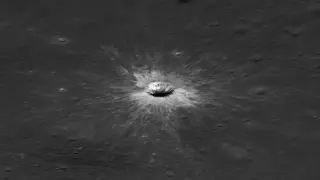
NASA’s Lunar Reconnaissance Orbiter captured a new 60-foot-wide, 12-foot-deep crater on the Moon after SpaceX Falcon 9’s upper stage crashed there on Aug. 5 from the Jan. 15, 2025 Blue Ghost mission. The imagery, taken Aug. 11–12, required tilting LRO to look straight down with the Narrow-Angle Camera. The impact, traveling about 5,400 mph, involved a stage roughly 39 feet long, 13 feet wide, weighing ~4,000 kg. The darker ejecta rays reflect older surface material, while lighter rim material comes from deeper underground. Independent analysts predicted the collision and helped confirm the event.

NASA-curnished view shows 60-foot Moon crater from SpaceX impact
space6 days ago

NASA-curnished view shows 60-foot Moon crater from SpaceX impact

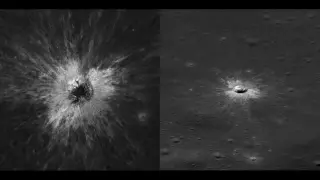
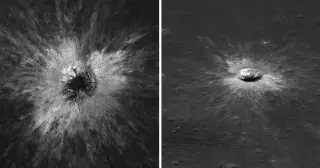
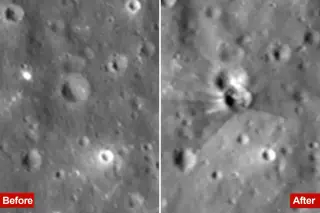
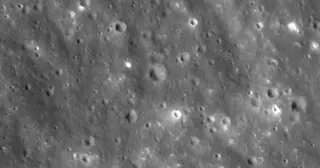
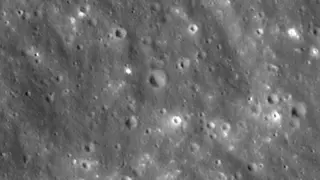
NASA’s Lunar Reconnaissance Orbiter released before-and-after images showing a roughly 60-foot-wide, less-than-10-foot-deep crater carved into the Moon by SpaceX’s upper‑stage impact on Aug. 5, 2026, at about 5,400 mph; the fresh ejecta rays and bright material were captured from about 60 miles up, illustrating a recent lunar impact and highlighting NASA’s ongoing push to commercialize lunar exploration.

NASA Images Show 60-Foot Lunar Crater From SpaceX Falcon 9 Crash
space6 days ago

NASA Images Show 60-Foot Lunar Crater From SpaceX Falcon 9 Crash

NASA’s Lunar Reconnaissance Orbiter captured before-and-after imagery of a roughly 60-foot-wide crater on the Moon, created when SpaceX’s Falcon 9 upper stage crashed on Aug. 5. The site, on the sunlit limb, shows bright and dark ejecta rays and a depth likely under 10 feet, with the crater center around 1,700 feet in elevation. Images taken Aug. 11–12 followed tracking of the booster’s trajectory, and observations also came from a Chilean telescope and South Korea’s Pathfinder Lunar Orbiter. SpaceX noted disposal challenges but emphasized space safety, marking one of the rare cases of a human-made object unintentionally impacting the Moon and fueling ongoing space-sustainability discussions.

NASA captures fresh Moon crater from SpaceX upper-stage collision
space6 days ago

NASA captures fresh Moon crater from SpaceX upper-stage collision

NASA’s Lunar Reconnaissance Orbiter released new images showing a roughly 60-foot crater on the Moon created when SpaceX’s Falcon 9 upper stage collided with the lunar surface on Aug. 5 after being discarded in orbit. Danuri’s observations guided follow-up imaging, and NASA notes the event posed no threat to Earth while providing data to study the Moon’s surface and inform future astronaut infrastructure and shielding.

Danuri Captures SpaceX Moon Impact, Sparking Debris Responsibility Debate
space-and-astronomy17 days ago

Danuri Captures SpaceX Moon Impact, Sparking Debris Responsibility Debate

South Korea’s Danuri lunar orbiter photographed the Moon before and after a defunct SpaceX Falcon 9 upper stage slammed into the lunar surface at about 5,400 mph, leaving a fresh dark scar near Einstein crater. Danuri’s eight imaging sessions provide data on impact dynamics and ejecta, with NASA’s Lunar Reconnaissance Orbiter likely to image the site again. The event raises questions about who is responsible for deep-space debris and the lack of end-of-life disposal standards beyond Earth orbit.

Moon Water Built Up Over Billions of Years, Not a One-Time Event
science4 months ago

Moon Water Built Up Over Billions of Years, Not a One-Time Event

New analysis using NASA’s Lunar Reconnaissance Orbiter data shows that ice in permanently shadowed lunar craters accreted gradually over about 3 to 3.5 billion years from multiple sources—comet/asteroid deliveries, solar-wind interactions, and ancient volcanic activity—challenging the idea of a single Late Heavy Bombardment event. The oldest, most shadowed craters host the most ice, a result with strong implications for future Moon missions and in‑situ resource use, though direct sample analysis is needed to confirm the exact origins.

Moon’s Fresh Scar: 225-Meter Crater Reveals a Recent Impact
space-and-spaceflight4 months ago

Moon’s Fresh Scar: 225-Meter Crater Reveals a Recent Impact

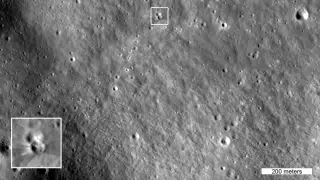
Scientists using NASA’s Lunar Reconnaissance Orbiter identified a fresh 225-meter crater on the Moon formed in late spring 2024, the largest crater created during the LRO mission; by comparing before-and-after images, researchers traced debris and observed dark glass-like rocks, indicating a high-energy impact and providing new insight into how recent impacts sculpt the lunar surface and crater formation across the solar system.

Fresh 225-Meter Lunar Crater Captured Moments After Formation
science4 months ago

Fresh 225-Meter Lunar Crater Captured Moments After Formation

NASA’s Lunar Reconnaissance Orbiter images confirm a freshly formed 225-meter lunar crater from spring 2024—the largest crater seen during the LRO era—featuring a funnel-shaped rim, 43-meter depth, large ejecta blocks, and glassy rock. The event, inferred to come from a south-southwest impact and documented with rare before-and-after imagery, offers a valuable dataset to refine crater-formation models; such fresh lunar craters are expected roughly once every 139 years on any given patch of surface.

New 22-Meter Moon Crater Highlights Ongoing Lunar Change
space5 months ago

New 22-Meter Moon Crater Highlights Ongoing Lunar Change

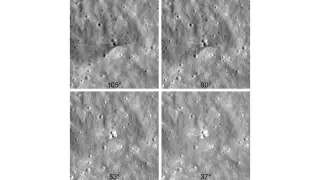
Researchers using imagery from the Lunar Reconnaissance Orbiter identified a fresh 22‑meter crater on the Moon by comparing images from 2009 and 2012, revealing bright ejecta rays that contrast with the dark surface. The rays will gradually darken due to space weathering, showing that the Moon's surface is still being sculpted today. The finding helps refine current impact rates and aids in calibrating age estimates for lunar terrains.