
Swift Observatory Ends 22-Year Mission After Failed Rescue, Reenters Over Indonesia
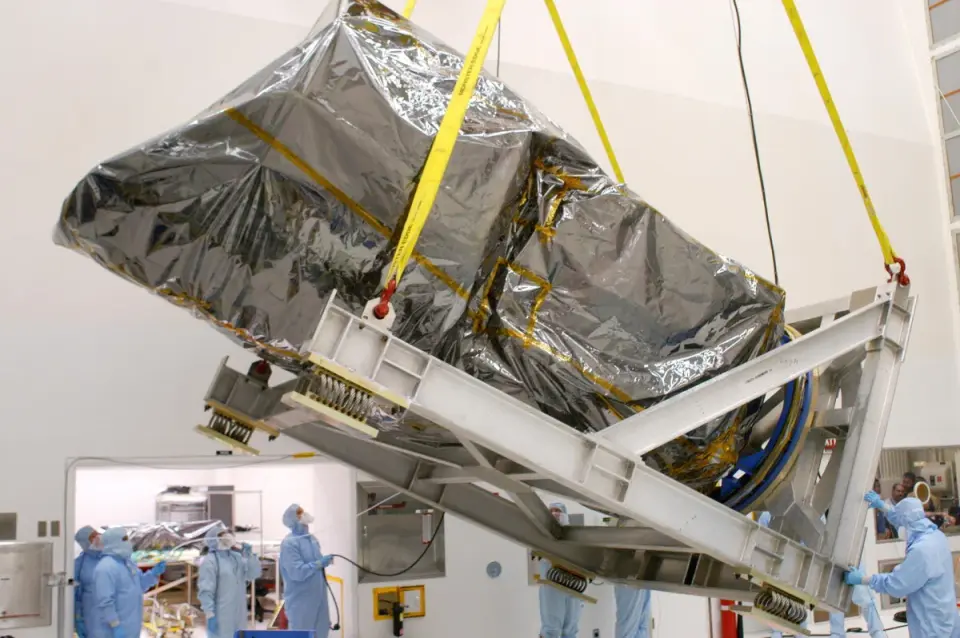
NASA's Neil Gehrels Swift Observatory reentered Earth's atmosphere on November 4, 2026, ending a 22-year mission that observed gamma-ray bursts for 11 times longer than planned. A commercial rescue attempt by Katalyst Space failed in September, and intense solar activity accelerated the telescope's orbital decay. NASA is now seeking private sector proposals to potentially save the Hubble Space Telescope from a similar fate by 2032.
Key points
- The Swift Observatory, launched in 2004, reentered near North Sumatra, Indonesia, at 7:39 a.m. ET on November 4, 2026.
- A rescue mission by Katalyst Space Technologies, launched in July, failed in September when its robotic craft spun out of control before reaching the telescope.
- Intense solar activity in 2024 expanded Earth's atmosphere, increasing drag and accelerating Swift's orbital decay.
- NASA issued a Request for Proposals to private companies to explore options for boosting, servicing, or guiding the Hubble Space Telescope to a controlled reentry by 2032.
- The Aerospace Corporation's CORDS tracked the reentry, noting that while most of the 3,200-pound spacecraft burned up, some dense pieces may have survived.
Background
Swift had been expected to reenter in the coming weeks following the failure of Katalyst's Link spacecraft in September 2026. The telescope's orbit had been decaying due to increased solar activity, which expanded Earth's atmosphere and increased drag. NASA had officially ended the mission in late October 2026 after the rescue attempt failed.
How outlets are covering it
AP News and CNN both confirmed the reentry over Indonesia on November 4, 2026, and highlighted the failed rescue mission by Katalyst Space. CNN emphasized the safety risks, noting that current orbital debris mitigation standards require an expected casualty rate of less than 1 in 10,000 for uncontrolled reentries, whereas NASA estimated a 1 in 2,100 risk for Swift. The Aerospace Corporation's CORDS focused on tracking the reentry and providing public updates, noting that Swift was about the size of a small car. NASA's APOD highlighted the scientific legacy of Swift, noting that its data will continue to contribute to astronomy for years to come. All sources agreed that NASA is now exploring options to save the Hubble Space Telescope, which faces a similar reentry risk by the mid-2030s.
Why it matters
The reentry of Swift marks the end of a long-running mission that provided critical data on gamma-ray bursts and other cosmic explosions. The failed rescue attempt highlights the challenges of extending the life of aging space telescopes, and NASA's move to seek private sector proposals for Hubble signals a shift toward commercial solutions for maintaining key space assets. The incident also underscores the growing concern about space debris and the need for stricter end-of-life planning for spacecraft.
What to watch
NASA will evaluate proposals from private companies for potentially saving the Hubble Space Telescope, which is expected to deorbit by the mid-2030s. Any such mission would need to happen by 2032. The agency will also analyze the data from the failed Swift rescue mission to improve future satellite servicing technologies.
- NASA space telescope plunges to Earth after two decades studying cosmic explosions AP News
- APOD: 2026 November 6 - A Farewell to Swift NASA Science (.gov)
- A 3,200-pound telescope plunged out of orbit. How it unfolded CNN
- Goodbye Swift: After 22 years, NASA spacecraft burns up in atmosphere Science | AAAS
- CORDS keeps public informed as NASA's Swift Observatory reenters atmosphere The Aerospace Corporation
Want the full story? Read the original reporting
Read on AP News