
NASA's Roman Telescope Launches Aug. 30, Repurposing Spy Tech for Cosmic Surveys
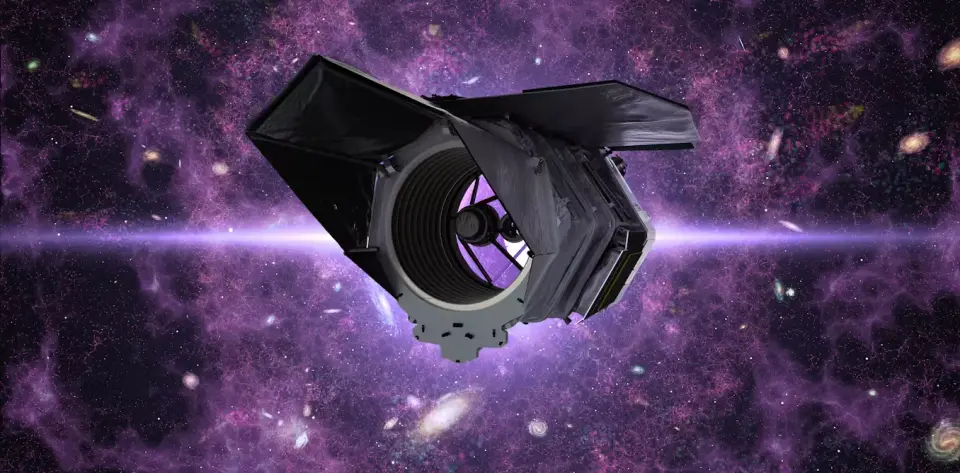
NASA is preparing to launch the Nancy Grace Roman Space Telescope on August 30, 2026, aboard a SpaceX Falcon Heavy. Originally developed by the National Reconnaissance Office for intelligence purposes, the telescope was transferred to NASA in 2012 and modified for astronomical use. Its primary mission involves surveying a billion galaxies to map dark matter and measure the expansion rate of the universe via supernovae. The instrument features a wide-field infrared camera with 300 megapixels, offering a field of view 100 times larger than the Hubble Space Telescope. This launch marks a significant milestone in repurposing military technology for scientific discovery, following a decade of modifications and testing.
Key points
- Launch scheduled for August 30, 2026, from Kennedy Space Center on a Falcon Heavy rocket.
- Telescope originated from the National Reconnaissance Office's Future Imagery Architecture program, transferred to NASA in 2012.
- Scientific goals include mapping dark matter, measuring dark energy via supernovae, and detecting rogue planets in the Milky Way.
- The Wide Field Instrument uses 18 near-infrared detectors with 16 megapixels each, totaling 300 megapixels.
- The telescope's field of view is approximately 100 times larger than that of the Hubble Space Telescope.
Background
Previous coverage indicated NASA had fueled the telescope for its August 30 launch, nine months ahead of schedule and under budget. Earlier reports highlighted the cost-saving aspect of repurposing spy satellite optics, though experts debated the extent of savings. The telescope is expected to generate over 500 terabytes of data per year and will operate at the Sun-Earth L2 point. It is named after Nancy Grace Roman, NASA's first chief astronomer, marking a milestone in women's contributions to space science.
How outlets are covering it
The Conversation emphasizes the scientific potential of the telescope's wide-field infrared detectors, linking them to a long history of technological advancements that led to Nobel Prize-winning discoveries in dark energy and black holes. Space.com highlights the political context, noting that President Trump attempted to scrap the Roman telescope last year, but it is now ready for launch. SpaceX provides logistical details, confirming the Falcon Heavy launch from Florida, which is a rare flight for the vehicle since late April. The sources collectively agree on the launch date and the telescope's origins but differ in emphasis: The Conversation focuses on the detector technology and scientific legacy, while Space.com focuses on the political survival of the mission.
Why it matters
The launch of the Roman Space Telescope represents a significant advancement in astronomical observation, combining military-grade optics with cutting-edge infrared detectors to answer fundamental questions about the universe's composition and evolution. Its wide-field capability will allow for unprecedented surveys of dark matter and dark energy, potentially leading to new discoveries in cosmology. Additionally, the successful repurposing of spy satellite technology demonstrates a cost-effective approach to space exploration, setting a precedent for future missions like the Habitable Worlds Observatory.
What to watch
NASA expects the telescope to launch on August 30, 2026, and begin operations at the L2 point. The telescope will generate over 500 terabytes of data per year, which will be released to the public immediately. Scientists are already planning for the next generation of discoveries, with NASA developing the Habitable Worlds Observatory to directly image Earth-like planets and identify signs of life. The success of the Roman telescope will inform future missions and detector technology.
- NASA is gearing up to launch its next flagship space telescope – combining spy technology with sophisticated infrared detectors The Conversation
- Trump tried to scrap NASA's Roman Space Telescope last year. Now it's ready to launch Space
- Roman telescope aims to directly image exoplanets 1,000 times fainter than current limits Phys.org
- Roman Space Telescope Mission SpaceX
- Nancy Grace Roman Observatory: T-Rex-Sized Space Telescope Launching This Weekend Will Photograph Exoplanets And Solve Cosmic Mysteries IFLScience
Want the full story? Read the original reporting
Read on The Conversation