
Composer turns thousands of cosmic radio bursts into audible sound for Finnish cathedral installation
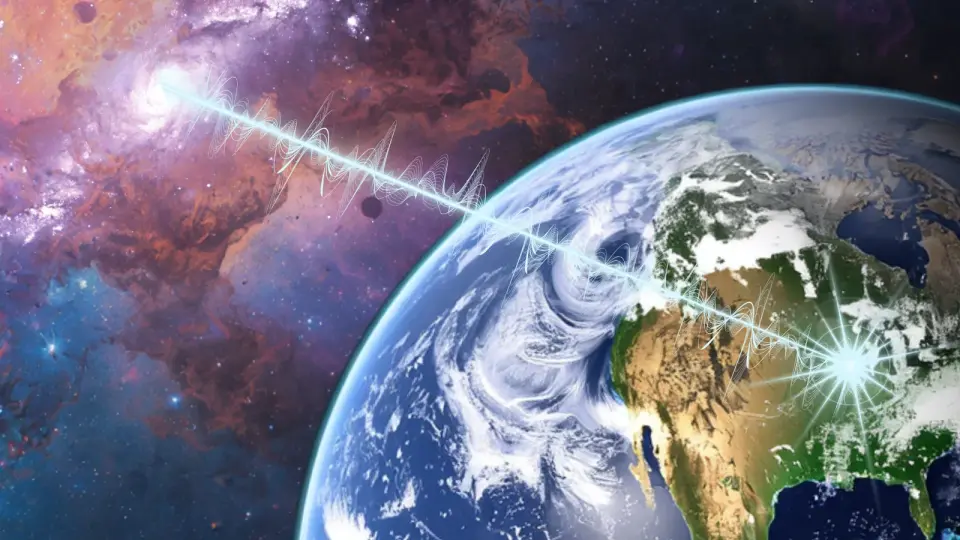
Fast radio bursts (FRBs), intense flashes of energy from distant galaxies, are invisible to the human eye but can now be heard through a new artistic installation. Composer Andrew Melchior and MIT physicist Kiyoshi Masui have sonified data from the Canadian Hydrogen Intensity Mapping Experiment (CHIME), translating thousands of detected bursts into sound. The installation, titled 'The Logos,' has been playing daily at Oulu Cathedral in Finland since April and will continue through the end of the year. The project maps the structure of real radio signals to musical pitches, allowing listeners to hear the dispersion of these cosmic events as they travel through intergalactic gas. On November 21, a choir of 30 singers will perform alongside the live playback, creating a layered acoustic experience that reflects the billions of years these signals have traveled to reach Earth.
Key points
- Composer Andrew Melchior and MIT physicist Kiyoshi Masui created 'The Logos,' an installation that sonifies fast radio burst data from the CHIME telescope.
- The installation has been active at Oulu Cathedral in Finland since April 2026 and is scheduled to run through the end of the year.
- CHIME recorded 4,539 bursts from 3,641 sources between 2018 and 2023, significantly increasing the known catalog of FRBs.
- The sonification process maps radio signal structures to musical pitches, revealing how high frequencies arrive first and sweep downward due to intergalactic gas dispersion.
- A live performance on November 21 will feature 30 singers performing in Finnish alongside Melchior's keyboard playback of the bursts.
- Recent JWST findings suggest FRBs may originate from young magnetars rather than merging neutron stars, as the host galaxy of the most distant burst was a small, young dwarf galaxy.
Background
Fast radio bursts have been a subject of intense astronomical study since their discovery in 2007. Recent advancements, particularly the James Webb Space Telescope's identification of the host galaxy for FRB 20240304B, have shifted scientific consensus toward the theory that these bursts are produced by young magnetars in small, star-forming dwarf galaxies, rather than older neutron star mergers. This new artistic project builds on the growing catalog of FRBs detected by CHIME, offering a novel way to engage with this cosmic phenomenon.
Why it matters
This installation bridges the gap between scientific data and human perception, making invisible cosmic phenomena accessible through sound. It highlights the ongoing effort to understand the origins of fast radio bursts, which remain one of the most extreme and poorly understood events in the universe. By translating radio waves into audio, the project provides a unique perspective on the journey of these signals across billions of years of cosmic space.
What to watch
The installation 'The Logos' will continue to play daily at Oulu Cathedral through the end of 2026. The November 21 performance with a choir is expected to offer a rich, layered acoustic experience that reveals the physical properties of fast radio bursts as they travel through space.
Want the full story? Read the original reporting
Read on Space