Tag

Fast Radio Bursts

All articles tagged with #fast radio bursts

Composer turns thousands of cosmic radio bursts into audible sound for Finnish cathedral installation
science-and-technology12 days ago

Composer turns thousands of cosmic radio bursts into audible sound for Finnish cathedral installation

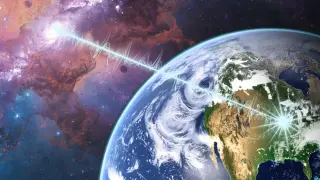
Fast radio bursts (FRBs), intense flashes of energy from distant galaxies, are invisible to the human eye but can now be heard through a new artistic installation. Composer Andrew Melchior and MIT physicist Kiyoshi Masui have sonified data from the Canadian Hydrogen Intensity Mapping Experiment (CHIME), translating thousands of detected bursts into sound. The installation, titled 'The Logos,' has been playing daily at Oulu Cathedral in Finland since April and will continue through the end of the year. The project maps the structure of real radio signals to musical pitches, allowing listeners to hear the dispersion of these cosmic events as they travel through intergalactic gas. On November 21, a choir of 30 singers will perform alongside the live playback, creating a layered acoustic experience that reflects the billions of years these signals have traveled to reach Earth.
Webb Telescope Reveals Record-Breaking Radio Burst Originated in a Tiny, Young Galaxy
science1 month ago

Webb Telescope Reveals Record-Breaking Radio Burst Originated in a Tiny, Young Galaxy

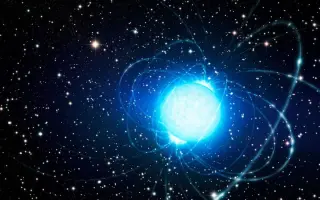
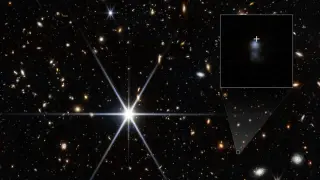
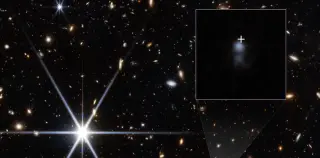
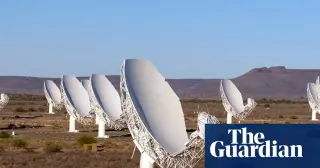
Astronomers have identified the host galaxy of FRB 20240304B, the most distant fast radio burst ever detected. The signal originated when the universe was just 3 billion years old, traveling through 80% of cosmic history. Detected by the MeerKAT telescope in March 2024 and confirmed by the James Webb Space Telescope (JWST), the burst emerged from a surprisingly small, young dwarf galaxy. This finding challenges previous assumptions that FRBs originate from massive, older galaxies, instead supporting theories that they are produced by young magnetars.

JWST locates record-breaking fast radio burst in tiny, ancient galaxy
science1 month ago

JWST locates record-breaking fast radio burst in tiny, ancient galaxy

Astronomers identified the most distant fast radio burst (FRB) ever recorded, FRB 20240304B, originating over 10 billion light-years away. Detected by South Africa’s MeerKAT telescope in March 2024, the signal’s host galaxy was confirmed by the James Webb Space Telescope (JWST) as a small, metal-poor dwarf galaxy actively forming stars. Published in *Science* on October 8, the study places the event just 3 billion years after the Big Bang, more than doubling the previous distance record. The findings suggest FRBs may be common in the early universe and support theories linking them to young magnetars rather than older neutron star mergers.

JWST Confirms Record-Breaking Radio Burst from Universe’s First 3 Billion Years
science1 month ago

JWST Confirms Record-Breaking Radio Burst from Universe’s First 3 Billion Years

Astronomers have identified the most distant fast radio burst (FRB) ever recorded, designated FRB 20240304B. Detected by South Africa’s MeerKAT telescope in March 2024, the signal originated when the universe was only 3 billion years old, traveling for over 10 billion years to reach Earth. The James Webb Space Telescope (JWST) confirmed the host galaxy’s redshift at 2.148, placing it more than twice as far as the previous record holder. The host is a small, low-mass dwarf galaxy with intense star formation and low metallicity, challenging previous assumptions that FRBs originate in massive, evolved galaxies. This discovery suggests FRBs may have been common in the early universe and provides a new method for mapping invisible intergalactic matter.

Webb Telescope Identifies Tiny, Ancient Galaxy as Source of Record-Breaking Fast Radio Burst
science1 month ago

Webb Telescope Identifies Tiny, Ancient Galaxy as Source of Record-Breaking Fast Radio Burst

Astronomers have identified the host galaxy of the most distant fast radio burst (FRB) ever detected, designated FRB 20240304B. Using the James Webb Space Telescope (JWST), researchers confirmed the burst originated just 3 billion years after the Big Bang, during the peak of cosmic star formation. The host is a surprisingly small dwarf galaxy, challenging previous assumptions that FRBs occur in massive, older galaxies. This discovery supports the theory that FRBs are generated by magnetars from recent supernovae rather than neutron star mergers, and allows scientists to map invisible matter across 80% of cosmic history.

Webb Telescope Identifies Host Galaxy of Record-Breaking 10-Billion-Year-Old Radio Burst
science-tech1 month ago

Webb Telescope Identifies Host Galaxy of Record-Breaking 10-Billion-Year-Old Radio Burst

Astronomers have identified the host galaxy of FRB 20240304B, the most distant fast radio burst ever detected. The signal originated 10.6 billion years ago, when the universe was only 3 billion years old. The burst was detected by the MeerKAT telescope in South Africa and its host galaxy was confirmed by the James Webb Space Telescope. The host is a surprisingly small, young dwarf galaxy actively forming stars, which supports theories that fast radio bursts are generated by young magnetars rather than older neutron star mergers.

JWST Identifies Record-Breaking Fast Radio Burst from a Tiny, Ancient Galaxy
astronomy1 month ago

JWST Identifies Record-Breaking Fast Radio Burst from a Tiny, Ancient Galaxy

Astronomers have identified the most distant fast radio burst (FRB) ever detected, designated FRB 20240304B. Discovered by the MeerKAT telescope in South Africa in March 2024, the signal traveled for over 10 billion years, originating when the universe was just 3 billion years old. The James Webb Space Telescope (JWST) pinpointed its host as a surprisingly small, metal-poor dwarf galaxy actively forming stars, a finding that challenges existing theories about FRB origins and offers new data for mapping the cosmic web.

Record-Breaking Radio Burst Detected from Galaxy Formed in Early Universe
science1 month ago

Record-Breaking Radio Burst Detected from Galaxy Formed in Early Universe

Astronomers have identified the most distant fast radio burst (FRB) ever recorded, originating from a galaxy that existed when the universe was only 3 billion years old. Detected via the MeerKAT telescope in South Africa and confirmed by the James Webb Space Telescope, this burst traveled for over 10 billion years, covering approximately 80% of cosmic history. The source is a young, metal-poor galaxy with rapid star formation, challenging existing theories about FRB origins. This discovery suggests FRBs were common in the early universe and provides a new method for mapping unseen matter across vast cosmic distances.

Fast Radio Bursts Reveal Where the Universe's Missing Ordinary Matter Hides
science2 months ago

Fast Radio Bursts Reveal Where the Universe's Missing Ordinary Matter Hides

A new analysis of 69 fast radio bursts (FRBs) provides the most precise census yet of the universe's 'missing' ordinary matter. Researchers found that approximately 76% of baryons exist as extremely diffuse, ionized gas in the intergalactic medium, rather than within galaxies. This finding resolves a long-standing discrepancy between early-universe predictions and local inventories of stars and gas. The study also suggests that galactic feedback processes, such as supernovae and black hole outflows, have efficiently expelled gas from galaxy halos, smoothing the distribution of matter on large scales. These results offer new constraints for cosmological models, potentially helping to resolve tensions in measurements of matter clustering and dark energy.

Fast radio bursts offer new lens on dark matter and cosmic structure
science2 months ago

Fast radio bursts offer new lens on dark matter and cosmic structure

A study published in Nature Astronomy demonstrates that fast radio bursts (FRBs) can effectively map the distribution of ordinary matter in the universe. By analyzing approximately 100 FRBs, researchers from Caltech and the University of Arizona measured how galactic feedback smooths out matter clumps. This method provides constraints competitive with major X-ray and microwave surveys, offering a new tool to investigate dark matter, dark energy, and neutrino mass.

Cosmic 'missing' matter found drifting between galaxies, hurled there by violent galactic processes
astronomy4 months ago

Cosmic 'missing' matter found drifting between galaxies, hurled there by violent galactic processes

Researchers using CHIME/FRB data and DESI galaxy maps cross-correlated thousands of fast radio bursts with galaxy locations to show a substantial amount of ordinary matter lies outside galaxies in diffuse clouds, likely ejected by energetic events such as black hole jets and supernovae—brightening the picture of where the universe’s missing baryons reside and implying these galactic processes are more powerful than previously thought.

Missing Ordinary Matter Reunited: Diffuse Gas Envelopes Galaxies and Clusters
space-and-spaceflight4 months ago

Missing Ordinary Matter Reunited: Diffuse Gas Envelopes Galaxies and Clusters

Using thousands of fast radio burst measurements, researchers mapped where ordinary (baryonic) matter resides and found widespread, diffuse gas surrounding galaxies and galaxy clusters. This diffuse gas accounts for the universe’s missing baryons, extending up to about 4 million light-years from galaxies and suggesting energetic processes like black hole jets fling baryons far beyond visible halos, which helps reconcile observations with current astrophysical models.

Astronomer Reveals Distribution of Most Normal Matter in the Universe
science11 months ago

Astronomer Reveals Distribution of Most Normal Matter in the Universe

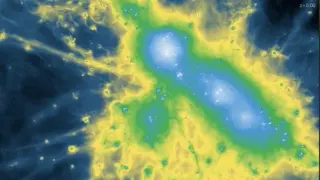
Most of the universe's normal matter isn't in stars or galaxies but is distributed in the cosmic web between galaxies, with recent studies using fast radio bursts confirming that about 76% of normal matter resides in intergalactic space, supporting the Big Bang theory. Dark matter, which makes up most of the universe's mass, remains largely mysterious, but scientists are actively studying it through various methods including underground detectors and telescopes.