
KASA releases images confirming SpaceX rocket debris impact on the Moon
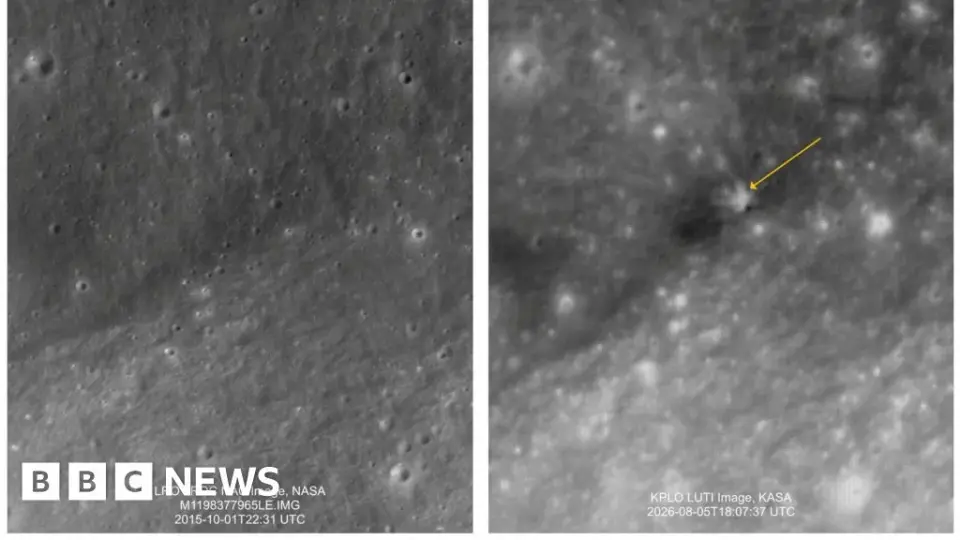
South Korea's space agency (KASA) has released images showing the aftermath of a SpaceX Falcon 9 upper stage crashing into the Moon on August 5, 2026. The impact, which occurred near the Einstein crater, created a new crater approximately 60 feet wide. While the collision was unintentional and posed no threat to Earth, it has prompted discussions about space debris management and provided data for studying lunar geology.
Key points
- KASA's lunar orbiter Danubri captured images of the Moon before and after the impact, confirming the crash.
- The debris was the upper stage of a Falcon 9 rocket launched in January 2025 to deliver a Firefly Aerospace lander to the Moon.
- The impact occurred at approximately 06:35 GMT on August 5, 2026, at a speed of about 5,400 mph (8,700 km/h).
- NASA estimated the impact would create a crater 60 feet wide and 12 feet deep, ejecting dust and rock.
- SpaceX stated the impact was not intentional, resulting from gravitational and solar forces altering the stage's orbit.
Background
This event follows earlier predictions that the spent rocket stage, left in a looping orbit after a January 2025 mission, would eventually collide with the Moon. Previous coverage noted that the Moon already hosts around 3,000 human-made objects, and this impact adds to the growing concern about space debris in cislunar space.
How outlets are covering it
BBC and AP News focused on the confirmation of the impact and the release of images by KASA, emphasizing the scientific value of the data. NASA highlighted the opportunity to study the impact's ejecta and refine tracking techniques, noting that such impacts are rare but not unprecedented. The Guardian emphasized the unintentional nature of the crash and raised concerns about the disposal of space hardware, quoting SpaceX's director on the minor scientific interest of the event. All sources agreed that the impact posed no danger to Earth.
Why it matters
The incident underscores the growing issue of space debris and the need for responsible disposal practices. It also provides valuable data for understanding lunar geology and the behavior of ejecta plumes, which can inform future space missions and debris mitigation strategies.
What to watch
Scientists will analyze the data collected from the impact to better understand artificial impacts and their implications for lunar exploration. NASA and SpaceX are in communication about future debris mitigation strategies to prevent similar unintended impacts.
- South Korea space agency shares Moon images after SpaceX rocket debris crash BBC
- Scientists are certain a wayward SpaceX rocket slammed into the moon as predicted AP News
- NASA Will Attempt to Observe Rocket Part’s Lunar Impact NASA (.gov)
- SpaceX rocket thought to have crashed into the moon in unintentional collision The Guardian
- Chinese satellite captures video of SpaceX rocket debris crashing into the moon South China Morning Post
Want the full story? Read the original reporting
Read on BBC