
NASA Frames ESA’s LISA Mission as a 'Good Deal' Amid Partnership Tensions
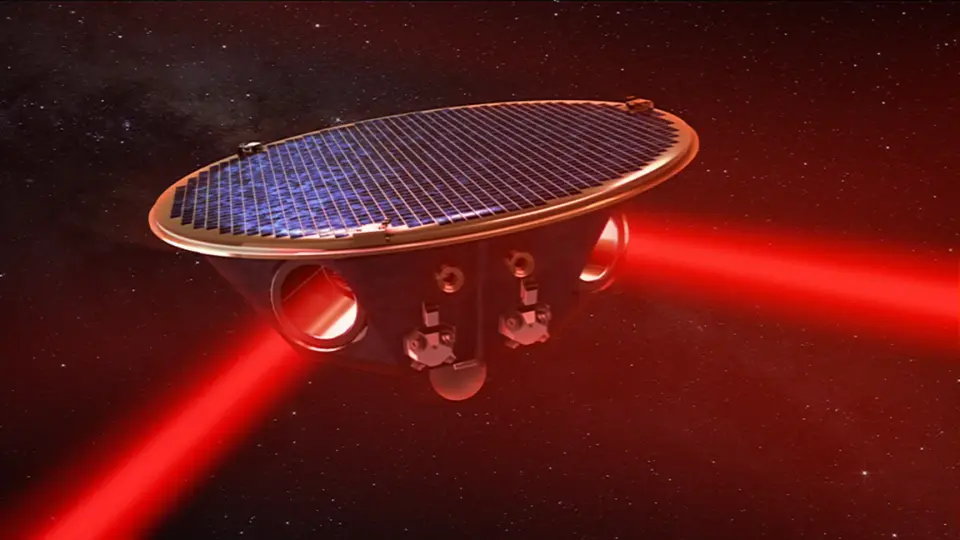
NASA Administrator Jared Isaacman is redefining international space partnerships as 'good deals' requiring tangible contributions, a shift that has strained relations with the European Space Agency (ESA) over lunar programs. However, the Laser Interferometer Space Antenna (LISA) mission remains a key exception. NASA views its role in LISA as highly cost-effective, providing roughly one-third of the funding for 100% of the science data. While the Trump administration proposed canceling NASA’s participation, Congress restored funding for fiscal year 2026, signaling continued support. ESA is leading the mission, which aims to detect low-frequency gravitational waves using three spacecraft in a triangular formation, with a launch scheduled for around 2035.
Key points
- NASA Administrator Jared Isaacman has shifted the agency’s international partnership strategy to prioritize 'good deals' with tangible, mission-critical contributions, moving away from diplomatic optics.
- This shift has caused friction with ESA, particularly regarding the Moon Base program, where NASA rejected an ESA proposal for a European cargo lander, preferring US-built solutions.
- The LISA mission is cited by NASA as a model of successful cooperation, with the US providing laser transmitters, telescopes, and charge management devices for a fraction of the cost of a standalone US mission.
- NASA’s estimated cost for LISA is approximately $1 billion, compared to a hypothetical $3 billion for a US-only version, while ESA’s total budget is 1.75 billion euros ($2 billion).
- Despite the White House proposing to cancel NASA’s participation in LISA and other science missions, Congress restored funding for fiscal year 2026, and NASA officials confirm they are maintaining their commitment to the project.
- LISA is designed to detect low-frequency gravitational waves using three spacecraft in a triangular formation, spaced 1.6 million miles apart, with a launch scheduled for around 2035.
Background
This development follows NASA Administrator Jared Isaacman’s September 2026 memo, which outlined an accelerated strategy for the Artemis program and a new approach to international partnerships. The memo emphasized a pivot from the canceled Lunar Gateway station to a permanent 'Moon Base' at the lunar south pole, citing competition with China. Isaacman stated that NASA will only pursue international agreements that offer 'good deals' with tangible contributions, rejecting previous models that prioritized diplomatic optics over mission efficiency. This shift aligns with a broader strategy to accelerate the 'Moon Base' program and maintain a competitive edge in the new space race.
Why it matters
The redefinition of international space partnerships as 'good deals' has significant implications for global cooperation in space exploration. While it has strained relations with ESA over lunar programs, it has also highlighted the potential for cost-effective collaborations like LISA. The mission’s success could unlock new scientific insights into gravitational waves, black holes, and the origins of the universe, while also demonstrating the value of international partnerships in achieving ambitious scientific goals.
What to watch
NASA and ESA will continue to collaborate on the LISA mission, with NASA providing key components and ESA leading the spacecraft development and launch. The mission is scheduled for launch around 2035, and its success could pave the way for future international collaborations in space exploration. Additionally, NASA and ESA will continue to work on other joint missions, such as the New Athena X-ray observatory and the Rosalind Franklin Mars rover, although some partnerships, like the Envision Venus mission, may face challenges due to shifting US priorities.
Want the full story? Read the original reporting
Read on Ars Technica