
NASA Launches $1M Student Challenge for Lunar Base Design
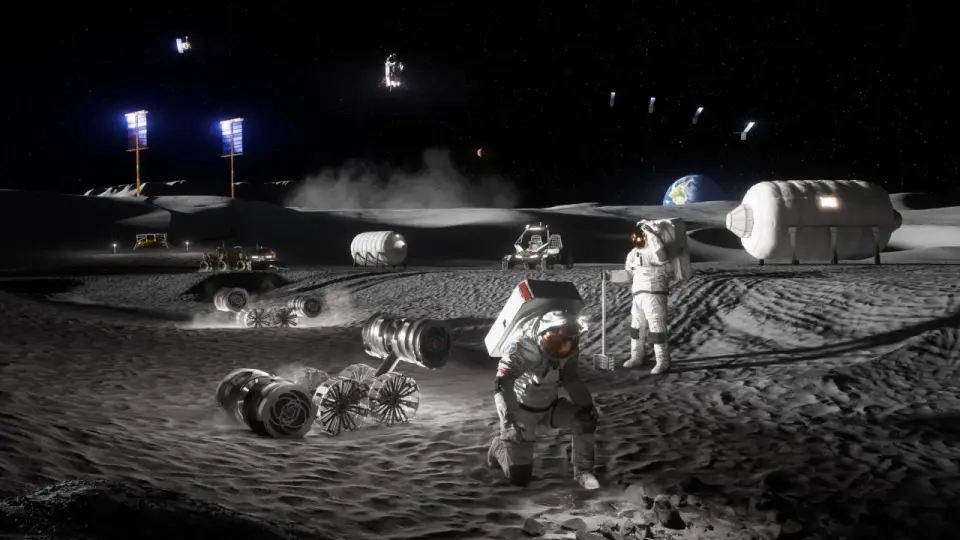
NASA has launched a $1 million Moon Base Challenge, inviting U.S. high school and college students to propose solutions for six critical engineering hurdles in establishing a permanent lunar outpost. The initiative, announced by Administrator Jared Isaacman, aims to leverage student creativity for power, life support, and construction systems while preparing the next generation of aerospace professionals.
Key points
- The competition offers $1 million in prizes for student teams to solve problems related to power generation, habitat construction, life support, transportation, communications, and astronaut safety.
- Registration is open until January 25, 2027, via the NASA STEM Gateway, with no prior engineering expertise required for participants.
- The challenge is part of NASA’s broader strategy to build a permanent base near the lunar South Pole, which is intended to serve as a stepping stone for future Mars missions.
- NASA Administrator Jared Isaacman emphasized that the initiative seeks 'bold ideas' from young innovators to address real-world technical obstacles for long-term lunar operations.
Background
This challenge follows recent announcements regarding a $10 billion Commercial Lunar Payload Services framework and the development of the PROMISE nuclear-powered rover. NASA has also accelerated plans to return astronauts to the Moon in 2028 and opened applications for its 25th astronaut class to support these lunar and Mars objectives.
How outlets are covering it
While ScienceDaily and The Presidential Prayer Team focus on the educational and inspirational aspects of the student challenge, Interesting Engineering provides a technical breakdown of the seven major engineering challenges NASA must overcome, including radiation shielding and in-situ resource utilization. University of Central Florida highlights the local impact, noting that 29% of the Kennedy Space Center workforce are UCF graduates, linking the national initiative to regional talent pipelines. All sources agree on the strategic importance of the Moon Base for future deep-space exploration, but they differ in emphasis: some highlight the competitive nature of the challenge, while others focus on the specific technological hurdles like lunar dust mitigation and power storage during the 14-day lunar night.
Why it matters
The Moon Base Challenge represents a shift in how NASA approaches infrastructure development, integrating public engagement and education directly into mission planning. By involving students in solving critical issues like power storage and life support, NASA aims to accelerate innovation and build a pipeline of skilled aerospace professionals. This initiative underscores the complexity of establishing a permanent human presence on the Moon, which requires not just landing capabilities but sustainable, self-sufficient infrastructure to support long-term operations and future Mars missions.
What to watch
Student teams must register by January 25, 2027, to participate in the multi-phase competition. NASA will evaluate proposals for technical feasibility and creativity, with winners receiving prizes and recognition. The agency continues to advance its Moon Base program through commercial contracts and robotic missions, with the goal of having foundational infrastructure ready before the first crewed return in 2028.
- NASA is offering $1 million for bold ideas to help build a Moon base Science Daily
- 7 major engineering challenges NASA must overcome to build a permanent Moon base Interesting Engineering
- NASA Administrator Jared Isaacman Speaks With Next Generation of Space Talent at UCF University of Central Florida
- America Must Prepare to Stay on the Moon RealClearWorld
- NASA Invests in Moon Base Projects and Announces Moon Base Challenge for Students The Presidential Prayer Team
Want the full story? Read the original reporting
Read on Science Daily