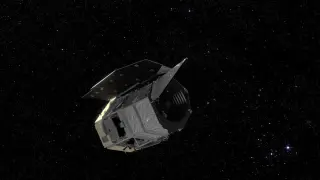
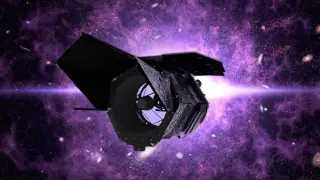
NASA’s Nancy Grace Roman Space Telescope now has enough fuel for at least 22 years of operations, double its original 10-year plan. This extension results from a lighter-than-planned spacecraft mass, a precise launch, and highly efficient initial trajectory corrections.
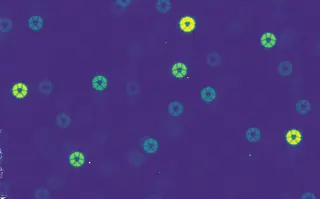
NASA successfully activated the Wide Field Instrument on the Nancy Grace Roman Space Telescope, capturing initial test images that appear as blurry, green-hued star halos. These images confirm the 300-megapixel camera is operational, though full calibration and focus adjustments are still months away. The telescope is currently en route to the Sun-Earth L2 point, where it will begin a primary mission potentially lasting 22 years.
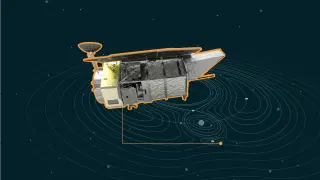
NASA's Nancy Grace Roman Space Telescope used only 18 kilograms of its 200-kilogram first mid-course correction fuel, aided by a lighter-than-planned launch mass and a precise trajectory. If the remaining maneuvers perform as expected, the observatory could exceed its original 10-year propellant plan and reach at least 22 years of potential science operations, though commissioning and hardware health remain gating factors; the forecast is contingent, not guaranteed.
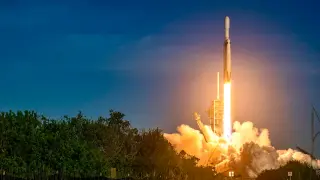
NASA's Nancy Grace Roman Space Telescope now has enough propellant for at least 22 years of science operations—roughly double the original forecast—thanks to a precise SpaceX Falcon Heavy launch, a lighter-than-expected mass, and efficient initial trajectory burns. While a potential uncrewed servicing/refueling mission exists in theory, no servicing spacecraft are currently available; the extra fuel margin reduces near-term refueling needs and supports planned wide-field and coronagraph observations from Roman.
NASA's Nancy Grace Roman Space Telescope launched atop a SpaceX Falcon Heavy from Cape Canaveral, carrying a wide-field infrared imager and the first active space-based coronagraph designed to directly image exoplanets. After a 90-day commissioning at the Sun-Earth L2 point, Roman will operate with other major observatories (Hubble, JWST, Euclid, Rubin) to survey huge swaths of the sky and study dark matter and dark energy, while generating an immense data stream (~500 terabytes per year). With a roughly $4 billion price tag, the mission was completed under budget and ahead of schedule, marking a major advance in space astronomy.
NASA’s Nancy Grace Roman Space Telescope is set to launch Aug. 30 and will map the cosmos with a field of view at least 100 times larger than Hubble, thanks to its Wide Field Instrument and a 300-megapixel infrared camera, plus a coronagraph to spot exoplanets. Operating near the Sun-Earth L2 point, Roman will study dark energy, dark matter, and the abundance of planets, potentially observing more than a billion galaxies in its first five years and complementing the deep infrared work of JWST.
NASA's Nancy Grace Roman Space Telescope is ready for launch on Aug. 30 atop a SpaceX Falcon Heavy, to be stationed at Lagrange Point 2 for a wide-field survey of the Milky Way and distant galaxies, delivering hundreds of terabytes of data annually to study dark matter, dark energy, and exoplanets with a coronagraph, complementing Hubble and JWST with a much broader view.
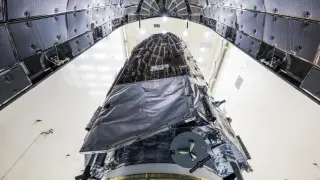
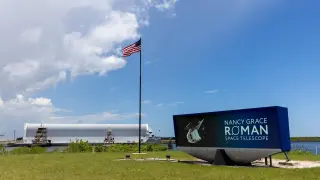
NASA’s Nancy Grace Roman Space Telescope has arrived at Kennedy Space Center, Florida, for final tests before an Aug. 30 liftoff aboard SpaceX’s Falcon Heavy—eight weeks earlier than originally planned. From Goddard, the telescope was shipped on a Pegasus barge to KSC, where it will be unpacked, decontaminated, and moved into the Payload Hazardous Servicing Facility for final checkouts, fueling, and integration in preparation for launch to Sun-Earth L2. The mission, powered by a historical 2.4-meter mirror and a 300-megapixel camera, aims to study dark energy, exoplanets, and other cosmic phenomena, with a nominal five-year primary duration and potential extensions if conditions allow.
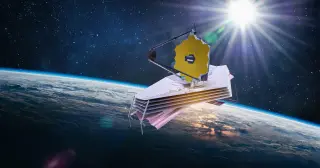
Launched with a list of 344 single-point failures, the James Webb Space Telescope avoided every one through a careful, unattended deployment. The sunshield’s successful unfolding and the mirror alignments minimized risk, enabling a mission at the Sun–Earth L2 point about 1.5 million kilometers from Earth. Remarkably, Webb now operates on roughly one kilowatt of power—about the same as a household kettle—thanks to passive cooling and shade, letting it conduct ultra‑sensitive infrared astronomy from a million miles away.
NASA has completed construction of the Nancy Grace Roman Space Telescope, finishing ahead of schedule and under budget, with a September launch aboard SpaceX Falcon Heavy to the L2 point. The telescope features a 7.9-foot primary mirror, a 300-megapixel Wide Field Instrument, and a Roman Coronagraph for exoplanet imaging; it will survey the sky 1,000x faster, observe 200x more of the sky per image, and process data 2,000x faster than Hubble, potentially discovering billions of galaxies and tens of billions of stars while expanding infrared astronomy and exoplanet discovery.