Tag

Wide Field Instrument

All articles tagged with #wide field instrument

Roman Telescope Exceeds Optical Targets by 30% After Precision Calibration
science-and-technology3 days ago

Roman Telescope Exceeds Optical Targets by 30% After Precision Calibration

NASA’s Nancy Grace Roman Space Telescope has achieved optical performance 30% better than predicted, with its Wide Field Instrument measuring 63 nanometers RMS error against a 90-nanometer requirement. Engineers completed extensive testing of detectors, filters, and alignment mechanisms, confirming the observatory is ready for routine surveys of dark matter and dark energy.

Roman Telescope’s 300-Megapixel Camera Activates, Producing Blurry 'Green Donuts' During Commissioning
space28 days ago

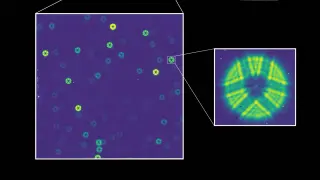
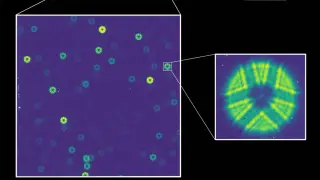
Roman Telescope’s 300-Megapixel Camera Activates, Producing Blurry 'Green Donuts' During Commissioning

NASA successfully activated the Wide Field Instrument on the Nancy Grace Roman Space Telescope, capturing initial test images that appear as blurry, green-hued star halos. These images confirm the 300-megapixel camera is operational, though full calibration and focus adjustments are still months away. The telescope is currently en route to the Sun-Earth L2 point, where it will begin a primary mission potentially lasting 22 years.

NASA's Roman Telescope Activates 300MP Camera, Fuel Savings Extend Mission to 22 Years
space1 month ago

NASA's Roman Telescope Activates 300MP Camera, Fuel Savings Extend Mission to 22 Years

NASA’s Nancy Grace Roman Space Telescope has successfully activated its 300-megapixel Wide Field Instrument (WFI) and Coronagraph Instrument during its journey to the L2 point. The WFI’s first test image shows out-of-focus, neon-green stars, confirming the instrument is operational. Meanwhile, a highly efficient first mid-course correction used only 18 kg of fuel against a 200 kg budget, potentially extending the mission’s operational lifespan from 10 to at least 22 years. Full science images are expected by early 2027.

Roman Telescope’s Fuel Efficiency Could Extend Mission to 22 Years
space1 month ago

Roman Telescope’s Fuel Efficiency Could Extend Mission to 22 Years

NASA’s Nancy Grace Roman Space Telescope has demonstrated exceptional fuel efficiency, potentially extending its operational life from 10 to 22 years. The telescope’s first mid-course correction used only 18 kg of the 200 kg budgeted, and its lighter-than-planned mass allowed for full tank loading. As of September 2026, the Wide Field Instrument is active, and the telescope is on track to reach its L2 orbit in December 2026.

Roman Telescope Extends Mission to 22 Years After Efficient Launch
space1 month ago

Roman Telescope Extends Mission to 22 Years After Efficient Launch

NASA’s Nancy Grace Roman Space Telescope has extended its expected operational lifespan from 10 to 22 years due to exceptional fuel efficiency during its journey to the L2 point. The spacecraft, launched on August 30, 2026, used only 40 pounds of its 441-pound fuel budget for initial trajectory adjustments. This efficiency, combined with a lighter-than-planned weight and a fully filled fuel tank, added 12 years to its mission. The telescope’s Wide Field Instrument (WFI) and Coronagraph have successfully passed initial tests, with first science images expected in early 2027.

Roman Telescope Achieves First Light, Confirms 22-Year Mission Lifespan
space1 month ago

Roman Telescope Achieves First Light, Confirms 22-Year Mission Lifespan

NASA's Nancy Grace Roman Space Telescope has successfully achieved 'first light,' confirming its Wide Field Instrument is operational. The $4.3 billion observatory, launched in late August, is on track for a 22-year mission due to exceptional fuel efficiency. It will soon begin detailed calibration before releasing its first science images in early 2027.

Roman Telescope Activates Instruments and Gains 22-Year Fuel Reserve
space1 month ago

Roman Telescope Activates Instruments and Gains 22-Year Fuel Reserve

NASA has successfully activated the Wide Field Instrument on the Nancy Grace Roman Space Telescope, marking a key milestone in its commissioning phase. The observatory, which launched on August 30, is currently traveling to the Sun-Earth L2 point. Initial tests confirm the 300-megapixel infrared camera is operational, with detectors cooling to their required temperatures. Additionally, NASA confirmed that Roman has enough fuel for at least 22 years of operations, double the original estimate, due to precise launch execution and lower-than-expected mass. The Coronagraph Instrument has also passed initial checks, though full science operations are not expected until early 2027.

NASA's Roman Space Telescope Gets New Core in Heart Transplant
space3 years ago

NASA's Roman Space Telescope Gets New Core in Heart Transplant

NASA's Nancy Grace Roman Space Telescope's Focal Plane System, which holds 18 detectors and ultra-modern electronics, has arrived at Ball Aerospace in Boulder. The system will be integrated into the Wide Field Instrument for the improved study of dark matter, dark energy, and exoplanets with the help of highly defined images. The detectors were developed by engineers at NASA's Goddard Space Flight Center. The team expects WFI's return to Goddard in the spring of 2024, where it will ultimately be integrated into the rest of the observatory, and launched in 2027.