
Bruker’s GAIA Microscope Set to Ship for Ultra-Cold Quantum Imaging
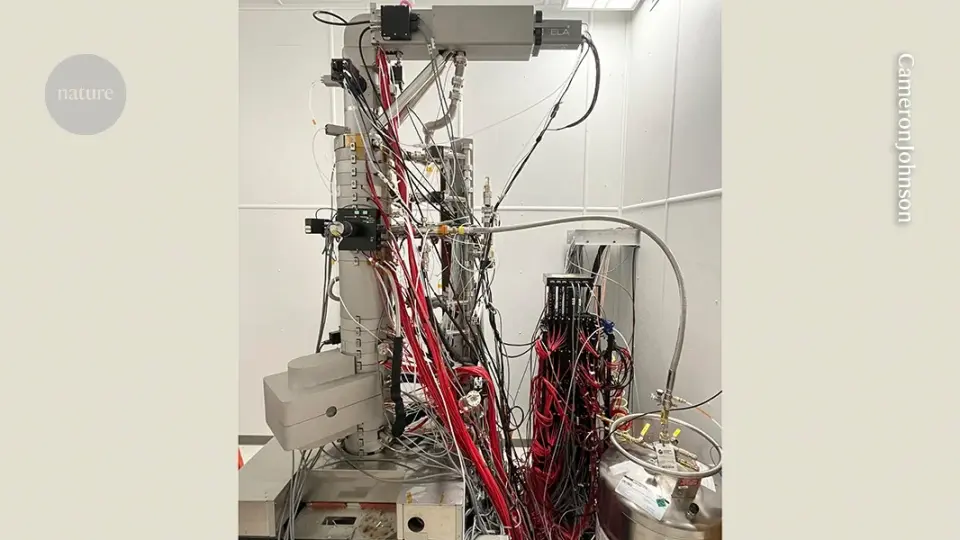
Bruker is set to ship its first scanning transmission electron microscope (STEM) capable of stable operation near absolute zero to three global labs by early 2027. Dubbed GAIA, the instrument uses liquid helium to cool samples to approximately 7 kelvin for over 30 hours, enabling atomic-resolution imaging of quantum materials. This breakthrough addresses decades-long challenges in cryogenic microscopy, where previous liquid helium attachments suffered from rapid evaporation and vibration-induced blurring. By integrating cooling directly into the microscope and adding aberration correction and a monochromator, GAIA allows researchers to observe material properties at ultra-low temperatures without the instability that previously limited data collection.
Key points
- Bruker will deliver the first GAIA STEM units to labs in Canada, Germany, and the United States by early 2027.
- The instrument achieves stable imaging at approximately 7 kelvin (−266 °C) for 30 hours or more using liquid helium.
- GAIA includes aberration correction and a monochromator to enhance image clarity and control electron energy.
- Previous liquid helium attachments failed due to rapid evaporation causing vibrations that blurred atomic-scale images.
- The development began in 2017 at Nion, which Bruker acquired in 2024, following earlier attempts by h-Bar Instruments.
Background
This development follows a decade-long effort to adapt transmission electron microscopes for cryogenic use. While liquid nitrogen cooling to 77 kelvin was common, reaching lower temperatures required liquid helium, which proved difficult to manage due to evaporation issues. In 2025, researchers reported a TEM attachment achieving 20 kelvin for ten hours, but GAIA represents the first integrated commercial solution for sustained ultra-low-temperature imaging. This advancement supports the broader quantum technology landscape, where understanding material behavior at near-absolute-zero temperatures is critical for developing quantum devices, complementing recent milestones in quantum computing and networking.
Why it matters
GAIA enables the direct observation of quantum behaviors in materials at atomic resolution, a capability previously limited by technical instability. This could accelerate the development of quantum technologies by allowing scientists to study how materials respond to extreme cold without the blurring artifacts that plagued earlier attempts. The instrument’s stability and advanced features like aberration correction may lead to new discoveries in condensed matter physics and quantum materials, potentially influencing the design of future quantum computers and sensors.
What to watch
The first three GAIA units are scheduled to ship to the Canadian Centre for Electron Microscopy, the Ernst Ruska-Centre in Germany, and Oak Ridge National Laboratory in the United States by early 2027. Researchers like Shelly Conroy and Noah Schnitzer have already secured time slots to use the instruments, indicating high demand. Future developments may include broader commercial availability and further integration of cryogenic capabilities into other microscopy platforms, expanding the range of materials that can be studied at ultra-low temperatures.
Want the full story? Read the original reporting
Read on Nature