
Incomplete Chilean Telescope Array Captures 22 Bow Shocks, Solving Stellar Recycling Mystery
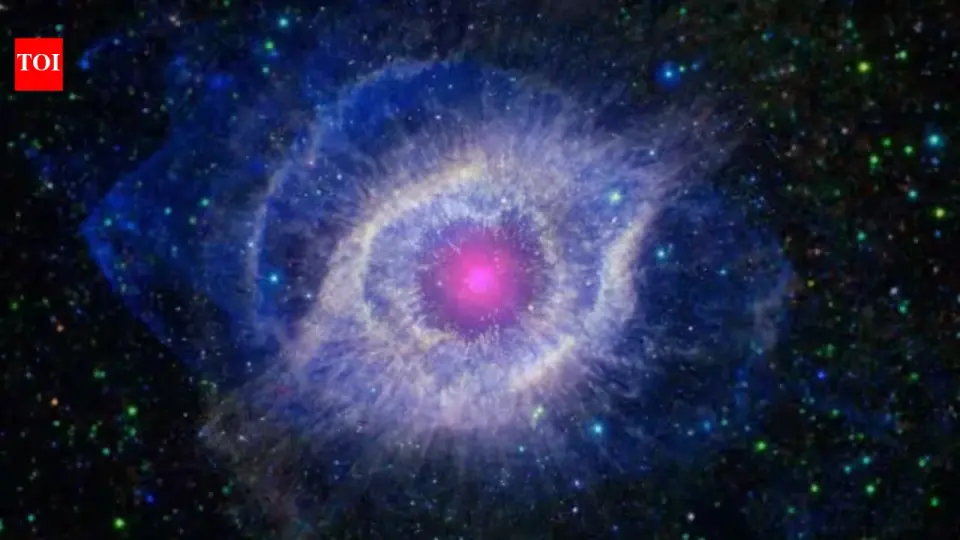
An unfinished telescope array in Chile accidentally captured 22 bow shocks in the Helix Nebula, revealing how dying stars recycle material into the galaxy.
Key points
- MOTHRA, a modular array of 1,140 commercial lenses, detected 22 bow shocks in the Helix Nebula during calibration tests in November 2025.
- The discovery occurred with only five of its 30 mounts operational, capturing faint arcs in the nebula's outer halo.
- These bow shocks indicate that gas clumps from a dying star are being stripped and fragmented by the interstellar medium over roughly 10,000 years.
- The findings, published in Nature, provide the first direct observational evidence of the final stage of stellar material recycling into the galaxy.
- MOTHRA, built for tens of millions of dollars, is designed to trace faint cosmic web filaments and is scheduled for full completion by late 2026.
Background
This discovery follows recent milestones in large-scale telescope development, such as the European Southern Observatory’s Extremely Large Telescope rotation in July 2026. While previous studies theorized that stellar envelopes enrich the interstellar medium, direct observation of this dispersal had eluded astronomers until now.
How outlets are covering it
The Times of India emphasizes the accidental nature of the discovery and the low-cost engineering behind MOTHRA. Universe Today highlights the specific morphological changes in the bow shocks, noting how they transition from thin and sharp to fuzzy and fragmented with distance. Space Daily provides technical detail on the shock velocities and the geometric analysis used to determine the 10,000-year fragmentation timescale. All sources agree that this finding bridges a gap in understanding how elements like carbon and oxygen are recycled into future stellar nurseries.
Why it matters
This observation validates theoretical models of galactic recycling by providing a benchmark for the timescale of stellar debris assimilation. It confirms that the final stage of a star's life involves the rapid breakdown of ejected material, a process crucial for the formation of new stars and planets.
What to watch
Astronomers plan to confirm these findings in other planetary nebulae to determine if the mixing timescale depends on shock velocities. MOTHRA is expected to reach full operational capacity by the end of 2026, allowing for more detailed observations of the cosmic web.
- How an accidental discovery by underconstruction Telescope in Chile captured one of Astronomy’s missing l The Times of India
- MOTHRA Shows Us A Star Being Recycled in the Helix Nebula Universe Today
- Scientists find dead star that predicts our sun's future. 'Broken apart and returned to the galaxy' Space
- A telescope array still in early construction was pointed at the Helix Nebula and came back with 22 arcs of shocked gas in the faint outskirts — each one carved by an invisible clump of a dead star's ejecta that interstellar space is pulling apart Space Daily
- Dead Star Reveals How the Sun Will End in 5 Billion Years tovima.com
Want the full story? Read the original reporting
Read on The Times of India