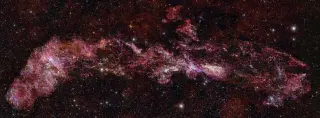
New eROSITA X-ray maps reveal the Local Hot Bubble around the Sun is jagged and extended, with a north-south temperature split and possible tunnels linking to neighboring cavities, suggesting the solar neighborhood is part of a connected, dynamic interstellar network shaped by past supernovae.
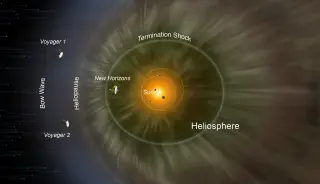
SwRI researchers merged a solar wind forecasting method with heliosphere models to predict where New Horizons will encounter the termination shock, the outer boundary of the heliosphere. They estimate the crossing could occur between 2029 and 2040, with the possibility of multiple crossings as the heliosphere expands and contracts, helping plan future measurements at the solar system's edge.
A 2009 detection of ethyl formate in Sagittarius B2 helped fuel the popular claim that space tastes like raspberries; however, ethyl formate is only one of many molecules in a vast, tenuous cloud, and the larger, more significant finding was the identification of n-propyl cyanide, showing complex organics can form in interstellar space. The raspberry framing is an oversimplification: the cloud’s chemistry does not equate to a space flavor, and space does not smell like raspberries—astronauts describe spaceflight smells as metallic. The broader takeaway is that complex organic chemistry, potentially related to prebiotic processes, can begin in interstellar environments long before planets form, though unambiguous amino acids have yet to be detected in space.
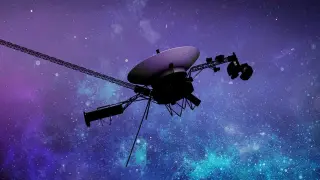
NASA’s Voyager 1 is set to reach exactly one light-day from Earth in November 2026, about 25.9 billion kilometers away, continuing to send science data despite aging power and limited instruments. It has already crossed the termination shock and heliopause into the interstellar medium, but remains far from the Solar System’s edge; by around 2036 it could become undetectable, after which it will drift through the Milky Way for eons as a relic of humanity’s first grand interstellar-leaning probes.
A new study detects iron-60 in Antarctic ice aged 40,000–80,000 years, tying Earth’s passage through the Local Interstellar Cloud to debris from a past supernova. Using accelerator mass spectrometry on hundreds of kilograms of ice and corroborating isotopes, researchers show the cloud around the Solar System contains material from an ancient stellar explosion, with the iron-60 signal varying over tens of thousands of years and supporting the idea that our cosmic neighborhood records such events.
Astronomers released the largest, most detailed image of the Milky Way's center, created with ALMA's 66 antennas to map cold molecular gas and dust at millimeter wavelengths. The mosaic reveals intricate gas filaments and molecular fingerprints, offering new insight into how stars form in the extreme environment around the galactic center, including a mysterious millimeter ultra-broad line object (MUBLO) detected only by ALMA. The project will be complemented by JWST observations to place our Galaxy in broader cosmic context and to inform theories of solar-system formation.
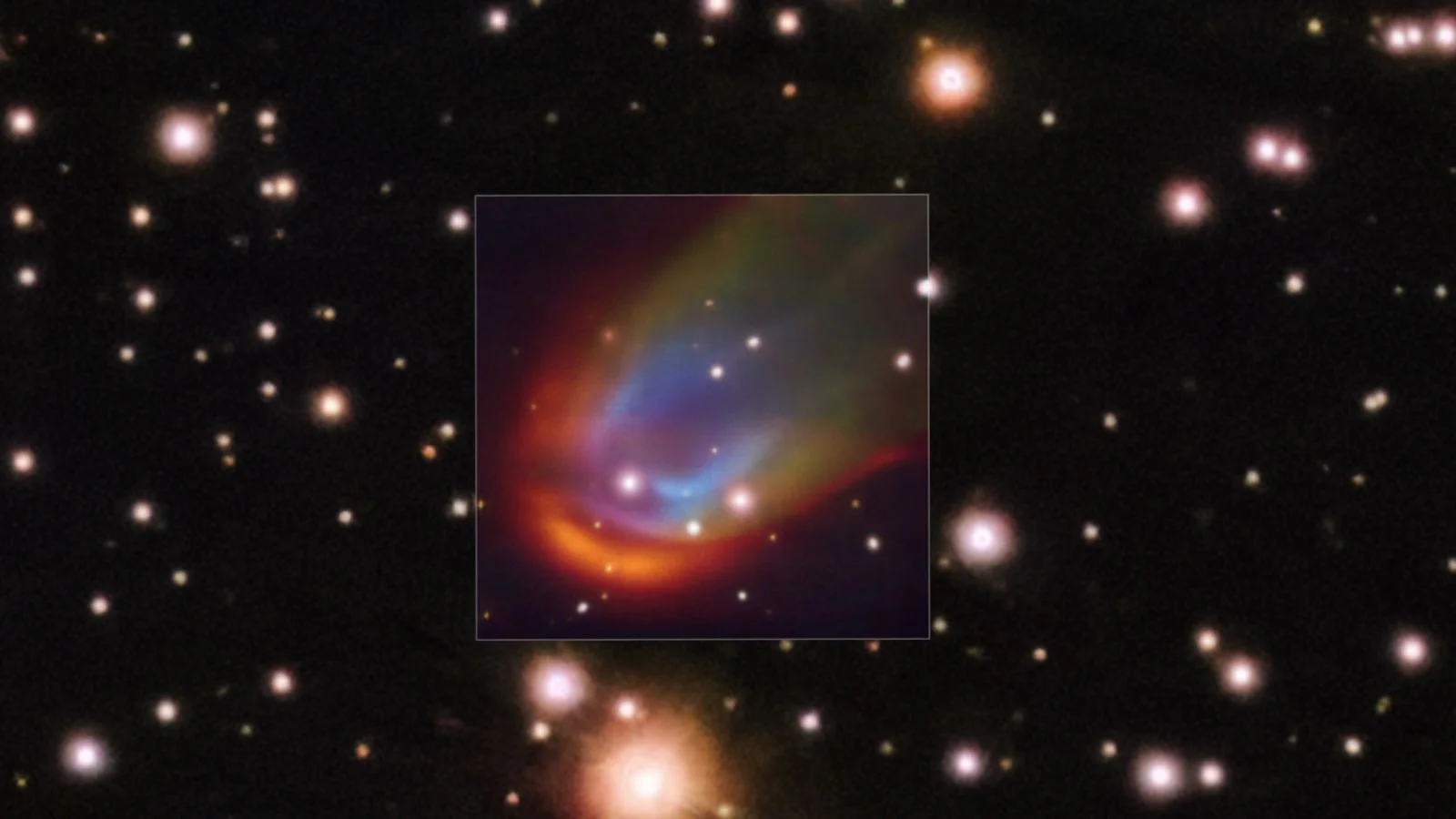
Astronomers using the VLT have spotted a rainbow-colored bow shock around RXJ0528+2838, a white dwarf in a binary about 730 light-years away. The nebula, extending ~4,000 AU and at least 1,000 years old, surrounds a diskless system that is actively pulling material from its companion. Researchers believe an extremely strong magnetic field powers an unusual, outflow-like phenomenon—the so-called mysterious engine—without a traditional accretion disk, challenging current models of mass transfer in binary systems. The finding, published in Nature Astronomy, suggests more such systems may exist and could be studied in detail with the upcoming ELT set to go online by 2028.
NASA's Voyager probes confirmed a hot, dynamic boundary called the heliopause at the edge of the solar system, characterized by temperatures up to 50,000 kelvin, providing new insights into the solar system's interaction with interstellar space.
NASA's Voyager 1 probe discovered a hot boundary at the edge of the solar system, where temperatures reach up to 50,000°C, caused by the interaction of solar and interstellar winds, forming the heliosphere's boundary known as the heliopause, which protects us from interstellar radiation.
Using data from the now-collapsed Arecibo radio telescope, SETI scientists have studied how pulsar signals are distorted by the interstellar medium, revealing that current models of the universe may need revision. This research, led by Sofia Sheikh, highlights the importance of archived data and its role in understanding cosmic phenomena like gravitational waves. The findings suggest that galactic structures, such as the Milky Way's spiral arms, influence these distortions, which could refine gravitational wave detection methods.
Scientists from the SETI Institute have used archival data from the now-collapsed Arecibo Observatory to study how signals from pulsars, rapidly spinning neutron stars, are distorted as they travel through space. The research focused on diffractive interstellar scintillation (DISS), revealing that pulsar signal bandwidths are wider than current models suggest, indicating a need to revise models of the interstellar medium. This study highlights the ongoing scientific value of Arecibo's data, even after its destruction, in understanding galactic structures and phenomena like gravitational waves.
Scientists are exploring mission concepts for an interstellar probe to travel beyond the sun's heliosphere and understand its boundaries and shape. A study recommends an exit route through the heliosphere's tail end to maximize scientific measurements. The mission aims to collect samples from the local interstellar medium and provide unprecedented insights into the heliosphere's interaction with the interstellar environment. This research challenges previous assumptions about the optimal trajectory for the interstellar probe and emphasizes the importance of additional measurements outside the heliosphere to determine its shape and boundaries.
NASA is launching the GUSTO experiment, a balloon-borne telescope, to scan the space between stars in the Milky Way and listen for cosmic ingredients. GUSTO will create a 3D map of a region of the galaxy using high-frequency radio waves, searching for signals of carbon, oxygen, and nitrogen in the interstellar medium. By studying this space, scientists hope to understand how stars and planets form and how galaxies evolve. The balloon will float over Antarctica for at least 55 days, allowing GUSTO to observe without interference from water vapor in Earth's atmosphere.
NASA is set to launch the GUSTO experiment, which involves a balloon telescope floating over Antarctica to gather data and create a 3D map of a portion of the Milky Way Galaxy. The telescope will study the interstellar medium, looking for signals of carbon, oxygen, and nitrogen to understand how stars and planets form. The mission will also reveal the 3D structure of the Large Magellanic Cloud, a dwarf galaxy near the Milky Way. GUSTO is part of NASA's Explorers Program, which aims to provide flight opportunities for scientific investigations in space.
Astronomers have discovered the oldest and most powerful fast radio burst (FRB) ever observed, originating from deep space eight billion years ago. The burst, which lasted only milliseconds, contained as much energy as the sun emits in 30 years. FRBs provide valuable insights into the intergalactic medium and the evolution of the universe. The researchers used the Australian Square Kilometer Array Pathfinder (ASKAP) and the Very Large Telescope in Chile to determine the source galaxy and study the dispersion of intergalactic particles.