
Ancient cave art may depict the world's oldest image of a mind-altering plant
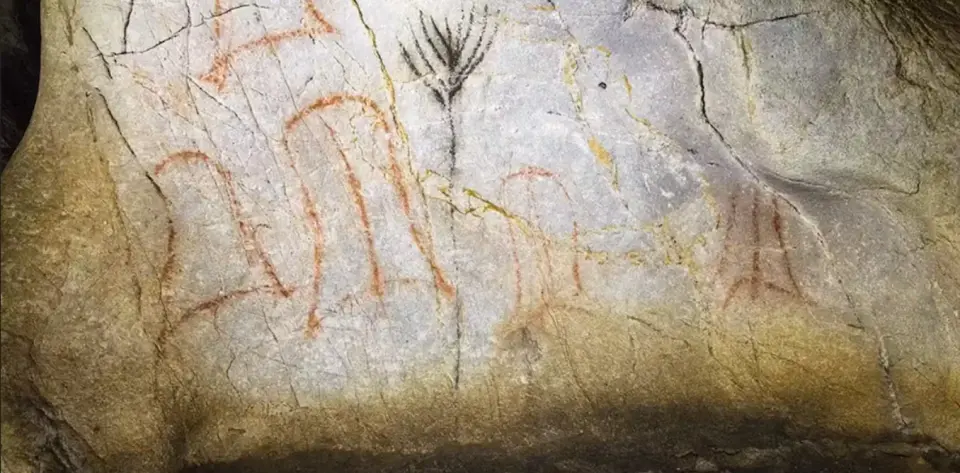
A researcher argues that five red, bell-shaped signs in El Castillo cave in northern Spain, dating to 17,000–15,000 years ago, depict psychoactive nightshade flowers like belladonna or henbane. If correct, this would be the oldest known image of a mind-altering plant, predating similar depictions by thousands of years. The claim is supported by visual similarities to the flowers and the presence of an altar-like stone ledge beneath the signs, though it remains unverified by direct chemical evidence.
Key points
- The panel in El Castillo cave, created 17,000–15,000 years ago, features five red signs shaped like bells, which have long been catalogued as abstract ice age marks.
- Benjamin Pothier, a researcher at the University of Plymouth, argues these signs depict psychoactive nightshade flowers, specifically belladonna or henbane, based on their flared, five-lobed shape and central veins.
- The signs are positioned above a natural stone ledge resembling an altar, suggesting ritual use, and are part of a deliberate grouping rather than random marks.
- If the interpretation is correct, it would push the earliest known image of a mind-altering plant back by 7,000–10,000 years, predating similar depictions in the Sahara and China.
- The claim is testable through modern environmental DNA analysis of sediment at the site, which could detect traces of the nightshade family (Solanaceae), though no such confirmation has yet been published.
Background
This interpretation builds on Pothier’s 2021 argument that a tree in China’s Chu Silk Manuscript depicted a psychoactive plant used in spirit communication. It also aligns with broader evidence of psychoactive plant use in European history, including chemical traces in Bronze Age hair from Menorca and the use of belladonna in witch trials. The claim contrasts with older interpretations that viewed such shapes as female symbols, a view challenged by paleoanthropologist Genevieve von Petzinger. A 2023 survey found plants make up only 0.07% of catalogued Paleolithic cave art, suggesting such depictions may be overlooked.
Why it matters
If confirmed, this finding would fundamentally reshape the timeline of human interaction with psychoactive substances, linking the origins of art and ritual to the use of mind-altering plants at the very dawn of the Upper Paleolithic. It challenges the assumption that such depictions began in the Neolithic and highlights how modern analytical tools can re-examine long-ignored archaeological details.
What to watch
The claim awaits verification through environmental DNA analysis of sediment at El Castillo cave. If traces of Solanaceae are found, it would provide physical corroboration for the interpretation. Further field studies may also examine other cave sites for similar overlooked plant depictions.
Want the full story? Read the original reporting
Read on The Conversation