Tag

Paleolithic Art

All articles tagged with #paleolithic art

280 Ice Age Engravings Uncovered in Catalan Cave Visited by Tourists for Decades
science17 days ago

280 Ice Age Engravings Uncovered in Catalan Cave Visited by Tourists for Decades

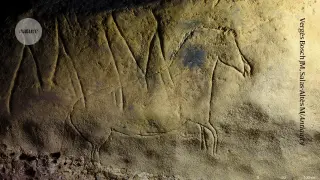
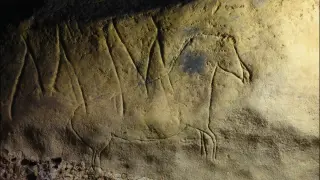
Archaeologists have identified 280 Paleolithic engravings in the Cova de la Font Major in Catalonia, Spain, a site open to tourists since the 1950s. The discovery, published in Antiquity, includes 55 animal figures and abstract shapes dating to approximately 26,000 years ago. The find challenges the assumption that northeastern Iberia lacked significant Ice Age art and suggests a distinct Mediterranean artistic tradition separate from the Franco-Cantabrian region.
Archaeologists Uncover 280 Ice Age Engravings in Long-Visited Spanish Cave
science18 days ago

Archaeologists Uncover 280 Ice Age Engravings in Long-Visited Spanish Cave

Researchers at the Catalan Institute of Human Palaeoecology and Social Evolution identified 280 prehistoric engravings in the Cova de la Font Major in Catalonia, Spain. Discovered in 2019, the art includes 55 animal figures and geometric shapes dating to at least 19,000 years ago. The findings, published in Antiquity, challenge previous assumptions that the cave's soft walls were unsuitable for such artwork and highlight a distinct Mediterranean graphic tradition.

1940 Discovery of Lascaux Cave: How a Dog-Led Accident Changed Art History
history1 month ago

1940 Discovery of Lascaux Cave: How a Dog-Led Accident Changed Art History

In 1940, four French teenagers, including 18-year-old Marcel Ravidat, discovered the Lascaux Cave after following a dog into a hole on a hillside. The site contained 17,000-year-old paintings of animals and geometric engravings. Public tourism later damaged the fragile environment, leading to its closure in 1963 and the creation of replicas like Lascaux IV.

Ice Age Artists Mimicked Mammoth Tusk Growth Rings in 18,000-Year-Old Ukrainian Figurines
science2 months ago

Ice Age Artists Mimicked Mammoth Tusk Growth Rings in 18,000-Year-Old Ukrainian Figurines

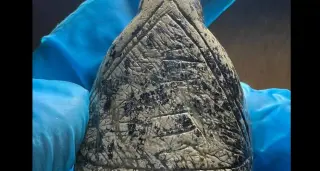
New research reveals that Ice Age artists in Ukraine deliberately incorporated natural growth patterns from mammoth tusks into the designs of 18,000-year-old female figurines. By analyzing 18 artifacts from the Mizyn site using 3D digital modeling, scientists found that engravings like zigzags and meanders closely matched the Schreger and Owen lines found in the ivory. This finding challenges the traditional view that Stone Age art evolved linearly from simple to complex, suggesting instead that Eastern European artists developed independent artistic traditions influenced by the material itself. The study, conducted amid the Russian-Ukrainian war, highlights the importance of digital preservation for cultural heritage at risk from conflict.

Ancient cave art may depict the world's oldest image of a mind-altering plant
science-tech3 months ago

Ancient cave art may depict the world's oldest image of a mind-altering plant

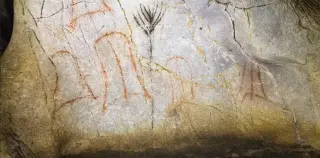
A researcher argues that five red, bell-shaped signs in El Castillo cave in northern Spain, dating to 17,000–15,000 years ago, depict psychoactive nightshade flowers like belladonna or henbane. If correct, this would be the oldest known image of a mind-altering plant, predating similar depictions by thousands of years. The claim is supported by visual similarities to the flowers and the presence of an altar-like stone ledge beneath the signs, though it remains unverified by direct chemical evidence.

"Unearthing France's Carbon-Based Cave Art Unlocks Precise Radiocarbon Dating"
archaeology2 years ago

"Unearthing France's Carbon-Based Cave Art Unlocks Precise Radiocarbon Dating"

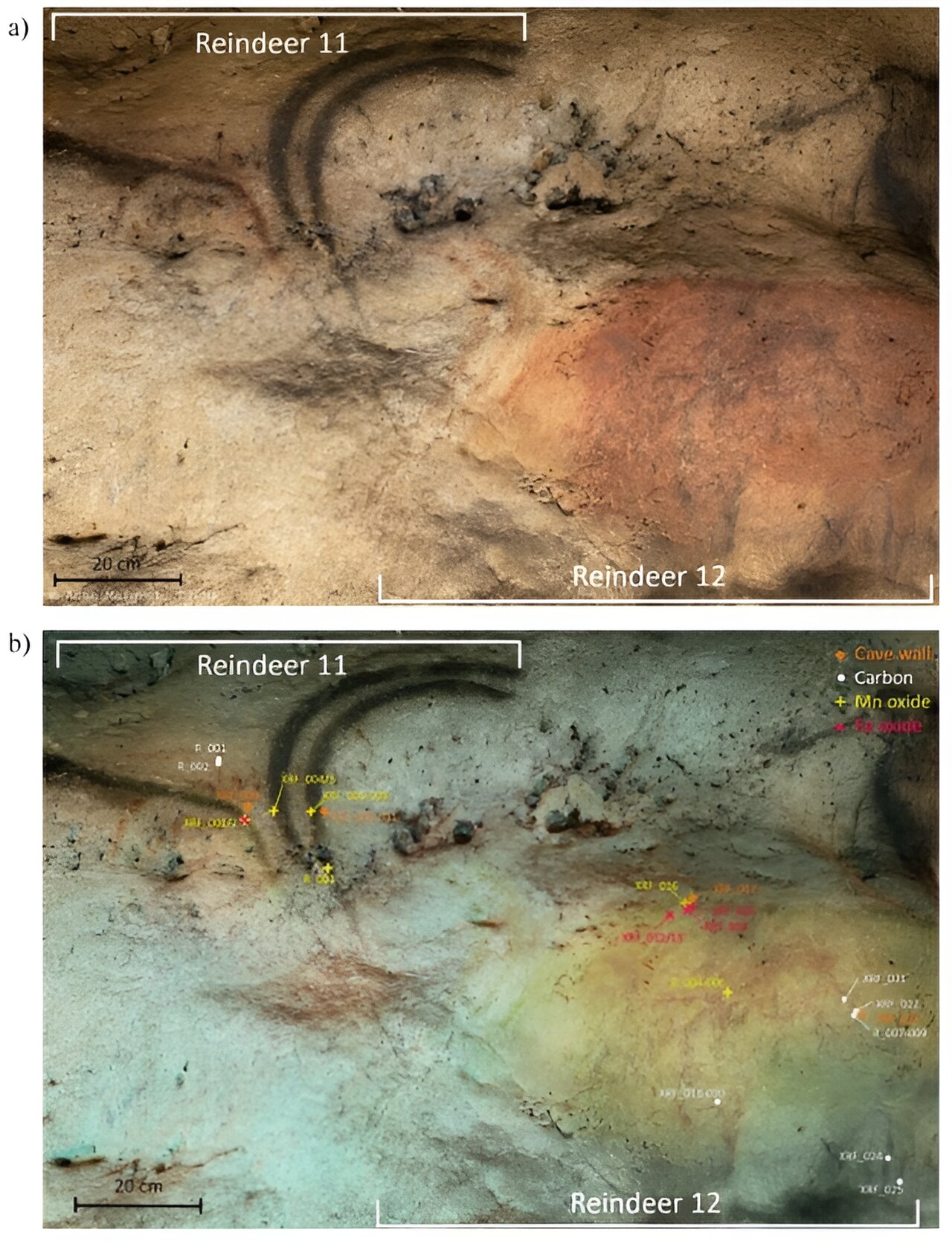
Researchers have made the first discovery of carbon-based cave art in France's Dordogne region, specifically in the Font-de-Gaume cave. This breakthrough could potentially allow for precise radiocarbon dating of the art, which has previously been challenging due to its coloration with iron- or manganese-oxide-based material. The findings open up new opportunities for reevaluating existing art in the region and improving our understanding of the creation phases and inter-regional comparisons of Paleolithic art. Non-invasive analytical methods, such as visible-light and infrared photography, portable X-ray fluorescence, and micro-Raman spectroscopy, were used to study the carbon-based drawings beneath the iron and manganese oxide-based pigments.