
Standardizing Microbiome Research: A Roadmap for Reproducible Multi-Omics Integration
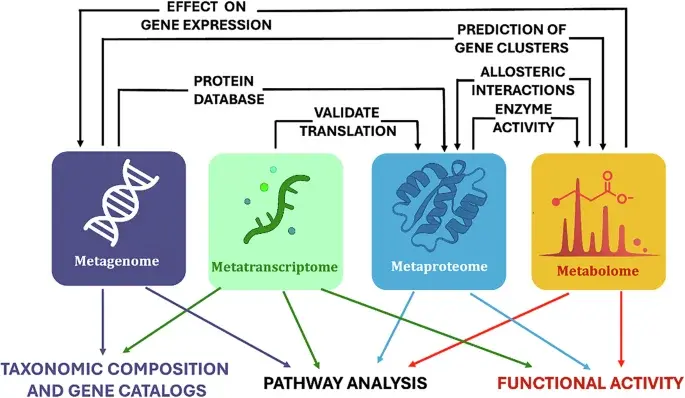
A new perspective in Nature Communications argues that the primary bottleneck in microbiome research has shifted from data generation to reproducible interpretation. Authors propose a collaborative roadmap to standardize experimental design, metadata, and computational workflows to ensure that multi-omics studies yield meaningful biological insights rather than just increased data volume.
Key points
- The central challenge in microbiome science is now the reproducible interpretation of complex, multi-layered datasets rather than the generation of the data itself.
- Effective multi-omics integration requires aligning specific molecular layers (genomic, transcriptomic, proteomic, metabolomic) with specific biological questions, rather than simply adding layers for the sake of complexity.
- Current obstacles include non-standardized outputs, heterogeneous analytical strategies, and incomplete reference databases that hinder cross-study comparability.
- The authors recommend a hierarchy of best practices, starting with foundational requirements like shared sample sourcing and standardized metadata, moving to integration and benchmarking, and finally ecosystem-wide infrastructure.
- Future progress depends on FAIR-compliant data, community-driven benchmarking consortia, and the development of AI models capable of handling complex, standardized microbiome datasets.
Background
Recent studies have highlighted the utility of multi-omics in understanding complex biological states, such as viral reactivation in COVID-19 patients and cellular senescence. However, these efforts often face challenges in standardizing data across different platforms. This new perspective addresses the need for a unified framework to ensure that such complex analyses are reproducible and comparable across global research initiatives.
Why it matters
Standardizing multi-omics workflows is critical for translating microbiome research into clinical and environmental applications. Without reproducible interpretation, the massive volume of data generated by modern sequencing and mass spectrometry technologies risks becoming unusable for developing precision therapeutics or sustainable agricultural practices. A standardized approach ensures that findings are robust, comparable, and ready for AI-driven analysis.
What to watch
The scientific community is expected to move toward coordinated international efforts to create benchmark datasets and interoperable repositories. This includes the development of community-driven consortia to define standardized evaluation metrics for AI models and the implementation of FAIR (Findable, Accessible, Interoperable, Reusable) data principles to facilitate global collaboration and reproducibility.
Want the full story? Read the original reporting
Read on Nature