
Caltech researchers use new algorithm to visualize black hole jet in 3D
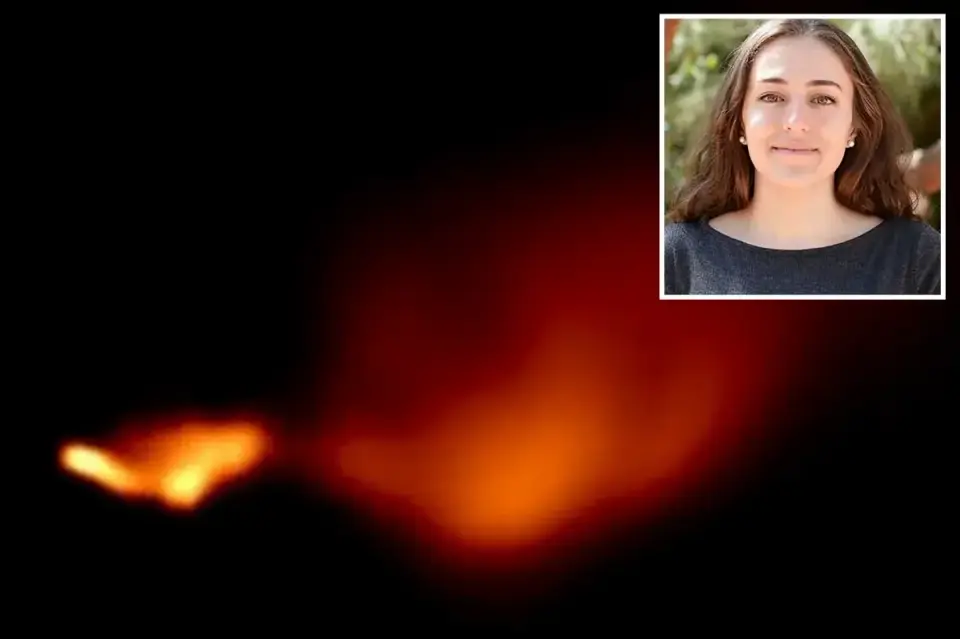
Caltech astrophysicists have released a high-resolution video of a supermassive black hole’s plasma jet using a new neural field algorithm called 'kine.' The footage, derived from 27 years of data on the blazar 3C 345, allows scientists to observe different parts of the jet moving at varying speeds, a capability previously limited to overall velocity tracking.
Key points
- The video focuses on blazar 3C 345, located approximately 5.5 billion light-years away in the constellation Hercules.
- The 'kine' algorithm reconstructs 116 observations from the MOJAVE program, recorded between 1995 and 2022 at 15 GHz.
- Lead researcher Dr. Marianna Foschi notes that the new technology provides high resolution and contrast without requiring new telescope hardware.
- The visualization reveals linear polarization and velocity fields within the inner jet, showing that different sections move at different speeds.
- This breakthrough allows for a clearer view of the universe by processing existing data rather than relying on next-generation sensors.
Background
Recent astronomical studies have focused on the mechanics of black hole jets, including research on tidal disruption events that show predictable jet bursts after a star is devoured. Additionally, the identification of nearby black holes like Gaia BH1 and the discovery of triple black hole systems in distant galaxies have expanded our understanding of black hole formation and growth. These recent findings provide a backdrop for the new visualization techniques that allow for more detailed observation of jet dynamics.
Why it matters
This advancement in data processing allows astronomers to extract more detailed information from existing telescope data, potentially revealing complex dynamics in black hole jets that were previously invisible. It demonstrates how software innovation can enhance observational capabilities without the need for new hardware, making high-resolution astrophysical studies more accessible and cost-effective.
What to watch
Researchers may apply the 'kine' algorithm to other datasets to further analyze the behavior of blazars and other active galactic nuclei. This could lead to a better understanding of how magnetic fields and accretion processes influence jet formation and propagation over time.
Want the full story? Read the original reporting
Read on New York Post