Tag

Caltech

All articles tagged with #caltech

Teenager’s AI Algorithm Catalogs 1.5 Million Variable Sky Objects from NASA Archive
science2 days ago

Teenager’s AI Algorithm Catalogs 1.5 Million Variable Sky Objects from NASA Archive

Matteo Paz, a high school student in Pasadena, California, developed a machine-learning pipeline to analyze NASA’s NEOWISE infrared data. His algorithm identified 1.5 million previously unknown variable light sources, including quasars and supernovae. The resulting catalog, published in The Astronomical Journal, is now being used by major observatories like the Vera C. Rubin Observatory to process real-time alerts. This achievement highlights how accessible AI tools are enabling non-traditional researchers to drive significant astronomical discoveries.

Caltech Professor Abandons Accuracy Grading as AI Solves Math Homework
education7 days ago

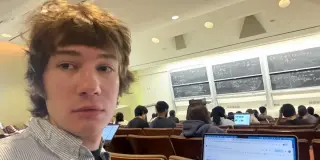
Caltech Professor Abandons Accuracy Grading as AI Solves Math Homework

Caltech mathematics professor Yi Ni has stopped grading homework for correctness because students are using AI to complete assignments. He now evaluates work solely on completion. This shift reflects a broader trend where AI can solve undergraduate-level math problems, prompting changes in syllabi and grading policies across the university.

Caltech’s ASTRA Robot Completes First Autonomous Space Structure Assembly
technology8 days ago

Caltech’s ASTRA Robot Completes First Autonomous Space Structure Assembly

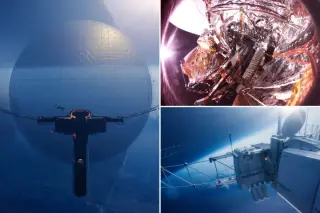
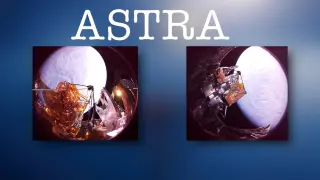
A robot developed by Caltech and DARPA has successfully assembled a structural section in low Earth orbit for the first time. The ASTRA system built part of a 1.4-meter reflector antenna using raw materials, proving that large space structures can be constructed autonomously rather than pre-built on Earth. Although technical issues prevented the completion of the full antenna, the demonstration validates a new method for building massive infrastructure in orbit.

Caltech robot completes first autonomous structure assembly in orbit
science-and-technology13 days ago

Caltech robot completes first autonomous structure assembly in orbit

A robotic system developed by Caltech has successfully assembled a structural section in low Earth orbit for the first time, marking a milestone in autonomous space construction. The demonstration, part of DARPA’s NOM4D program, proved that large structures can be built from raw materials in orbit rather than being folded or manually assembled by astronauts. Although the mission did not complete the full antenna due to technical challenges, it validated the feasibility of scaling construction to kilometer-sized structures for future telescopes and solar arrays.

Caltech robot assembles first autonomous space structure, validating DARPA’s NOM4D program
space13 days ago

Caltech robot assembles first autonomous space structure, validating DARPA’s NOM4D program

A robotic system developed by Caltech successfully assembled a structural section in low Earth orbit for the first time, marking a milestone in autonomous space construction. The demonstration, part of DARPA’s NOM4D program, proved that large structures can be built from raw materials in orbit rather than being folded or manually assembled by astronauts. Although the mission did not complete the full antenna due to technical challenges, it validated the feasibility of scaling construction to kilometer-sized structures for future telescopes and solar arrays.

Caltech robot autonomously assembles first space structure, validating DARPA's NOM4D program
technology14 days ago

Caltech robot autonomously assembles first space structure, validating DARPA's NOM4D program

A robotic system developed by Caltech successfully assembled a structural section in low Earth orbit for the first time, marking a milestone in autonomous space construction. The demonstration, part of DARPA's NOM4D program, proved that large structures can be built from raw materials in orbit rather than being folded or manually assembled by astronauts. Although the mission did not complete the full antenna due to technical challenges, it validated the feasibility of scaling construction to kilometer-sized structures for future telescopes and solar arrays.

Caltech’s New President Faces JPL Contract Auction and Visa Scrutiny
science-and-policy25 days ago

Caltech’s New President Faces JPL Contract Auction and Visa Scrutiny

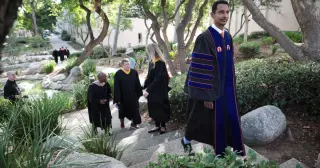
Astrophysicist Ray Jayawardhana was inaugurated as Caltech’s 10th president on Oct. 29, taking over during a period of significant institutional stress. He faces the first competitive bid for the Jet Propulsion Laboratory management contract, a federal investigation into international student visas, and shifting federal funding policies. While Caltech has secured new private funding and increased its federal research grants, the university is navigating reduced graduate admissions and a high-stakes competition to retain its decades-old partnership with NASA.

Solar System Collapse Timeline Shortened to One Billion Years by New Study
science1 month ago

Solar System Collapse Timeline Shortened to One Billion Years by New Study

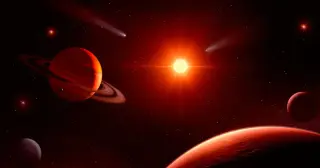
A new study led by Konstantin Batygin suggests the outer solar system will collapse within one billion years after the Sun becomes a white dwarf, a timeline a billion times shorter than previous estimates. The research indicates that random, violent mass ejections from the dying Sun, rather than smooth mass loss, will destabilize planetary orbits. While earlier models predicted stability for trillions of years, this analysis shows stochastic 'kicks' will trigger violent scattering, potentially ending the solar system's existence far sooner than anticipated.

Caltech Study: Random Solar Mass Ejections Will Destroy Outer Planets in 1 Billion Years
science1 month ago

Caltech Study: Random Solar Mass Ejections Will Destroy Outer Planets in 1 Billion Years

A new study led by Konstantin Batygin at Caltech argues that the outer solar system will collapse within one billion years after the Sun becomes a white dwarf, a timeline a billion times shorter than previous estimates. The research suggests that random, violent mass ejections from the dying Sun, rather than smooth mass loss, will destabilize the orbits of Jupiter, Saturn, Uranus, and Neptune. While earlier models predicted stability for trillions of years, this new analysis indicates that stochastic 'kicks' from the Sun will trigger violent scattering, potentially ending the solar system's existence far sooner than anticipated.

Solar System Collapse Timeline Shortened by Billion-Fold Due to Random Solar Mass Ejections
science1 month ago

Solar System Collapse Timeline Shortened by Billion-Fold Due to Random Solar Mass Ejections

New research from Caltech indicates the outer planets will be ejected from the solar system roughly one billion years after the Sun becomes a white dwarf, a timeline a billion times shorter than previous estimates. The study attributes this accelerated collapse to random, violent mass ejections from the dying Sun, which destabilize planetary orbits far sooner than smooth mass loss models predicted.

Caltech researchers use new algorithm to visualize black hole jet in 3D
science2 months ago

Caltech researchers use new algorithm to visualize black hole jet in 3D

Caltech astrophysicists have released a high-resolution video of a supermassive black hole’s plasma jet using a new neural field algorithm called 'kine.' The footage, derived from 27 years of data on the blazar 3C 345, allows scientists to observe different parts of the jet moving at varying speeds, a capability previously limited to overall velocity tracking.

OpenAI Withdraws From Caltech Math Hackathon Amid 'Slop Mathematics' Backlash
technology2 months ago

OpenAI Withdraws From Caltech Math Hackathon Amid 'Slop Mathematics' Backlash

OpenAI has withdrawn its sponsorship from Caltech's upcoming 'math hackathon' following a public backlash from mathematicians who criticized the event as exploitative. The dispute centers on allegations that AI companies claim credit for solving complex theoretical problems while leaving the verification and practical application work to human researchers, a practice critics label 'slop mathematics.' This withdrawal follows recent controversies over OpenAI's solution to the Navier-Stokes equations and broader concerns about AI's impact on mathematical norms.

Fast radio bursts offer new lens on dark matter and cosmic structure
science2 months ago

Fast radio bursts offer new lens on dark matter and cosmic structure

A study published in Nature Astronomy demonstrates that fast radio bursts (FRBs) can effectively map the distribution of ordinary matter in the universe. By analyzing approximately 100 FRBs, researchers from Caltech and the University of Arizona measured how galactic feedback smooths out matter clumps. This method provides constraints competitive with major X-ray and microwave surveys, offering a new tool to investigate dark matter, dark energy, and neutrino mass.

Teenager’s AI Code Uncovers 1.5 Million Hidden Cosmic Objects in Decade-Old Data
science2 months ago

Teenager’s AI Code Uncovers 1.5 Million Hidden Cosmic Objects in Decade-Old Data

Matteo Paz, a high school senior from Pasadena, utilized machine learning to analyze 200 billion raw infrared data points from the retired NEOWISE telescope, identifying 1.5 million potential new celestial objects. His work, published in The Astronomical Journal, won the 2025 Regeneron Science Talent Search top prize and led to his employment at Caltech’s IPAC.

Nevada Desert to Welcome 1,650-Dish Deep Synoptic Array
science5 months ago

Nevada Desert to Welcome 1,650-Dish Deep Synoptic Array

Caltech’s Deep Synoptic Array will be built in Nevada’s White Pine County as a 1,650-dish radio telescope network designed to survey the sky 100 times faster and produce sharper radio images, enabling precise localization of radio sources for follow-up by optical, infrared and X-ray observatories; funded by Schmidt Sciences, with prototype dishes already built and construction planned to begin next year and finish by 2029.