
JWST Spots a Black Hole Star Lighting Up the Early Universe
TL;DR
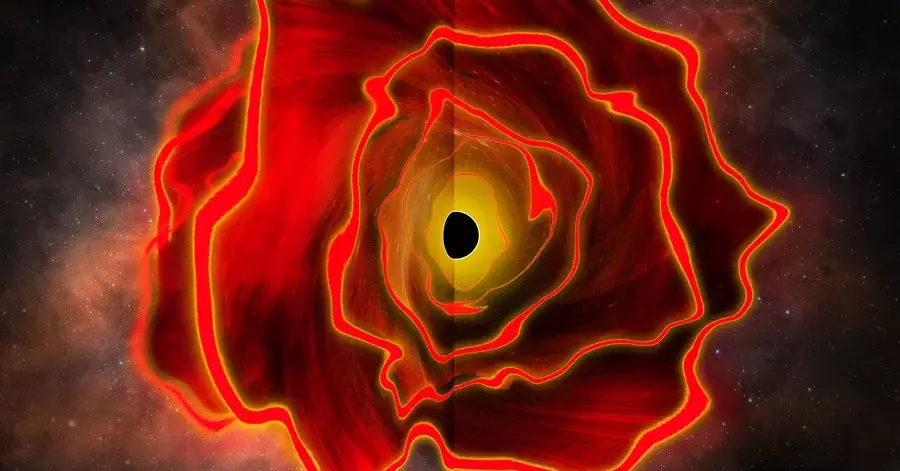
Using the James Webb Space Telescope, scientists describe MoM-BH*-1—a black hole embedded in a massive, luminous gas envelope that glows bright red about 660 million years after the Big Bang. The object emits energy far exceeding normal stars, while dense surrounding gas absorbs light in a way that makes the source appear star-like. This provides evidence for the existence of black hole stars and may explain mysterious red spots seen in the early universe.
- Astronomers Discover the Existence of a Black Hole Star WIRED
- A gas-enshrouded and gas-reddened black hole at cosmic dawn Nature
- How the universe got its spots The Economist
- Astronomers discover a brand-new type of astrophysical object: A black hole star MIT News
- Astronomers Peered at the Early Universe and May Have Discovered a New Kind of Celestial Object: Black Hole Stars Smithsonian Magazine
Want the full story? Read the original reporting
Read on WIRED