
NASA LRO images reveal details of SpaceX rocket’s lunar impact crater
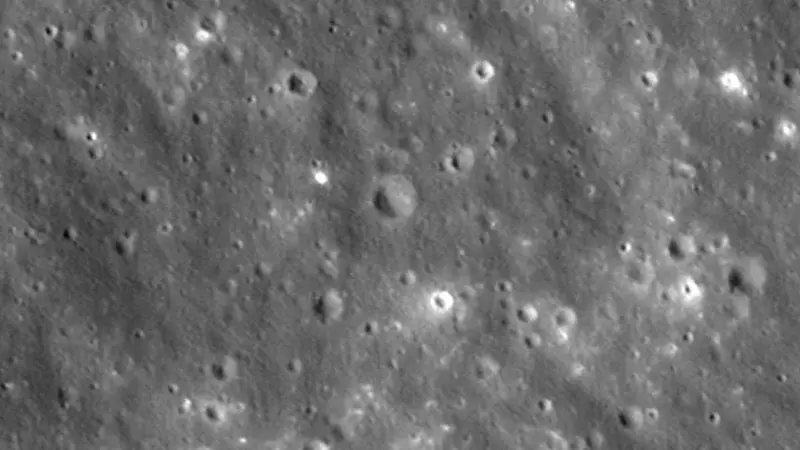
NASA’s Lunar Reconnaissance Orbiter (LRO) captured new images of a crater formed on August 5, 2026, when a discarded SpaceX Falcon 9 upper stage struck the Moon. The impact occurred 19 months after the stage was deployed in January 2025 for a Firefly Blue Ghost mission. LRO images, taken between August 11 and 12, show a crater approximately 60 feet wide and less than 10 feet deep. The event highlights growing concerns about space debris as crewed lunar missions are planned by 2030.
Key points
- NASA’s LRO captured images of the impact site between August 11 and 12, 2026, using its Narrow-Angle Camera.
- The crater is approximately 60 feet wide and less than 10 feet deep, with fresh material excavated from deeper underground.
- The SpaceX Falcon 9 upper stage had been drifting since a January 2025 launch, impacting the Moon at 8,700 kilometers per hour.
- South Korea’s Danuri orbiter initially located the crater, with NASA refining the coordinates to 19.4759°N, 266.7138°E.
- SpaceNews warns that future uncontrolled impacts could threaten planned crewed lunar missions by 2030.
Background
The impact was first confirmed on August 5, 2026, when a defunct SpaceX Falcon 9 second stage struck the Moon near Einstein Crater. Prior coverage noted the event posed no danger to Earth but raised concerns about space debris management. South Korea’s Danuri orbiter provided initial images, with NASA’s LRO expected to follow up for detailed analysis.
How outlets are covering it
NASA Science emphasized the technical challenges of capturing the images, noting the need for precise timing and viewing angles. SpaceNews focused on the broader implications, warning that future uncontrolled impacts could threaten crewed lunar missions. CNN highlighted the new images as a key development in understanding the impact site.
Why it matters
The incident underscores the growing problem of space debris and the need for better coordination to protect future lunar missions. As crewed landings are planned by 2030, ensuring the safety of the lunar surface becomes critical.
What to watch
NASA and SpaceX are discussing ways to prevent future lunar impacts. The LRO images will be used to refine techniques for tracking space debris and predicting impacts.
- New images reveal what happened when a SpaceX rocket slammed into the moon CNN
- NASA’s LRO Images Falcon 9 Crater on Moon, Learns New Details NASA Science (.gov)
- New images show moon crater carved by SpaceX rocket Yahoo
- A rocket crashed into the moon. It was harmless, but the next one might not be. SpaceNews
- Will the new moon race turn Earth's nearest neighbor into a dumping ground? Space
Want the full story? Read the original reporting
Read on CNN