
NASA Releases 800GB of Artemis II Data, Revealing Unexpected Lunar Colors and Impact Flashes
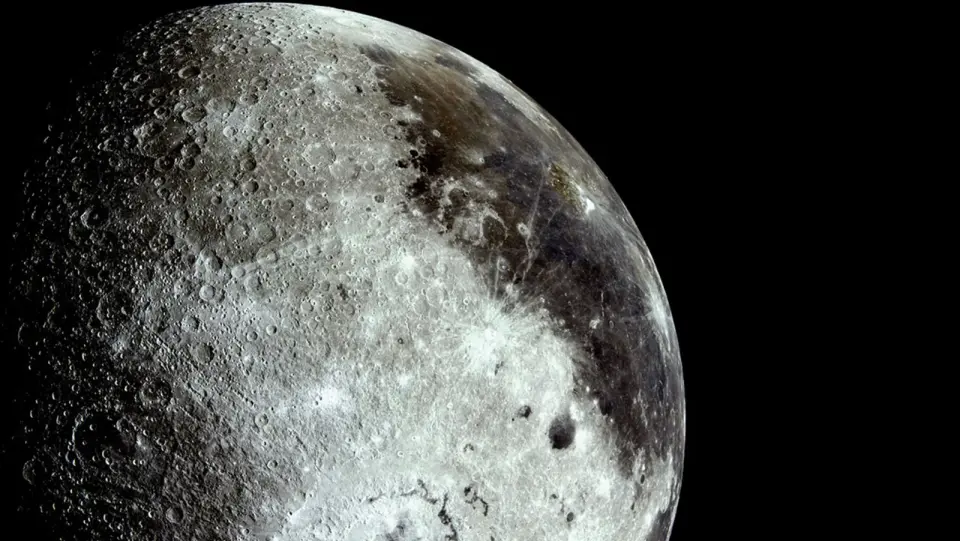
NASA has released a massive 800GB dataset from the Artemis II mission, including 11,000 images and audio logs. The data reveals unexpected 'swampy' and 'jaundiced' colors on the lunar surface and confirms five micrometeorite impact flashes, providing critical data for future lunar landings.
Key points
- NASA released approximately 800GB of Artemis II data, including 11,000 high-resolution images, 8.5 hours of audio, and crew notes, marking the first human-collected planetary science data in over 50 years.
- Crew members reported seeing distinct yellow, brown, green, and blue features on the moon, particularly at the Aristarchus Plateau, which contradicts the traditional view of the moon as monochromatic.
- The mission confirmed five faint 'pinprick' flashes of light caused by micrometeorite impacts, a key finding for assessing safety risks for future lunar bases and vehicles.
- The data includes detailed observations of the lunar terminator (day-night boundary), which will help engineers plan lighting and navigation for future missions near the south pole.
- The release includes three reports: the Preliminary Lunar Science Report, Lunar Science Operations Report, and Data User Guide, available via NASA's Planetary Data System.
Background
Artemis II, a 10-day crewed lunar flyby in April 2026, marked the first human mission to the moon in over 50 years. Following the mission, commanders Reid Wiseman and Victor Glover transitioned to emeritus roles at NASA, while Christina Koch remains active. This data release supports the planning for Artemis III in 2027 and a potential crewed landing in 2028.
How outlets are covering it
Live Science emphasizes the visual surprise of the moon's 'swamp-like' colors, highlighting crew descriptions of yellow and green hues. WIRED focuses on the scale of the data release (nearly 1TB) and its utility for planetary geologists and flight engineers. NASA's official release highlights the scientific value of the impact flash detections for safety assessments. Space.com notes the scientific community's enthusiastic reaction to the new findings.
Why it matters
This data is critical for the safety and success of future Artemis missions. Understanding lunar color variations helps identify geological features, while impact flash data informs risk assessments for astronauts and equipment. The detailed terminator observations will aid in navigation and lighting strategies for south pole landings.
What to watch
Scientists will analyze the 800GB dataset to refine lunar composition maps and safety protocols. NASA will use these findings to plan Artemis III and subsequent landings, potentially in 2028. The public can access the data via NASA's Planetary Data System and Artemis II science page.
- 'Swamp-like colors' on the moon: New 130-page NASA science report reveals strange sights from Artemis II mission Live Science
- Artemis II Crew Moon Photo Annotations NASA (.gov)
- 'Dude! No way!' Scientists jump for joy over Artemis II moon science results Space
- NASA Just Made Nearly 1 TB of Artemis II Data Available to the Public WIRED
- Hackaday Links: October 11, 2026 Hackaday
Want the full story? Read the original reporting
Read on Live Science