
Simulations suggest comets likely failed to deliver life's essential chemicals to Earth
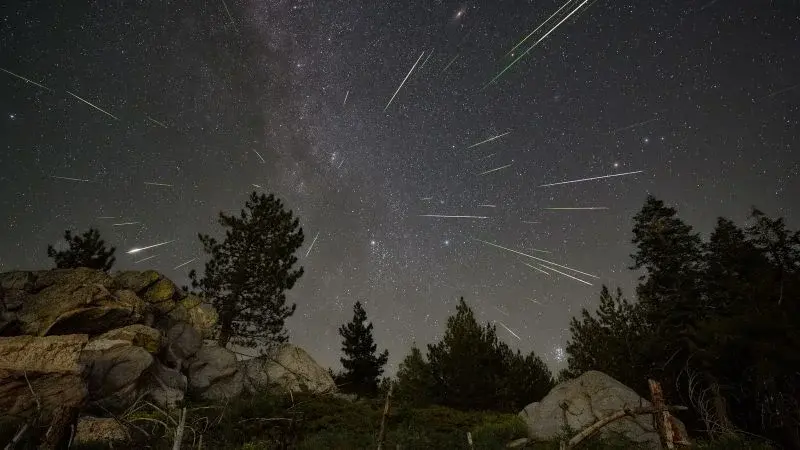
A new study challenges the long-held theory that comets seeded life on Earth. Researchers at the University of Cambridge ran 100,000 computer simulations to model the heavy bombardment Earth experienced over 4 billion years ago. The results indicate that comets struck the planet at velocities too high to preserve fragile organic molecules, specifically hydrogen cyanide (HCN). While comets contain these essential building blocks, the simulations suggest that successful delivery was an exceedingly rare 'fluke' rather than a steady source. This shifts scientific focus toward alternative origins, such as asteroid impacts or endogenous synthesis, and suggests Mars may have been a more viable target for cometary delivery due to lower impact velocities.
Key points
- The study, published in Scientific Reports, used 100,000 simulations to model early Earth's bombardment history.
- Comets struck Earth at high velocities, causing the destruction of key prebiotic molecules like hydrogen cyanide (HCN).
- 54% of the simulations showed no successful impact at all, while only a tiny minority resulted in any collisions.
- Even if a successful impact occurred, the chemical would likely have dissolved quickly or been present in insufficient concentrations.
- Alternative theories, such as asteroid impacts or Earth's own primordial soup synthesizing molecules, are now gaining prominence.
- Mars may have been a better candidate for cometary delivery due to its smaller size and lower impact velocities.
Background
This development follows recent challenges to other origin-of-life theories, such as the alkaline hydrothermal vent hypothesis. The cometary delivery theory dates back to 1961, with the broader concept of panspermia postulated in 1908. Previous archive coverage highlighted similar findings from Cambridge researchers, emphasizing that comets were not a reliable source for prebiotic chemistry on Earth.
Why it matters
Understanding how life's building blocks arrived on Earth is crucial for astrobiology and the search for extraterrestrial life. If comets were not the primary source, scientists must look to other mechanisms, such as asteroids or internal Earth processes, to explain the origin of life. This also impacts the interpretation of findings from Mars, where cometary delivery might have been more effective.
What to watch
Researchers will likely focus on alternative theories, such as asteroid impacts or endogenous synthesis, to explain the origin of life's building blocks. Further studies may explore the role of Mars in cometary delivery and the potential for life on other planets.
Want the full story? Read the original reporting
Read on CNN