
Study: Artemis II Launch Created Massive Ionospheric Disturbances Affecting GPS
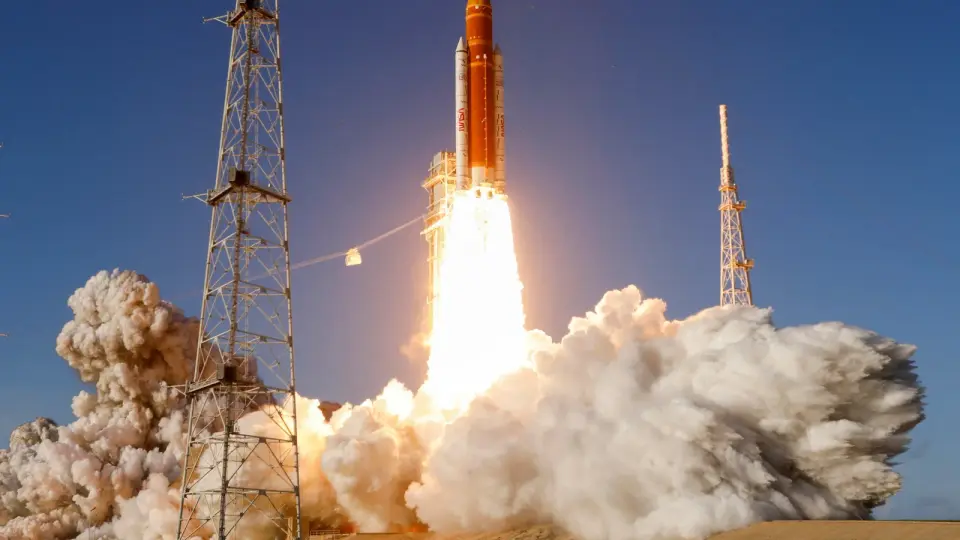
A new study indicates that the April 2026 launch of NASA’s Artemis II mission created unprecedented disturbances in Earth’s ionosphere, potentially affecting GPS accuracy. The powerful Space Launch System rocket and subsequent orbital maneuvers generated shock waves that altered electron density in the upper atmosphere. While no widespread GPS failure occurred, researchers warn that future heavy rocket launches could disrupt autonomous vehicles and communication systems. This finding highlights the growing impact of large-scale spaceflight on terrestrial technology as lunar missions increase in frequency.
Key points
- Artemis II launched on April 1, 2026, carrying four astronauts on a historic lunar flyby.
- The Space Launch System rocket generated 8.8 million pounds of thrust, making it NASA’s most powerful vehicle.
- Researchers from National Cheng Kung University in Taiwan identified three distinct ionospheric disturbances caused by the launch and orbital maneuvers.
- The disturbances stretched across North America, resembling 3,100-mile contrails, and were more intense than those from previous rocket launches.
- The study suggests these disturbances could cause meter-level GPS errors, posing risks to self-driving cars and drones.
- Artemis III is planned for late 2027 to test commercial lunar landers in Earth orbit.
Background
This development follows NASA’s successful Artemis II mission, which marked the first crewed lunar flyby in over 50 years. The mission set a new record for distance from Earth, reaching 252,756 miles. The findings add to ongoing discussions about the environmental and technological impacts of increasingly powerful rocket launches, such as SpaceX’s Starship, which is twice as powerful as the SLS based on liftoff thrust.
How outlets are covering it
USA TODAY and Space.com emphasize the sheer power of the SLS rocket and the unprecedented scale of the atmospheric disturbances, noting that the holes in the ionosphere stretched across the American continent. BBC Sky at Night Magazine highlights the potential future implications for GPS-dependent technologies like self-driving cars and drones, warning that as rocket launches become more frequent, these disruptions could become a significant operational risk. All sources agree that while the Artemis II launch did not cause widespread GPS failure, the ionospheric changes were more intense than those observed after other rocket launches, including SpaceX’s Starship test flights.
Why it matters
The study underscores the growing intersection between space exploration and terrestrial infrastructure. As NASA and private companies plan more frequent and powerful launches to the Moon and Mars, the potential for atmospheric disturbances to affect GPS, communications, and autonomous systems becomes a critical concern. Understanding these impacts is essential for mitigating risks to technology that relies on precise positioning and timing.
What to watch
NASA is preparing for Artemis III, scheduled for late 2027, which will test commercial lunar landers from Blue Origin and SpaceX in Earth orbit. The mission will involve a new crew, including astronauts Randy Bresnik, Andre Douglas, Frank Rubio, and Luca Parmitano. Future studies may further investigate the long-term effects of heavy rocket launches on the ionosphere and GPS systems.
- Artemis II moon launch was so powerful it punched a hole in atmosphere USA Today
- Artemis II launch tore a hole in Earth's atmosphere, say scientists BBC Sky at Night Magazine
- NASA rocket may have punched a hole in the atmosphere, here's how it could impact GPS signals WUSA9
- NASA's Artemis II moon launch tore a hole in Earth's upper atmosphere so huge it disrupted GPS signals Space
- Space Mission Created ‘Hole’ in Atmosphere, Could Have Impacted GPS: Study People.com
Want the full story? Read the original reporting
Read on USA Today