
Thailand's Nagatitan: A 27-Meter Sauropod Redefines Southeast Asian Dinosaur History
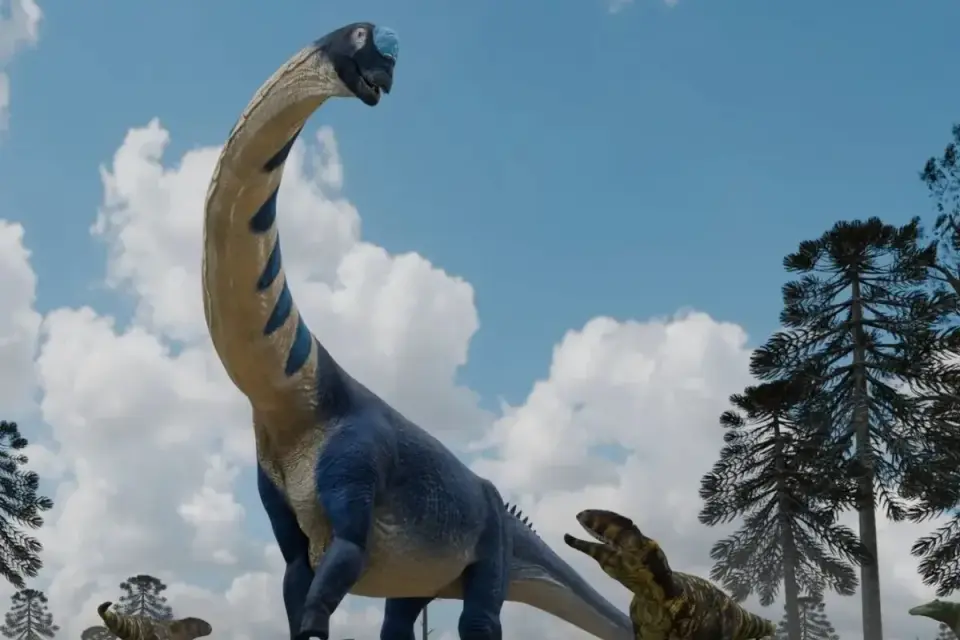
Researchers have officially described Nagatitan chaiyaphumensis, a massive sauropod dinosaur discovered in Thailand. Measuring 27 meters and weighing approximately 27 tons, it is the largest dinosaur ever found in Southeast Asia. The study, published in Scientific Reports, details the excavation of remains found a decade ago, highlighting the creature's significance as a potential 'last titan' in the region's geological record.
Key points
- Nagatitan chaiyaphumensis is a newly identified sauropod measuring 27 meters in length and weighing about 27 tons, making it larger than the famous Diplodocus 'Dippy'.
- The dinosaur lived in what is now Thailand between 100 and 120 million years ago, representing the largest known dinosaur from Southeast Asia.
- Remains were initially discovered by local residents in northeastern Thailand a decade ago, with full excavation completed in 2024.
- The species name combines 'naga' (a mythical Southeast Asian serpent), 'Titan' (Greek mythology), and 'Chaiyaphum' (the province where it was found).
- A life-size skeleton model is currently on display at the Thainosaur Museum in Bangkok, with the study published in Scientific Reports on May 14, 2026.
Background
This discovery follows other recent paleontological announcements, such as the identification of Uragasaurus kalasinensis in Thailand in July 2026 and the confirmation of a titanosaur bone in Antarctica in June 2026. These findings continue to expand the global understanding of dinosaur distribution and evolution, particularly in regions previously thought to have limited fossil records.
Why it matters
The identification of Nagatitan chaiyaphumensis significantly advances the understanding of Late Cretaceous ecosystems in Southeast Asia. As the largest dinosaur found in the region, it provides critical insights into the size and diversity of sauropods in this part of the world. The finding also highlights the importance of local community involvement in paleontological discoveries and the ongoing potential for new species in areas with limited fossil records.
What to watch
Researchers will continue to analyze the unique features of Nagatitan's bones to further understand its evolutionary relationships with other sauropods. Additionally, the designation of Nagatitan as a potential 'last titan' in Southeast Asia suggests that future discoveries in the region may be limited, making this find particularly significant for the field of paleontology.
Want the full story? Read the original reporting
Read on Futura, le média qui explore le monde