
Elias 2-24 b Confirmed as Youngest Planet, Defying Formation Models
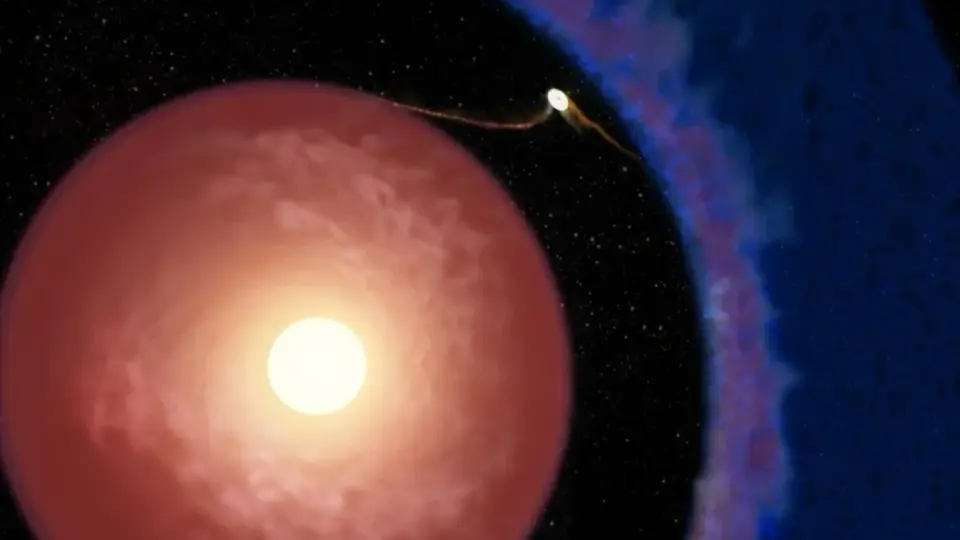
Astronomers have confirmed Elias 2-24 b as the youngest known planet, with an age under one million years. Located 450 light-years away, this Jupiter-mass world is still actively accreting material within its natal disk. Its rapid formation at a distance far from its host star challenges existing models, which predict such planets take millions of years to develop. The discovery, confirmed using archival data from the W. M. Keck Observatory, resolves a decade-long debate regarding a faint signal first spotted by ALMA and the VLT. This finding highlights the need for updated theories and sets the stage for future detections by NASA’s Nancy Grace Roman Space Telescope.
Key points
- Elias 2-24 b is the youngest confirmed exoplanet, estimated to be less than one million years old, compared to previous record holders at over five million years.
- The planet is roughly Jupiter-sized and orbits its host star at a distance approximately 11 times greater than Jupiter’s distance from the Sun.
- Confirmation relied on reanalyzing archival observations from 2018 and 2020 at the W. M. Keck Observatory, combined with data from ALMA and the VLT.
- The planet’s rapid growth at such a distance contradicts current core accretion models, which suggest longer formation times for distant giants.
- NASA’s Nancy Grace Roman Space Telescope, launched in August 2026, is expected to detect more such infant planets due to its advanced coronagraph.
Background
Previous records for the youngest planets were held by four worlds orbiting stars PDS 70 and WISPIT 2, all older than five million years. The discovery of Elias 2-24 b follows a decade of debate regarding a gap in the disk around the star Elias 2-24, first identified by ALMA and later by the VLT. While earlier studies suggested the host star could be as young as 200,000 years, the new study assumes a one-million-year age for modeling purposes. This discovery builds on prior efforts to link disk gaps to forming planets, a connection that was previously difficult to confirm directly due to observational limitations.
How outlets are covering it
Gizmodo emphasizes the anomaly of the planet’s size and distance, noting that current models struggle to explain how a Jupiter-sized world could form so quickly at such a distance. NASA Science and ScienceDaily focus on the technical confirmation process, highlighting the use of the Keck Observatory Archive and the coronagraph technique to distinguish the planet from background noise or imaging defects. The W. M. Keck Observatory release stresses the scientific value of preserving archival data, noting that the discovery was only possible through new analysis techniques applied to old data. All sources agree that the finding challenges existing planet formation theories, but they differ in emphasis: Gizmodo and ScienceDaily highlight the model failure, while Keck and NASA focus on the observational methodology and future capabilities of the Roman Space Telescope.
Why it matters
The confirmation of Elias 2-24 b provides a rare, direct observation of a planet in its earliest formation stage, offering a 'time machine' to study how planetary systems like our own may have developed. It forces a recalibration of core accretion models, which are currently unable to predict the mass and luminosity of such young, distant giants. Furthermore, it validates the potential of upcoming instruments like the Roman Space Telescope to detect fainter, closer-in planets, potentially revealing true Jupiter analogs that are currently hidden by stellar glare. This discovery closes a significant observational gap in exoplanet science, moving the field from theoretical simulations to direct empirical evidence of infant planetary systems.
What to watch
Researchers plan to conduct further spectroscopic analysis of Elias 2-24 b to constrain its dynamical mass, temperature, and atmospheric composition. The team hopes to use these new measurements to refine evolutionary models for young planets. Additionally, the launch of the Nancy Grace Roman Space Telescope, which achieved first light in September 2026, is expected to facilitate the detection of more infant planets. Its advanced coronagraph, capable of detecting objects 100 million times fainter than their host stars, should make it easier to find planets in tighter orbits and at earlier stages of formation, potentially revealing more examples that challenge current theoretical frameworks.
- Astronomers Just Found the Youngest Planet Ever Seen. It Shouldn’t Be So Huge Gizmodo
- Newfound ‘Baby’ Planet Smashes Record for Youngest Known World NASA Science (.gov)
- Astronomers just found the youngest known planet ever ScienceDaily
- Youngest Exoplanet Yet Discovered Found Hiding in Keck Observatory Data W. M. Keck Observatory
- Scientists find youngest exoplanet on record — a 'newborn' named Elias Space
Want the full story? Read the original reporting
Read on Gizmodo