
Shuttle Speed vs. Laser Sails: The 165,000-Year Gap to Alpha Centauri
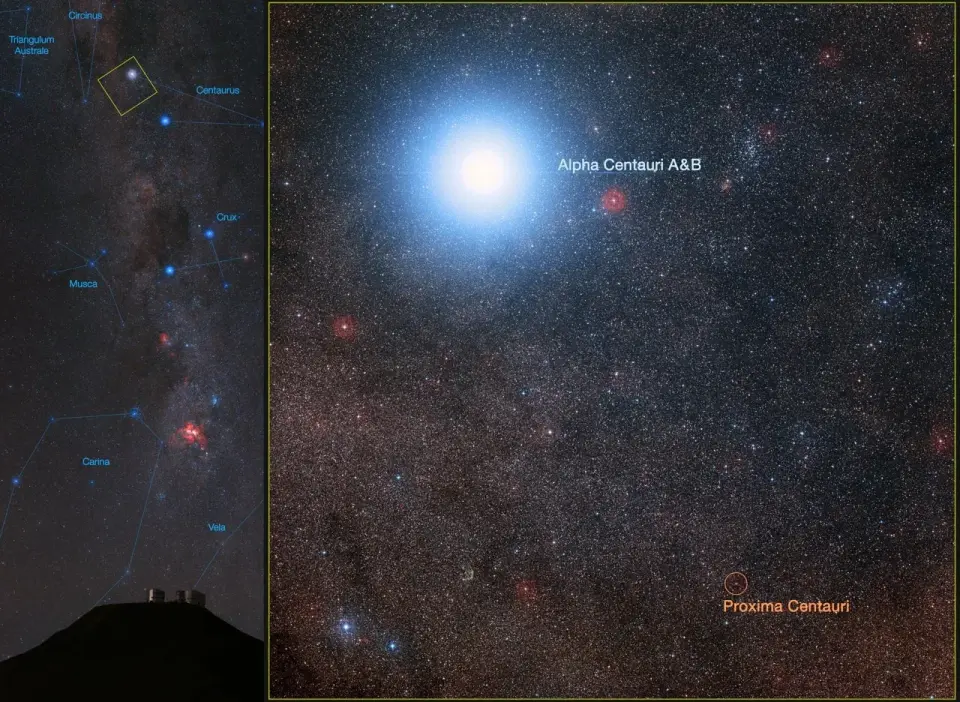
Space Daily contrasts the 165,000 years required to reach Alpha Centauri at orbital speed with Breakthrough Starshot’s 20-year proposal using laser-driven nanocrafts, highlighting the massive engineering gap between current technology and future concepts.
Key points
- At 28,000 km/h, a space shuttle would take roughly 165,000 years to reach Alpha Centauri, a figure derived from simple arithmetic rather than a feasible mission profile.
- Breakthrough Starshot proposes sending gram-scale chips on metre-wide sails accelerated by Earth-based lasers to reach the same destination in just over 20 years.
- The Starshot concept relies on achieving 0.2 times the speed of light, a velocity approximately 7,700 times faster than orbital speed, but requires unbuilt gigawatt-scale laser arrays.
- No complete Starshot vehicle or full-scale propulsion system exists, and there is no confirmed launch date, as the initiative remains a research and development programme.
- Challenges include maintaining sail stability under intense laser pressure, surviving interstellar dust impacts, and transmitting data back across 4.24 light-years, which adds years to the total mission timeline.
Background
Previous coverage from August 2026 established that while Voyager 1 has entered interstellar space, it would take tens of thousands of years to reach Alpha Centauri at current speeds. Earlier articles noted that Breakthrough Starshot’s concept, announced in 2016, aims to demonstrate feasibility for light-driven nanocrafts but faces significant hurdles in energy storage, atmospheric correction, and communication. The current article reinforces that while the physics is sound, the engineering remains unproven, and the 20-year timeline is a theoretical design result rather than a forecast.
Why it matters
This comparison illustrates the extreme scale of interstellar distances and the radical technological shifts required to bridge them. It underscores that while conventional propulsion is inadequate for interstellar travel, emerging concepts like laser-sailed nanocrafts offer a theoretical path, albeit one that remains far from practical implementation due to unresolved engineering challenges.
What to watch
Researchers will continue to test materials and optical forces, such as the 2025 Caltech experiment measuring radiation pressure on microscopic membranes, to inform future sail designs. However, no launch is imminent, and the focus remains on proving the feasibility of individual components like the laser array and sail stability before any integrated system can be constructed.
Want the full story? Read the original reporting
Read on spacedaily.com