Tag

Laser Propulsion

All articles tagged with #laser propulsion

Relativistic Drag Emerges for Laser-Driven Solar Sails at 0.75c
science1 month ago

Relativistic Drag Emerges for Laser-Driven Solar Sails at 0.75c

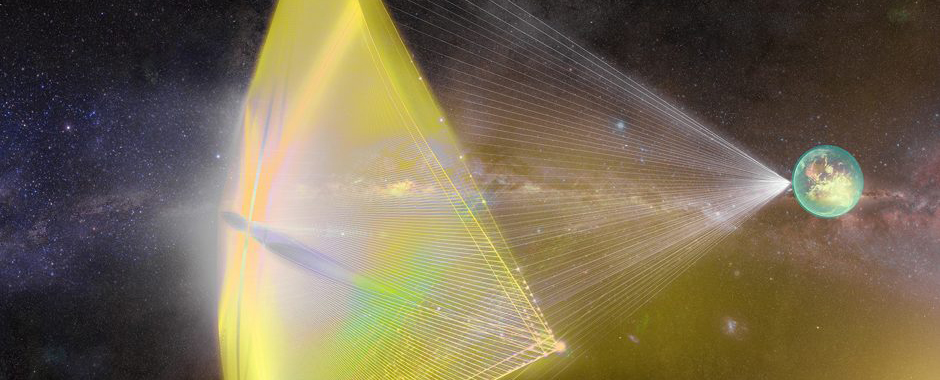
A new arXiv study shows that as a laser-driven solar sail nears relativistic speeds, Doppler shifts weaken thrust and, around 0.75c, relativistic aberration makes diffusely scattered light act as drag—reducing propulsion efficiency even though overall thrust stays positive. The model uses an idealized mirror and omits nonradiative effects like heating and interstellar gas, with real sails potentially facing material limits; advanced metamaterials could help mitigate some challenges and help stabilize the beam.
Tiny Probes, Giant Lasers: a 21-Year Path to Alpha Centauri
science1 month ago

Tiny Probes, Giant Lasers: a 21-Year Path to Alpha Centauri

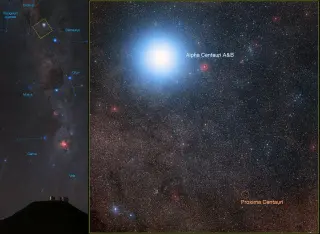
A shuttle-speed trip to Alpha Centauri would take about 165,000 years, but Breakthrough Starshot envisions gram-scale nanoprobes attached to a metre-wide sail accelerated by a ground-based laser array to reach the system in roughly 21 years. The plan hinges on unbuilt, high-power lasers and a one-way, autonomous flyby, with major engineering challenges in sail materials, beam control, and interstellar hazards, and remains a design concept rather than a launch forecast.

science1 month ago

Tiny Probes, Giant Lasers Aim for Distant Star Systems

Scientists are exploring interstellar missions using ultra-light, sensor-packed light sails propelled by a network of high-powered lasers. Tiny probes (smart-dust-like sensors) could reach nearby star systems at relativistic speeds (about 10–20% of light) and relay observations back to Earth, as envisioned by Breakthrough Starshot. Solar sails already demonstrate the concept in Earth orbit, but laser-driven sails offer a faster route to distant worlds, albeit with challenges such as deceleration at arrival and data transmission, while discoveries like the exoplanet LHS 1140b fuel the interest in visiting neighboring planetary systems.

Gram-scale lightsail eyes 20-year voyage to Alpha Centauri
space2 months ago

Gram-scale lightsail eyes 20-year voyage to Alpha Centauri

A Space Daily piece outlines Breakthrough Starshot's concept: a gram‑scale payload on an ultrathin lightsail accelerated by a ground‑based laser array to about 0.2c, enabling a flight to Alpha Centauri in a little over 20 years. The plan hinges on building the laser, sail, and communications systems, plus solving beam stability, navigation, and decades‑long durability challenges. Even if launched, data would take years to return—about 26 years after launch—since a transmission from Proxima Centauri to Earth adds another 4.2 years. No launch date is set; the concept remains a physics‑proof, research program rather than an imminent mission.

Laser-Propelled Metajets Point Toward a 20-Year Alpha Centauri Runway
space5 months ago

Laser-Propelled Metajets Point Toward a 20-Year Alpha Centauri Runway

Texas A&M researchers demonstrated laser-driven metajets—ultrathin, patterned devices—that can be steered in three dimensions by transferring photon momentum, with potential to scale to larger craft and, given enough laser power, enable a ~20-year voyage to Alpha Centauri; experiments were conducted in a fluid environment to observe controllable motion and microgravity tests are planned for space readiness.

Laser-Powered Metajets Hint at 20-Year Alpha Centauri Trip
space-and-astronomy5 months ago

Laser-Powered Metajets Hint at 20-Year Alpha Centauri Trip

Texas A&M researchers report a lab demonstration of micron-scale metajets with metasurfaces that can be steered in three dimensions by laser light; they say the concept could be scaled to propel larger spacecraft, potentially enabling a 20-year journey to Alpha Centauri, though real-world feasibility and space testing remain to be proven.

Laser-Propelled Metajets Could Shorten Alpha Centauri Trip to 20 Years
space5 months ago

Laser-Propelled Metajets Could Shorten Alpha Centauri Trip to 20 Years

Texas A&M researchers demonstrated micron-scale metajets that use metasurfaces to move in three dimensions when illuminated by laser light, enabling 3D maneuverability that could, in theory, scale to propel larger craft. While the approach could cut a trip to Alpha Centauri to about 20 years, feasibility remains uncertain as tests to date occurred in fluid environments and microgravity space tests are planned to validate practicality and scaling.

Laser-Driven Graphene Paves Fuel-Free Space Travel
science5 months ago

Laser-Driven Graphene Paves Fuel-Free Space Travel

A study in Advanced Science shows laser light can push graphene aerogel in microgravity, hinting at a propellant-free propulsion method for spacecraft; graphene cubes accelerated under laser beams suggest light-based thrust could cut fuel costs and enable longer, more efficient deep-space missions, though Earth gravity dampens the effect and further research is needed.

"NASA's Ambitious 2024 Mission: Swarm Proxima Centauri with Tiny Probes and Far-Out Space Tech"
space-exploration2 years ago

"NASA's Ambitious 2024 Mission: Swarm Proxima Centauri with Tiny Probes and Far-Out Space Tech"

NASA has selected a proposal called Swarming Proxima Centauri, which involves using gram-scale spacecraft propelled by a 100-gigawatt laser beamer to reach Proxima Centauri and its Earth-like exoplanet by the third quarter of this century. The concept, developed by Space Initiatives Inc. and the Initiative for Interstellar Studies, aims to overcome the challenges of interstellar travel by utilizing swarm dynamics and autonomous navigation. The mission could have applications in space exploration, Earth observation, and various fields on Earth, but the primary obstacle remains the cost of the laser array.

"Miniature Swarm Ships: Linking Proxima Centauri through Communication Breakthrough"
space3 years ago

"Miniature Swarm Ships: Linking Proxima Centauri through Communication Breakthrough"

Researchers from the Initiative for Interstellar Studies (i4is) have proposed using a swarm of gram-scale spacecraft propelled by laser sails to establish communications with Earth across interstellar distances. The team recommends launching hundreds of probes that would be synchronized and maintained by a 100 GW launch laser. The swarm concept would enhance data return and exploration capabilities, while also providing solutions to challenges such as interstellar dust grains. The technology could also be used for solar system exploration, allowing for faster and more cost-effective missions.