
Blue Origin to build second Cape Canaveral pad for larger New Glenn variant
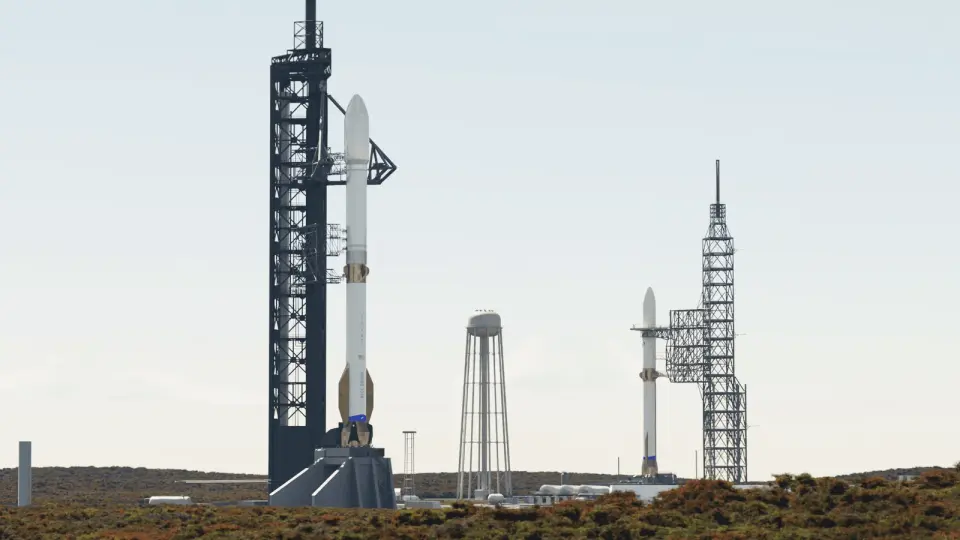
Blue Origin announced plans to construct a second launch pad, LC-36B, at Cape Canaveral to support the larger New Glenn 9x4 rocket. This expansion occurs alongside the urgent rebuilding of the existing LC-36A pad, which was damaged by a May 28 explosion. The company aims to return to flight by the end of 2026 using a new hybrid integration method, while the new pad will eventually host a 400-foot-tall vehicle capable of lifting 70 metric tons to low-Earth orbit.
Key points
- Blue Origin will build LC-36B to support the New Glenn 9x4, a larger rocket with nine first-stage engines and four upper-stage engines.
- The existing LC-36A pad is being rebuilt after a May 28 explosion during a static fire test, which caused significant damage and registered a 2.5 magnitude seismic event.
- The company is adopting a hybrid horizontal/vertical integration concept, where the first stage is rolled out horizontally and raised, while the upper stage and payload are installed vertically via crane.
- A $78.2 million contract with the Space Force for a payload processing facility was awarded in October 2025, with construction targeted for completion by 2028.
- The new 9x4 variant will stand approximately 400 feet tall and can lift 70 metric tons to low-Earth orbit, compared to 38 metric tons for the current SLS Block 1B.
Background
In July 2026, Blue Origin outlined a return-to-flight strategy for New Glenn following an anomaly that destroyed a pad vehicle, aiming for a late-2026 launch. The company coordinated with NASA on Moon Base timelines while advancing Blue Moon landers. Recent weeks have seen increased launch activity at Cape Canaveral, including SpaceX Falcon 9 missions for Starlink and national security payloads, highlighting the competitive pressure on launch cadence in the region.
How outlets are covering it
SpaceNews emphasizes the strategic expansion to a dual-pad facility and the specific engineering changes in the integration process. The Orlando Sentinel, via WyomingNews, highlights the scale of the new 9x4 rocket and the significant investment of over $3 billion in Florida operations, noting the explosion's visible impact across Central Florida. Aviation Week focuses on the dual-pad design as a solution to support two distinct New Glenn variants, framing it as a key development in commercial heavy-lift capabilities. All sources agree on the priority of rebuilding LC-36A for a 2026 return to flight, but differ in emphasis: SpaceNews details the operational testing at LC-11, while the Orlando Sentinel provides specific payload capacity comparisons with the Space Launch System.
Why it matters
The expansion of Blue Origin's Cape Canaveral footprint signals a major commitment to increasing launch cadence and capability in the U.S. commercial space sector. The development of the larger New Glenn 9x4 variant positions Blue Origin to compete directly with other heavy-lift providers for national security and deep space missions. The shift to a hybrid integration method may improve turnaround times and reduce the risk of pad damage, addressing a critical vulnerability exposed by the May 28 explosion. This expansion also reflects the growing demand for dedicated payload processing facilities to alleviate logistical bottlenecks on the Space Coast.
What to watch
Blue Origin is currently testing vertical stacking and mating procedures at Launch Complex 11 to validate the new integration concept. The company aims to complete the rebuild of LC-36A and resume flights by the end of 2026. Construction of the new LC-36B pad and the associated vertical integration facility will proceed in parallel, with the payload processing facility targeted for completion by 2028. No specific schedule has been disclosed for the first flight of the New Glenn 9x4 variant.
- Blue Origin outlines plans for second Cape Canaveral launch pad SpaceNews
- Returning Launch Complex 36 to Two Pads: Blue Origin Begins Construction of LC-36B Blue Origin
- Blue Origin lays out Canaveral expansion amid post-explosion rebuild WyomingNews.com
- Blue Origin Details Dual-Pad Approach For New Glenn At Cape Aviation Week
- Blue Origin Rocket Explodes at Florida Launch Pad: Bezos Calls It 'Very Rough Day' - Growth Acceleration Report dars.gov.et
Want the full story? Read the original reporting
Read on SpaceNews