
Solar Storm Blind Spots Threaten Future Crewed Missions
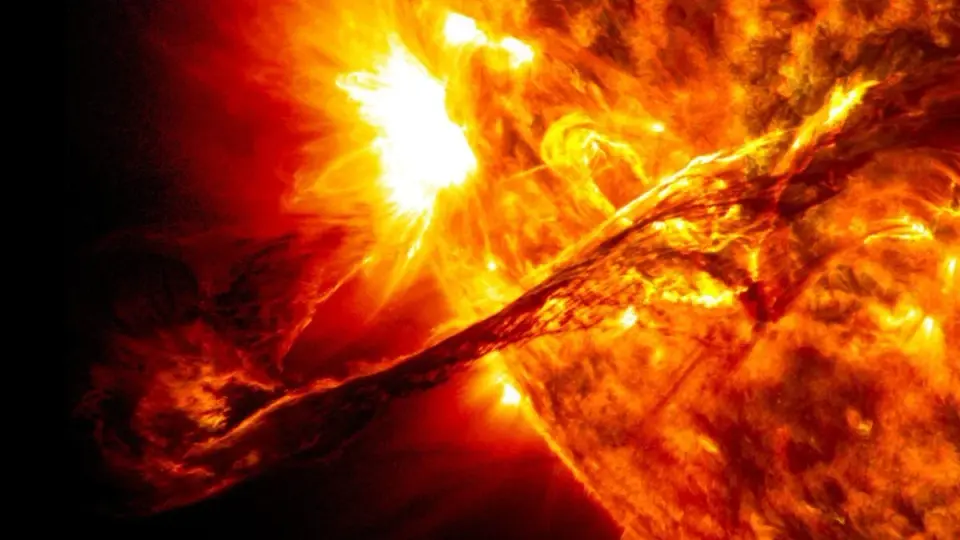
Recent research reveals critical gaps in space weather forecasting. A December 2024 coronal mass ejection (CME) detected by NASA’s Europa Clipper showed that asymmetric solar eruptions can bypass Earth-based predictions. Meanwhile, analysis of the May 2024 solar storm highlights how complex magnetic waves near Earth can disrupt GPS and power grids, underscoring the need for expanded monitoring networks to protect future crewed missions.
Key points
- NASA’s Europa Clipper detected an unexpected, fast-moving solar wind in December 2024, revealing a CME that missed Earth-based forecasts due to its asymmetric shape.
- Analysis of the May 2024 solar storm by Embry-Riddle researchers shows that Kelvin-Helmholtz waves near Earth can cause magnetic reconnection, leading to GPS failures and power grid disruptions.
- Current forecasting models struggle to predict these complex, small-scale processes, creating significant radiation risks for astronauts traveling beyond Earth’s magnetic shield.
- Researchers emphasize that planetary missions like Europa Clipper and MAVEN can fill observational gaps, providing essential data for safer deep-space travel.
Background
This development follows ongoing efforts to improve solar physics understanding, including recent NASA eclipse missions that captured high-resolution data of the Sun’s corona to enhance space weather models. These initiatives build on earlier discoveries of solar system dynamics, such as the detection of exosatellites and unique Martian phenomena, which highlight the importance of multi-point observations in the solar system.
How outlets are covering it
Gizmodo focuses on the structural blind spot revealed by the December 2024 CME, emphasizing how asymmetric eruptions can evade Earth-centric monitoring and endanger future crewed missions between Earth and Mars. In contrast, Embry-Riddle Aeronautical University highlights the May 2024 storm, detailing how Kelvin-Helmholtz waves and magnetic reconnection near Earth caused tangible damage to GPS systems and power grids, stressing the need for high-cadence monitoring to protect infrastructure and astronauts.
Why it matters
Accurate space weather forecasting is critical for protecting Earth’s technological infrastructure and ensuring the safety of astronauts in deep space. Unpredicted CMEs can expose crew to lethal radiation and disrupt communications, while complex magnetic phenomena can cause widespread economic damage on Earth. Expanding the network of monitoring spacecraft is essential to mitigate these risks as humanity plans missions to the Moon and Mars.
What to watch
Researchers plan to investigate whether distorted CMEs are rare or simply undetected due to limited observation points. They will also test if current forecasting models can accurately reproduce these complex behaviors, aiming to improve prediction tools and enhance the resilience of space and terrestrial systems.
- A 'Hidden' Solar Outburst Just Exposed a Blind Spot in Space-Weather Forecasting Gizmodo
- Embry-Riddle Researcher Measures Waves Generated by Extreme Solar Storm that Wreaked Havoc on Earth Embry-Riddle Aeronautical University
Want the full story? Read the original reporting
Read on Gizmodo