
Swift Observatory restarts telescopes for final observations as LINK mission ends
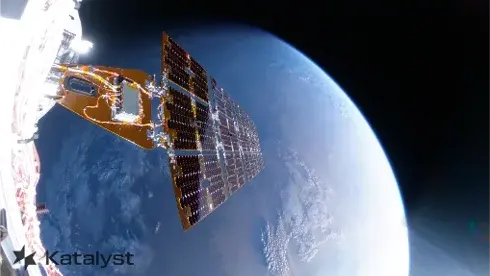
NASA's Swift Observatory will reenter Earth's atmosphere by year's end after its rescue mission failed. The agency has restarted two of Swift's three telescopes to maximize data collection before it burns up. Meanwhile, Katalyst Space's LINK spacecraft, which failed to save Swift due to attitude control issues, will also deorbit within weeks after completing a series of technology demonstrations.
Key points
- Swift's orbit decayed faster than expected due to increased solar activity, leading to a planned rescue by Katalyst Space's LINK spacecraft.
- LINK suffered attitude control issues after launch in July 2026, causing NASA to cancel the mission to boost Swift's orbit.
- Despite the failure, LINK successfully fired its thrusters and deployed its robotic arms, coming within 7.5 to 9 miles of Swift.
- Swift's operations team has restarted two of its three telescopes, including the x-ray telescope, to capture final observations.
- Both Swift and LINK are expected to reenter Earth's atmosphere by the end of 2026.
Background
Swift, launched in 2004, had its orbit decaying faster than anticipated due to increased solar activity. In August 2026, NASA and Katalyst Space canceled the Swift Boost mission after LINK experienced attitude control issues, including a spin from failing reaction wheels. A software patch had initially stabilized LINK, but the mission was ultimately halted.
How outlets are covering it
Space.com and NASA Science emphasize the technology demonstrations conducted by LINK, including firing its thrusters and deploying its robotic arms, despite the mission's failure. WIRED focuses on Swift's final observations, highlighting the restart of its telescopes and the potential for capturing valuable data before reentry. ABC News did not provide relevant information as the page was unavailable.
Why it matters
The failure of the Swift Boost mission highlights the challenges of satellite servicing in low Earth orbit. However, the data collected from LINK's technology demonstrations and Swift's final observations will inform future satellite-servicing missions and continue to provide valuable scientific data.
What to watch
Swift will continue to capture observations until its altitude falls below 185 miles, after which its descent will accelerate. LINK is expected to deorbit within 2 to 3 weeks. NASA and Katalyst Space will use the data collected from both missions to inform future satellite-servicing efforts.
- LINK spacecraft gets close to NASA's Swift Observatory, but not close enough to save it Space
- A Satellite Falling Out of Orbit Embarks on Its Final Mission WIRED
- Commercial Spacecraft for NASA’s Swift Boost Continues Tech Demo NASA Science (.gov)
- Rescue satellite gets close to NASA's doomed telescope, even if it can't save it abcnews.com
- NASA’s Swift Observatory resumed science observations, at least for now Popular Science
Want the full story? Read the original reporting
Read on Space