
NASA and IBM release open-source AI model to map lunar ice and craters
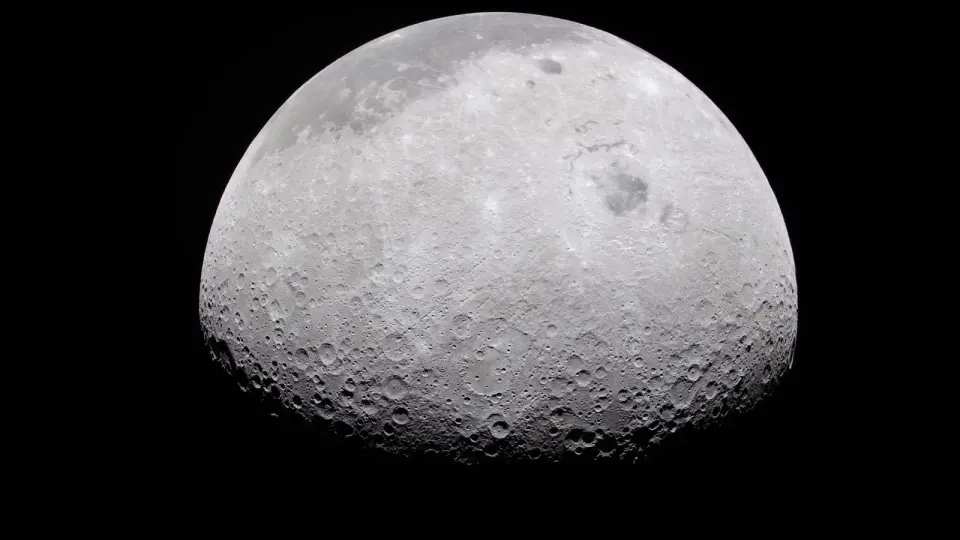
NASA and IBM have launched the NASA-IBM Lunar Foundation Model, an open-source AI tool designed to analyze decades of lunar data. The model, available on Hugging Face, helps researchers map craters, identify volcanic features, and locate water ice near the poles by processing data from missions like the Lunar Reconnaissance Orbiter.
Key points
- The model is open-source and hosted on Hugging Face, with code available on GitHub.
- It was trained on approximately 2 million image tiles from the Lunar Reconnaissance Orbiter and other missions.
- Key applications include mapping craters, identifying young volcanic features, and estimating polar ice stability.
- The model outperformed baseline systems in ice prospectivity by 22% and crater detection by 19% at coarser resolutions.
- It is part of a broader NASA-IBM initiative to apply AI to planetary science, following similar models for Earth and solar physics.
Background
This release follows earlier announcements in September 2026 regarding the model's initial unveiling and its performance benchmarks. It builds on previous NASA-IBM collaborations, including the Prithvi models for Earth observation and the Surya model for heliophysics, reflecting a growing trend in using AI to streamline scientific data analysis across space agencies.
How outlets are covering it
Space.com highlights the model’s role in unlocking NASA’s vast data archives, noting that LRO data alone exceeds all other planetary missions combined. NASA Science emphasizes the technical foundation, detailing how the model integrates data from multiple missions like GRAIL and SELENE to create a unified representation. IBM Research focuses on the practical benefits for future exploration, such as aiding Artemis program planning and addressing lighting challenges on the Moon. Yahoo Finance frames the release through a market lens, noting a 2% gain in IBM stock, though this specific financial reaction is not detailed in the other sources.
Why it matters
The model accelerates lunar research by automating the analysis of petabytes of data, potentially reducing costs and time for future missions. It provides critical insights into resource locations, such as water ice, which is essential for sustaining human presence on the Moon and planning deeper space exploration.
What to watch
Researchers are expected to use the model to fine-tune specific tasks, such as mapping new impact craters or refining ice prospectivity maps. The open-source nature of the release invites global scientific communities to build upon the model, potentially leading to new discoveries and more efficient mission planning for the Artemis program.
- NASA, IBM launch new AI model for studying the moon Space
- NASA, IBM Launch AI Foundation Model for Lunar Science NASA Science (.gov)
- Introducing IBM and NASA’s new foundation model for the Moon IBM Research
- IBM, NASA launch AI model to help map ice, craters on Moon Reuters
- IBM Gains 2% as Lunar AI Beats Mapping Methods by 23% Yahoo Finance
Want the full story? Read the original reporting
Read on Space