
NASA Greenlights PRIMA Far-Infrared Telescope for 2033 Launch
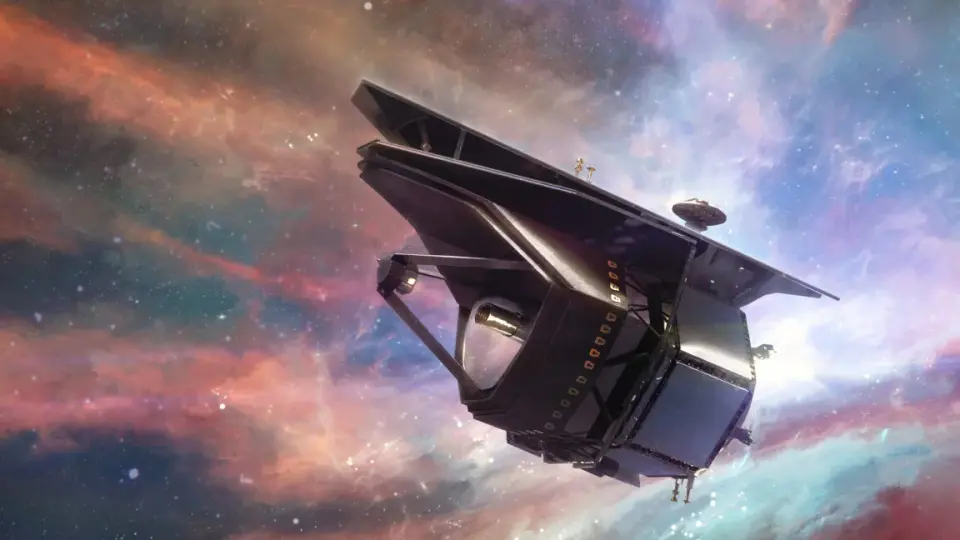
NASA has selected the Probe far-Infrared Mission for Astrophysics (PRIMA) as the first mission in its new 'Probe Explorer' class, targeting a 2033 launch. The $1.2 billion observatory will use a modified spare cryocooler from the James Webb Space Telescope to observe the universe in far-infrared light, bridging the gap between existing infrared telescopes and radio observatories.
Key points
- NASA announced the selection of PRIMA as the first mission in the new Probe Explorer class, moving it into Phase B development with a cost cap of $1.2 billion, excluding launch costs.
- The telescope, managed by the Jet Propulsion Laboratory (JPL), features a 1.8-meter primary mirror and will operate in far-infrared wavelengths between 24 and 235 micrometers, requiring cooling to 4.5 Kelvin.
- PRIMA will utilize a spare cryocooler from the James Webb Space Telescope, modified to use helium-3, to achieve record-low temperatures for its detectors, aiming for a 2033 launch.
- The mission includes three primary instruments: a cryogenically cooled telescope, an imaging polarimeter (PRIMAger), and a high-resolution spectrometer (FIRESS), leveraging detector technology developed over three decades by Caltech and JPL.
- International partners from Canada, France, Germany, Japan, South Korea, the UK, and Italy will contribute to the mission, which aims to study the origins of planets, galaxy evolution, and the formation of dust and heavy elements.
Background
This announcement follows the recent launch of the Nancy Grace Roman Space Telescope, which NASA officials cited as a model for delivering flagship missions on time and budget. The Roman telescope, launched in August 2026, is part of a broader strategy to maintain a cadence of major observatory launches. PRIMA is designed to fill the scientific gap between the Roman and Webb telescopes and future radio observatories, as recommended by the 2020 Decadal Survey. The mission builds on the legacy of the European Space Agency's Herschel telescope, which provided insights into cosmic filaments and star formation.
How outlets are covering it
Ars Technica emphasizes the cost-efficiency and speed of PRIMA, highlighting its use of a spare Webb cryocooler and a seven-year development cycle compared to the decade-long timeline for the Roman telescope. The outlet also notes the institutional challenges at JPL and Goddard Space Flight Center, which have faced layoffs and management issues. Spaceflight Now focuses on the international collaboration, listing partners from Canada, France, Germany, Japan, South Korea, the UK, and Italy, and details the three primary instruments. NASA’s official release underscores the scientific goals, such as understanding the origins of planets and the evolution of galaxies, and the role of the Explorers Program in providing low-cost access to space. Caltech highlights the technological breakthroughs in detector technology, specifically the superconducting microwave kinetic inductance detectors (MKIDs/KIDs) invented by Jonas Zmuidzinas and Rick LeDuc, and the role of IPAC as the science center. The outlets agree on the mission’s significance but differ in emphasis: Ars Technica on cost and schedule, Spaceflight Now on international partnerships, NASA on scientific objectives, and Caltech on technological innovation.
Why it matters
PRIMA represents a new class of NASA missions designed to balance cost and scientific impact, filling the gap between smaller Explorer missions and expensive flagship observatories. Its use of existing technology, such as the Webb cryocooler, demonstrates a strategy to reduce costs and accelerate development. The mission’s far-infrared capabilities will provide unprecedented insights into the formation of planets, galaxies, and black holes, advancing our understanding of the universe’s history and evolution. The international collaboration also underscores the global nature of modern space exploration, with partners from multiple countries contributing to the mission’s success.
What to watch
NASA will proceed with Phase B development, focusing on preliminary design and technology maturation, with a confirmation review expected in a few years. If approved, PRIMA will move into Phase C, with a launch target of 2033. NASA will also continue preliminary architecture studies for the Habitable Worlds Observatory, planned for the 2040s, which is expected to cost around $11 billion. The agency aims to apply lessons learned from the Roman telescope to ensure future flagships are delivered on time and within budget.
- NASA green-lights billion-dollar infrared observatory for launch in early 2030s Ars Technica
- NASA announces new space telescope ‘PRIMA’ to launch in 2033 Spaceflight Now
- NASA Selects Far-Infrared Telescope as First in New Mission Class NASA (.gov)
- NASA Selects PRIMA Mission; Key Roles for Caltech, JPL, and IPAC Caltech
- NASA selects far-infrared space telescope as first astrophysics probe mission SpaceNews
Want the full story? Read the original reporting
Read on Ars Technica