Tag

Space Telescope

All articles tagged with #space telescope

Vantor Satellite Captures Ultra-Close Portrait of Hubble on 36th Birthday
space29 days ago

Vantor Satellite Captures Ultra-Close Portrait of Hubble on 36th Birthday

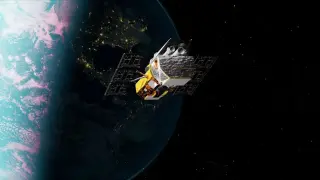
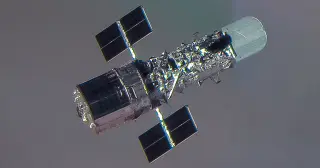
A Vantor WorldView Legion satellite photographed the Hubble Space Telescope from about 61.8 km away on April 23, 2026, capturing a rare close-up view that shows Hubble's cylindrical body, thermal shielding, solar arrays, and the open front aperture, as the telescope marks its 36th birthday and continues to inspire in an era of newer observatories like the Roman Space Telescope.

NASA's Roman Space Telescope Finishes Construction Ahead of Schedule and Under Budget
space1 month ago

NASA's Roman Space Telescope Finishes Construction Ahead of Schedule and Under Budget

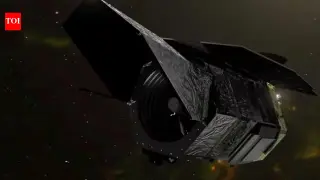
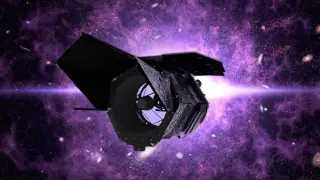
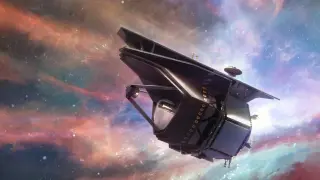
NASA has completed construction of the Nancy Grace Roman Space Telescope, finishing ahead of schedule and under budget, with a September launch aboard SpaceX Falcon Heavy to the L2 point. The telescope features a 7.9-foot primary mirror, a 300-megapixel Wide Field Instrument, and a Roman Coronagraph for exoplanet imaging; it will survey the sky 1,000x faster, observe 200x more of the sky per image, and process data 2,000x faster than Hubble, potentially discovering billions of galaxies and tens of billions of stars while expanding infrared astronomy and exoplanet discovery.

NASA targets September 2026 launch for the Roman Space Telescope
space1 month ago

NASA targets September 2026 launch for the Roman Space Telescope

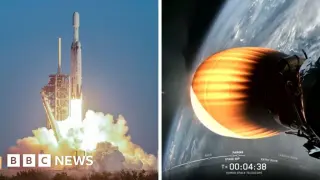
NASA aims to launch the Nancy Grace Roman Space Telescope in September 2026 aboard SpaceX’s Falcon Heavy, a wide-field observatory with a 300.8‑megapixel camera and a coronagraph to spot exoplanets and study dark energy; it will survey the sky about 100x larger than Hubble, operate from roughly 1 million miles from Earth, and work in concert with JWST and Chandra, with a latest possible launch date of May 2027.

NASA’s Roman Space Telescope: A Wide‑Field Eye Poised to Unveil the Cosmos
space1 month ago

NASA’s Roman Space Telescope: A Wide‑Field Eye Poised to Unveil the Cosmos

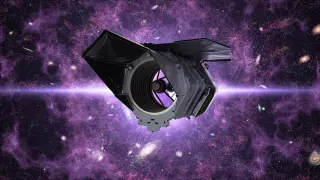
NASA has completed the final integration of the Nancy Grace Roman Space Telescope, a next‑generation observatory designed to image vast swaths of the sky much faster than Hubble. With a 2.4‑meter mirror, a 300‑megapixel Wide Field Instrument and a coronagraph, Roman will survey areas hundreds of times larger, deliver hundreds of terabytes of data per year, and help illuminate dark matter and dark energy while enabling direct imaging of exoplanets. It is scheduled to launch on SpaceX’s Falcon Heavy to the L2 point in September 2026, eight months ahead of schedule and under budget, joining JWST, Euclid, and Hubble as a major tool for cosmic exploration.

NASA unveils fully assembled Nancy Grace Roman Space Telescope, eyeing fall 2026 launch
space2 months ago

NASA unveils fully assembled Nancy Grace Roman Space Telescope, eyeing fall 2026 launch

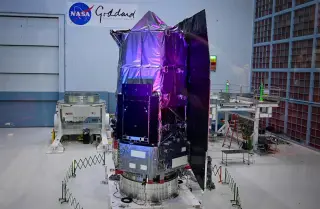
NASA has completed assembly and prelaunch testing of the Nancy Grace Roman Space Telescope, with a launch window potentially as early as fall 2026 and a target launch by May 2027. A media briefing and on-site opportunities at NASA Goddard on April 21 will showcase the fully integrated telescope, its advanced imaging capabilities, and the collaboration with international partners before it moves to Kennedy Space Center for launch.

Hubble at 36: How a blurry launch reshaped our view of the cosmos
science2 months ago

Hubble at 36: How a blurry launch reshaped our view of the cosmos

The Hubble Space Telescope marks 36 years in orbit, overcoming an early blurry image issue with five servicing missions, and accumulating nearly 1.7 million observations that spurred more than 22,000 papers and 1.3 million citations. Its Deep Field images helped redefine cosmic age, expansion, dark energy, exoplanet atmospheres, and the presence of supermassive black holes, while inspiring a generation and guiding future observatories like the Habitable Worlds Observatory. Hubble’s enduring, serviceable design and public imagery have made it a lasting scientific and cultural icon, with a legacy that continues as it works alongside the James Webb Space Telescope and beyond.

China's Xuntian CSST set to map the cosmos with Hubble-scale sky coverage by 2027
astronomy4 months ago

China's Xuntian CSST set to map the cosmos with Hubble-scale sky coverage by 2027

China is advancing the CSST/Xuntian space telescope, a bus-sized observatory with a 2-meter primary mirror and a 2.5-billion-pixel camera designed to survey the sky from near-UV to near-IR with a field of view about 300 times larger than Hubble. Slated for launch in early 2027, it will operate in low Earth orbit co‑orbiting with the Tiangong space station and can be serviced by astronauts. An end-to-end simulation study published ahead of launch highlights potential science across cosmology, galaxies, the Milky Way, and planetary systems, including insights into dark matter and dark energy.

Hubble Telescope's End: Is Its Disappearance Nearing?
science4 months ago

Hubble Telescope's End: Is Its Disappearance Nearing?

The Hubble Space Telescope, launched in 1990, is nearing the end of its operational life due to orbital decay accelerated by solar activity, with potential reentry as early as 2029. NASA has attempted to extend its lifespan, but without intervention, Hubble may soon be lost, creating a gap in space observation. However, the upcoming Lazuli telescope, funded by private sources and planned for launch in 2028, aims to succeed Hubble with advanced capabilities.

China's Xuntian Space Telescope to Reveal Universe's Secrets with Breakthrough Data Simulations
science-and-technology4 months ago

China's Xuntian Space Telescope to Reveal Universe's Secrets with Breakthrough Data Simulations

China's Chinese Space Station Telescope (CSST), also known as Xuntian, has completed a high-quality scientific data simulation, marking a key step toward its 2026 launch. The telescope features advanced optical systems with a 2-meter aperture, designed for wide-field, multi-color imaging to study galaxies, stars, and exoplanets, promising significant contributions to astrophysics and cosmology. It will operate independently and dock with China's space station for maintenance, supporting long-term space-based scientific exploration.