
NASA Halts Science on Perseverance and Odyssey Amid Radio and Reaction Wheel Failures
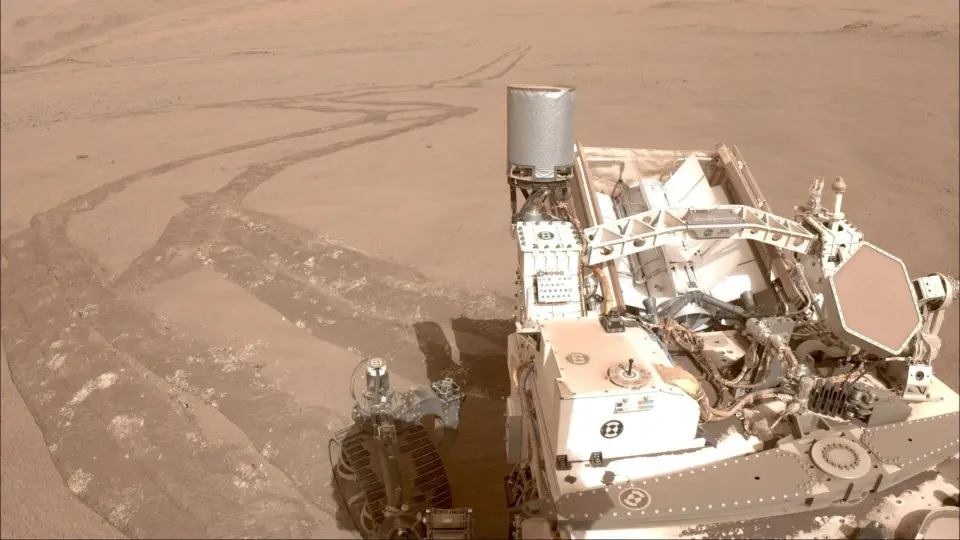
NASA has paused scientific operations for both the Perseverance rover and the Mars Odyssey orbiter due to separate hardware failures. Perseverance is experiencing issues with its primary and backup UHF radios, forcing it to use a slower direct-to-Earth link. Odyssey has lost a second reaction wheel, threatening its ability to orient itself without burning through limited fuel. NASA aims to restore both missions by the end of November 2026.
Key points
- Perseverance’s primary UHF radio failed to send 'heartbeat' signals on Oct. 30, triggering a safe mode; the backup radio was subsequently found transmitting at half power.
- The rover is now communicating via a slower X-band high-gain antenna to conserve bandwidth for diagnostics, pausing new image collection.
- Mars Odyssey entered safe mode between Nov. 4 and 6 after a reaction wheel stopped spinning; it has now lost two of its four wheels, with one failing in 2013.
- Odyssey requires three functional wheels to orient itself; without them, it must rely on hydrazine thrusters, of which only one to two months of supply remain.
- NASA hopes to resume science and relay operations for both spacecraft by the end of November 2026, pending further testing of the faulty components.
Background
These glitches occur shortly after Perseverance set a new interplanetary driving record in October 2026 and follow the cancellation of the Mars Sample Return program, which left collected samples stranded on Mars. The loss of MAVEN in late 2025 has increased the critical importance of Odyssey as a data relay for surface missions.
How outlets are covering it
All sources agree on the technical details and the pause in operations. NASA and Space.com emphasize the 'abundance of caution' and the stability of the vehicles, while IFLScience highlights the irony of Odyssey’s longevity versus its current fragility. MLQ.ai notes the broader context of recent Mars mission losses, specifically the decommissioning of MAVEN, which underscores the risk to the Mars Relay Network.
Why it matters
The pause disrupts the flow of scientific data and imagery from Mars, potentially delaying the analysis of complex organic compounds found by Perseverance. For Odyssey, a failure to recover the reaction wheel could end its 25-year mission, jeopardizing its role as a vital relay for other Mars assets.
What to watch
Mission teams are conducting further tests to determine if the Odyssey reaction wheel is recoverable and investigating the cause of the Perseverance radio power loss. NASA plans to provide updates as it works toward resuming operations by late November 2026.
- Trouble at Mars: NASA's Perseverance rover, Odyssey orbiter halt science work due to glitches Space
- NASA’s Perseverance, Odyssey Teams Investigate Technical Issues NASA Science (.gov)
- NASA pauses science on Perseverance and Mars Odyssey as both hit hardware problems MLQ.ai
- NASA’s Mars crisis snowballs as two spacecraft suffer from glitches Kursiv Media Узбекистан
- Perseverance Forced To Stop Doing Science On Mars, Possibly Until The End Of The Month – NASA Is Investigating IFLScience
Want the full story? Read the original reporting
Read on Space