
NASA Perseverance and Odyssey face critical hardware failures
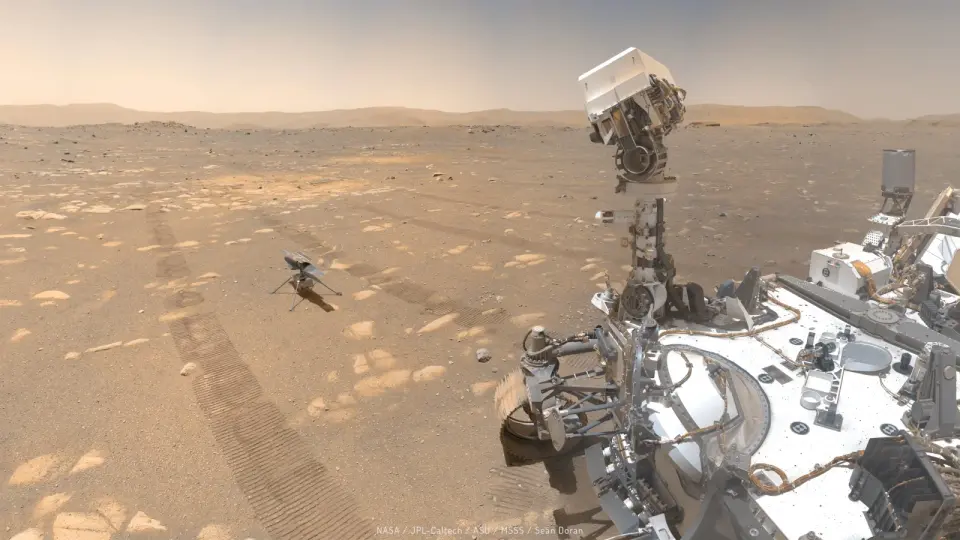
NASA’s Perseverance rover and 2001 Mars Odyssey orbiter have suspended science operations due to separate technical failures. Perseverance is using a slower direct-to-Earth link after both its UHF radios malfunctioned, while Odyssey is relying on limited fuel to maintain orientation after losing a second reaction wheel. Engineers hope to restore both missions by late November, but Odyssey’s future is uncertain if its faulty wheel cannot be repaired.
Key points
- Perseverance’s primary UHF radio failed on Oct 30, triggering a switch to the backup radio, which was found to transmit at half power; both radios are now paused for diagnosis.
- Perseverance is currently communicating via X-band, offering a data rate of 800 bps compared to the UHF link’s 2 Mbps, forcing a pause in science operations.
- Odyssey lost a second reaction wheel in early November, leaving it with only two functional wheels; it requires three to orient without burning hydrazine fuel.
- Odyssey has only one to two months of hydrazine fuel remaining if it must rely solely on thrusters for orientation.
- NASA aims to restore both missions to full science operations by the end of November 2026.
Background
Perseverance landed in Jezero Crater in February 2021 and recently broke the record for the farthest distance driven on another planet, surpassing 28.06 miles. Odyssey, which arrived in Mars orbit in 2001, is the longest-lived Mars mission in history and has provided critical data on surface composition and water ice. Both missions are operating well beyond their original design lifetimes.
How outlets are covering it
Ars Technica and Space.com emphasize the severity of Odyssey’s fuel constraints and the broader impact on the Mars Relay Network, noting that MAVEN’s loss in December 2025 has reduced redundancy. Hackaday highlights the technical specifics of Perseverance’s radio issues and the potential for a temporary workaround. The Register focuses on the immediate operational impact, noting that Perseverance’s issue is a communications bottleneck while Odyssey’s is a potential mission-ending event. All sources agree that NASA is prioritizing diagnostics for both systems, with a target return to science by late November.
Why it matters
The failures of Perseverance and Odyssey threaten to disrupt data relay for other Mars missions, including Curiosity, and could delay the return of rock samples to Earth. Odyssey’s potential loss would significantly reduce NASA’s ability to maintain high-bandwidth communications with Mars, exacerbating concerns about the aging Mars Relay Network.
What to watch
NASA plans to complete diagnostics for Perseverance’s backup UHF radio and Odyssey’s reaction wheel by the end of November 2026. If the wheel cannot be recovered, Odyssey will rely on thrusters, consuming its remaining hydrazine fuel within one to two months. NASA is also evaluating the Mars Telecommunications Network (MTN) contract with Blue Origin, which is on hold pending a GAO ruling on a protest by Rocket Lab.
- NASA’s Perseverance And Odyssey Teams Investigate Technical Issues Hackaday
- Half of NASA’s aging Mars fleet knocked offline by technical issues Ars Technica
- Trouble at Mars: NASA's Perseverance rover, Odyssey orbiter halt science work due to glitches Space
- NASA Mars rover and orbiter suffer glitches The Register
- Mars Guy Reports on Curiosity’s Desert Roses, Perseverance Communications Issues Inside Outer Space.
Want the full story? Read the original reporting
Read on Hackaday