
Roman Space Telescope fueled for August 30 launch, nine months ahead of schedule
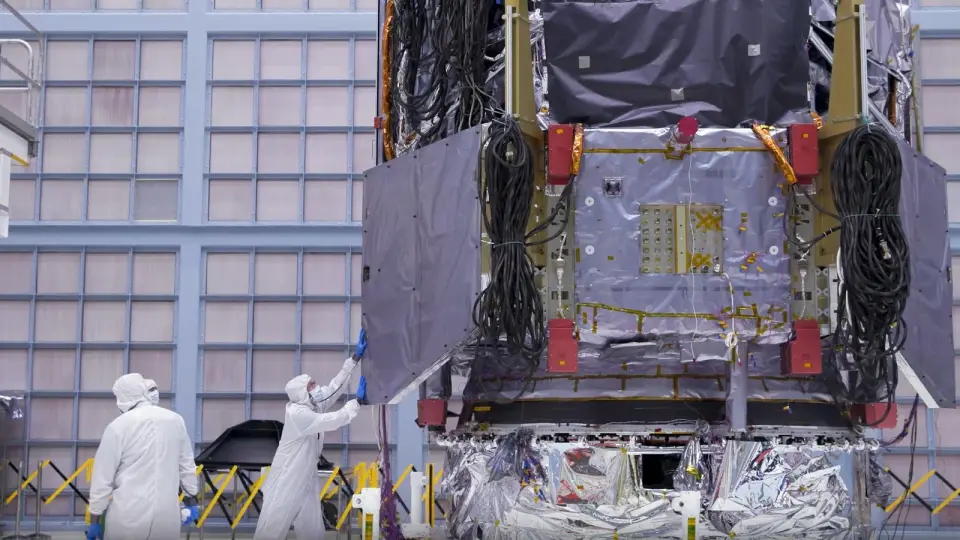
NASA has completed fueling the Nancy Grace Roman Space Telescope, clearing a major hurdle for its scheduled August 30 launch. The observatory, which is nine months ahead of schedule, will deploy to the Sun-Earth L2 point to study dark energy and directly image exoplanets using a new active coronagraph.
Key points
- NASA technicians loaded 290 gallons of hydrazine fuel into the Roman Space Telescope on July 25 at the Payload Hazardous Servicing Facility in Florida.
- The launch is currently targeted for no earlier than 7:26 a.m. EDT on August 30 aboard a SpaceX Falcon Heavy rocket from Launch Complex 39A.
- The telescope will travel to the Sun-Earth Lagrange point 2, located approximately one million miles from Earth, to begin its five-year primary mission.
- Roman’s wide-field camera will capture images 100 times larger than Hubble’s widest exposures, generating over 500 terabytes of data annually.
- The mission includes an active coronagraph with deformable mirrors designed to block starlight and directly image faint exoplanets, a capability not previously available in space.
Background
The Nancy Grace Roman Space Telescope arrived at Kennedy Space Center in June 2026, eight months ahead of its original schedule. It was transported from Goddard Space Flight Center via the Pegasus barge. The observatory is designed to complement the James Webb Space Telescope by surveying billions of galaxies and detecting up to 100,000 new exoplanets through gravitational microlensing and direct imaging.
How outlets are covering it
Space.com emphasizes the efficiency of the hydrazine fueling process and the project’s status as being under budget and ahead of schedule. NASA Science provides technical details on the propellant loading and the telescope’s orbit at L2. MIT Technology Review focuses on the innovative active coronagraph, highlighting its potential to image Jupiter-like planets and paving the way for future Earth-like world discoveries. ColoradoBoulevard.net highlights public outreach, noting a recent lecture at Caltech to introduce the public to the telescope’s capabilities.
Why it matters
The successful fueling and upcoming launch of the Roman Space Telescope mark a significant milestone for NASA’s astrophysics program. Its advanced instruments, particularly the active coronagraph, will enable the first direct imaging of mature, Jupiter-like exoplanets, potentially revealing atmospheric chemistry and paving the way for future missions to detect Earth-like worlds. The telescope’s wide-field survey will also provide unprecedented data on dark matter and dark energy, advancing our understanding of the universe’s expansion.
What to watch
Technicians will soon attach the Roman Space Telescope to the rocket’s top stage and encapsulate it within the payload fairing. Integrated operations for launch are scheduled to begin in August. The telescope is expected to launch no earlier than August 30, 2026, and will begin its five-year primary mission at the Sun-Earth L2 point, with potential for an extended mission if fuel reserves allow.
- NASA fuels its next-gen Roman Space Telescope for August launch Space
- NASA Fuels Roman Space Telescope for Late August Launch NASA Science (.gov)
- Shape-shifting mirrors on NASA’s new space telescope could unveil Jupiters like our own MIT Technology Review
- Friday’s Caltech Stargazing Night Brings New Era of Space Telescopes into Focus ColoradoBoulevard.net
- Who is the Argentinian behind the Nancy Grace Roman telescope, NASA's next big mission? Universidad de Mendoza
Want the full story? Read the original reporting
Read on Space