
NASA Solicits Commercial Bids to Reboost Hubble Before 2033 Reentry
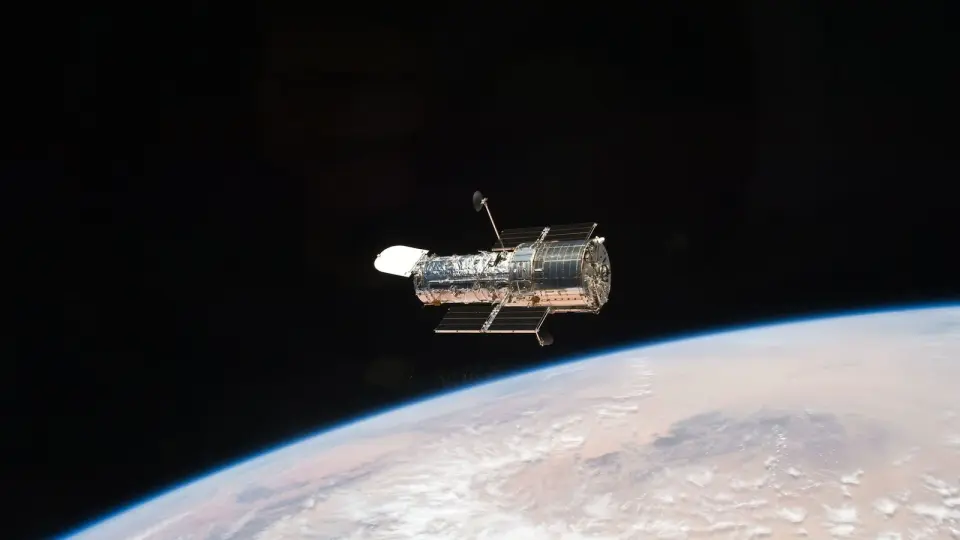
NASA has issued a Request for Information (RFI) to commercial firms seeking proposals to reboost, service, or safely dispose of the Hubble Space Telescope by 2032. The observatory, launched in 1990, is losing altitude due to atmospheric drag and is predicted to reenter Earth's atmosphere in 2033 or 2034. While no funding is currently allocated, the agency aims to assess industry capabilities and costs for a potential mission that could extend Hubble's life by at least 25 years. This move follows a failed 2022 attempt to secure a servicing mission and coincides with the recent, unsuccessful rescue attempt of the Swift telescope.
Key points
- NASA issued an RFI on October 29, with responses due by November 30, 2026, to identify commercial capabilities for in-space servicing.
- The agency requires a target altitude of 600 km (373 miles) to extend Hubble's operational life, noting that a reboost could keep it in orbit for another 25 years.
- Hubble lacks onboard propulsion and has lost altitude from 583 km in 2002 to approximately 470 km today due to atmospheric drag.
- NASA Administrator Jared Isaacman stated that the agency must explore 'every reasonable opportunity' to keep the telescope delivering science, especially if cost-effective.
- The RFI also includes options for a safe, controlled reentry or orbital disposal if a reboost is not feasible.
- No funding is currently allocated for a Hubble rescue mission, but NASA is assessing costs and capabilities for a potential contract by 2032.
Background
Hubble has been a cornerstone of astronomical research since its 1990 launch, contributing to over 23,000 scientific papers and discoveries such as the accelerating expansion of the universe. Previous efforts to extend its life, including a 2022 proposal by Jared Isaacman and a 2022 RFI that received eight responses, did not result in a mission due to concerns over risk and cost. The recent failed rescue of the Swift telescope by Katalyst Space Technologies in 2026 highlighted the challenges and potential costs of such missions, with Swift reentering the atmosphere on November 4, 2026, after 22 years of operation.
How outlets are covering it
NASA and its leadership, including Administrator Jared Isaacman and Associate Administrator Nicky Fox, emphasize the scientific value and public appeal of Hubble, arguing that exploring commercial options is a responsible use of taxpayer funds. Ars Technica notes that while the commercial satellite servicing industry has matured, with companies like Astroscale and Northrop Grumman advancing capabilities, a crewed mission is unlikely due to SpaceX's planned retirement of its Crew Dragon fleet by 2030. SpaceNews highlights that this is a restart of a search that concluded in 2024 as too risky, indicating a shift in NASA's approach as the commercial sector evolves. The primary source and NASA's official statement align on the urgency of the situation, given Hubble's high demand among astronomers and its iconic status, while Ars Technica provides a more skeptical view of the feasibility and cost of a successful rescue.
Why it matters
The potential reboost or servicing of Hubble could extend the life of one of the most important scientific instruments in history, allowing for continued discoveries in visible and ultraviolet light that are not fully replicated by newer telescopes like James Webb or Nancy Grace Roman. A successful mission would demonstrate the viability of commercial in-space servicing, potentially reducing costs for future missions and ensuring the safe disposal of aging satellites. Conversely, a failure or decision not to proceed would mark the end of an era for Hubble, with its reentry expected in 2033 or 2034, and highlight the challenges of maintaining long-lived space assets without onboard propulsion.
What to watch
NASA will review the responses to the RFI by November 30, 2026, to assess the capabilities and costs of potential commercial partners. The agency will then decide whether to allocate funding for a reboost or servicing mission, which would need to occur by 2032 to prevent Hubble's reentry. If no viable or cost-effective option is found, NASA may proceed with a controlled reentry or orbital disposal plan. The outcome of this RFI will also influence future strategies for maintaining other aging satellites in low Earth orbit.
- NASA asks industry for ideas about saving Hubble Space Telescope Space
- NASA Explores Potential Commercial Servicing for Hubble Telescope NASA Science (.gov)
- Once again, NASA is asking for ideas to rescue Hubble from certain death Ars Technica
- NASA seeks ideas for Hubble servicing mission SpaceNews
- NASA reaches out to commercial space industry for help saving legendary Hubble Space Telescope Mashable
Want the full story? Read the original reporting
Read on Space