
NASA's Swift Telescope Ends 22-Year Mission as It Reenters Earth This Week
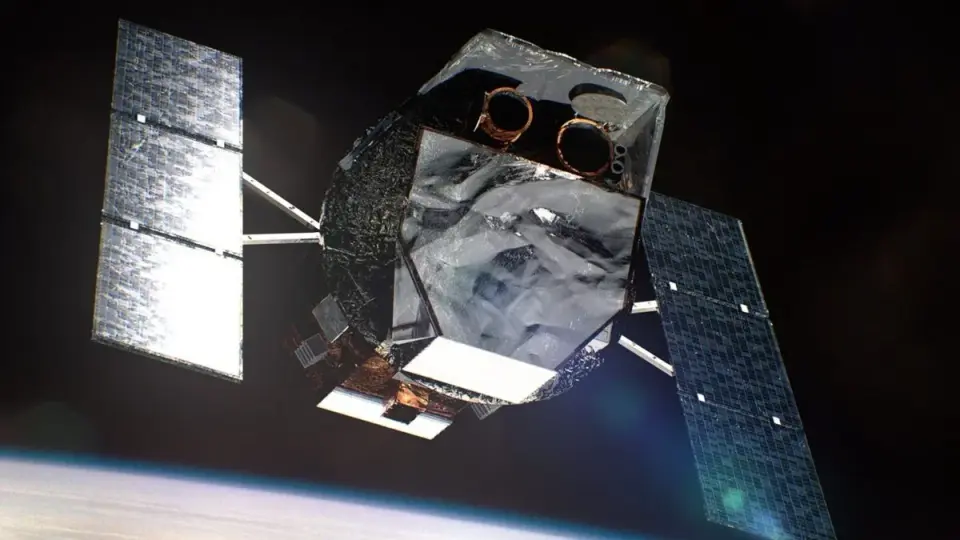
NASA's Neil Gehrels Swift Observatory is set to reenter Earth's atmosphere between November 3 and 4, 2026, after a failed commercial rescue mission. The 1.5-ton spacecraft, which studied gamma-ray bursts for 22 years, will mostly burn up, though dense components may survive and fall into the ocean or populated regions between 20 degrees north and south of the equator.
Key points
- Swift's orbit decayed to 275 kilometers (171 miles) by late October 2025, accelerated by solar activity.
- Katalyst Space Technologies' LINK rescue mission failed in July 2025 due to attitude control issues, leaving Swift to decay.
- NASA ended Swift's operations in late October 2025 after it could no longer maintain stable observations.
- The U.S. Space Force predicts reentry around 3:30 a.m. EST on November 4, 2026, with an 11-hour uncertainty window.
- Surviving debris is expected to land mostly in the ocean, but could fall in Africa, Australia, India, Southeast Asia, and the Americas.
- NASA estimates the risk of human injury from surviving debris at 1 in 2,100, though some experts cite 1 in 10,000.
Background
Swift launched in November 2004 with a planned two-year mission but operated for 22 years. In September 2025, NASA contracted Katalyst Space Technologies to boost its orbit via the LINK mission, which launched in July 2025 but failed due to technical issues. Swift resumed observations briefly after the rescue failed but was shut down in late October 2025 as its orbit decayed below 275 kilometers. Recent solar activity accelerated its orbital decay, leading to its imminent reentry.
How outlets are covering it
Gizmodo and CBS News emphasize the low risk of human injury, citing NASA's 1 in 2,100 estimate, while noting that dense components like tungsten and mirrors may survive. Space.com highlights that 10 times more objects are reentering annually than five years ago, raising concerns about long-term orbital debris. ABC News focuses on the emotional impact on the Swift team, who mourn the loss of a mission that exceeded its design life. All sources agree that most of Swift will burn up, but differ on the exact reentry timing, with the U.S. Space Force predicting November 4, 2026, while earlier estimates suggested November 3 or 5.
Why it matters
Swift's reentry underscores the growing challenge of managing space debris as low Earth orbit becomes more crowded. The mission's success in observing gamma-ray bursts and supernovae has advanced astrophysics, but its uncontrolled reentry highlights the need for better satellite end-of-life protocols. The event also provides data for improving future satellite designs to minimize debris and ensure safer reentries.
What to watch
NASA and the U.S. Space Force will continue monitoring Swift's reentry and update predictions. Scientists will analyze surviving debris to assess risks and improve satellite design. The gap left by Swift's retirement will require new missions to continue observing gamma-ray bursts and other high-energy events.
- NASA’s Swift Observatory Will Crash Back to Earth This Week. Here’s Where Pieces May Land Gizmodo
- NASA's Swift space telescope is about to crash to Earth. Where will it fall? Space
- An aging 1.5-ton space telescope is plunging back to Earth. NASA has calculated the risk of harm to people. CBS News
- NASA telescope is on the verge of plunging back to Earth after failed rescue mission ABC News - Breaking News, Latest News and Videos
- Aging NASA telescope crashing to Earth after rescue mission fails USA Today
Want the full story? Read the original reporting
Read on Gizmodo