
Missing Command Erased Half of Huygens' Titan Descent Images
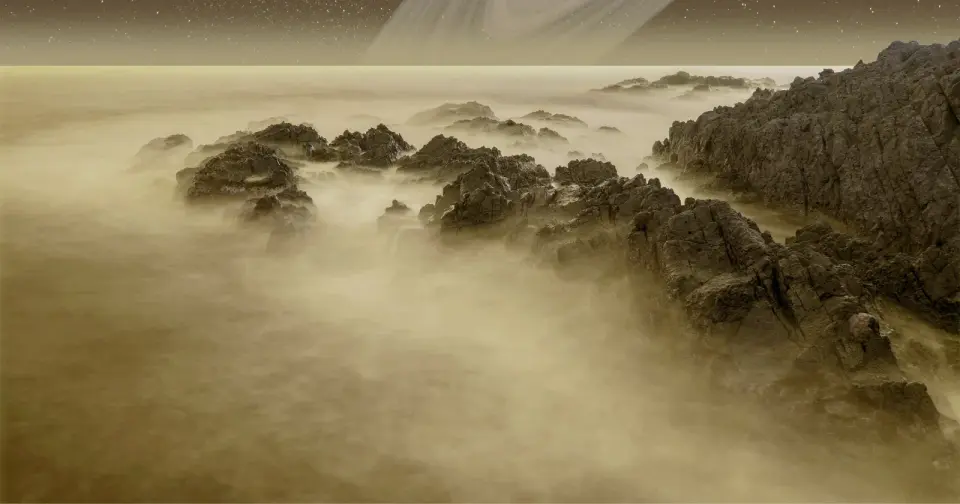
A missing command in Cassini’s instructions left one radio receiver off, causing the loss of approximately 350 images and wind data from the 2005 Huygens landing on Titan. While ground-based telescopes recovered some wind data, the lost images remain unrecoverable, leaving permanent gaps in our record of the only outer solar system landing.
Key points
- Huygens captured around 700 images during its 2005 descent through Titan’s atmosphere, but only 376 were received by Cassini.
- The loss occurred because a command to activate Cassini’s Channel A receiver was omitted from the orbiter’s instruction sequence.
- The imaging team had interleaved images across two channels rather than duplicating them, meaning the missing channel had no backup.
- The Doppler Wind Experiment, also transmitted on Channel A, was lost, though ground-based radio telescopes later reconstructed wind profiles from the carrier signal.
- ESA science director David Southwood acknowledged the failure as an ESA responsibility, noting it should have been caught during pre-mission checks.
Background
Huygens, built by ESA and carried by NASA’s Cassini, made the first and only landing on an outer solar system body in January 2005. It descended through Titan’s thick atmosphere, which is four times denser than Earth’s, and transmitted data back to Cassini. Previous coverage has highlighted Titan’s methane-based hydrological cycle, including rivers and lakes, which Huygens helped document. The probe’s data remains critical for understanding Titan’s climate and surface features, though gaps in the record limit full analysis.
Why it matters
The incident underscores how a single omitted command in a complex mission can permanently erase unique scientific data. It highlights the fragility of deep-space data transmission and the importance of redundant systems. The loss affects our understanding of Titan’s surface and wind patterns, limiting future research despite the mission’s overall success.
What to watch
No recovery of the lost images is possible, as no ground-based system could capture the image data. The permanent gaps in the panoramic mosaics and wind data will remain, affecting long-term analysis of Titan’s environment. Future missions like Dragonfly may provide new data, but the 2005 loss is irreversible.
Want the full story? Read the original reporting
Read on spacedaily.com