Tag

Jezero Crater

All articles tagged with #jezero crater

Ancient Martian mudstones reveal organic carbon, fueling habitability debate
science4 days ago

Ancient Martian mudstones reveal organic carbon, fueling habitability debate

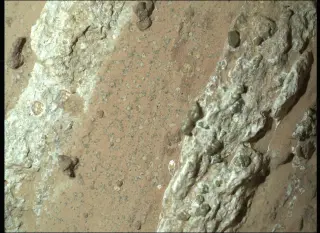
NASA’s Perseverance rover studied mudstones in Jezero Crater and found macromolecular carbon in two rocks, Cheyava Falls and Walhalla Glades. The carbon shows similarities to Earth carbon from both biotic and abiotic processes, offering clues about Mars’ ancient habitability but not proof of life; scientists say sample return to Earth is needed for definitive testing.

Mars Orbiter Captures Perseverance Completing a Martian Marathon
space-exploration11 days ago

Mars Orbiter Captures Perseverance Completing a Martian Marathon

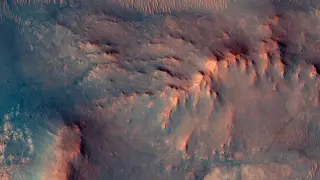
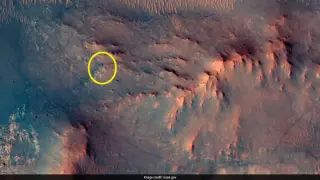
NASA’s Mars Reconnaissance Orbiter captured Perseverance finishing the 26.2-mile Martian marathon in Jezero Crater on June 14, 2026, a milestone that accompanies the rover’s ongoing science—imagery, samples and potential biosignatures—with a orbital perspective on its continued exploration; nearby, Opportunity also reached marathon distance in more than a decade of driving.

Martian Leopard Spots Spark Astrobiology Debate in Jezero Crater
science12 days ago

Martian Leopard Spots Spark Astrobiology Debate in Jezero Crater

Perseverance drilled Cheyava Falls in a Jezero Crater mudstone and found organic carbon intertwined with iron-rich minerals forming “poppy seeds” and “leopard spots.” The minerals, vivianite (iron phosphate) and greigite (iron sulfide), are often linked to microbial activity on Earth, but abiotic processes could explain them too. While the finding is intriguing and helps contextualize ancient Martian habitability, it stops short of life detection and highlights the need for detailed terrestrial analysis of returned samples.

Martian organics, two-liquid water and all-female Homo naledi headline this week’s science news
science14 days ago

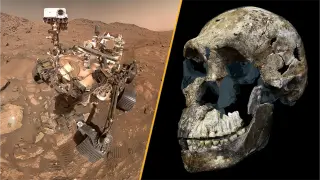
Martian organics, two-liquid water and all-female Homo naledi headline this week’s science news

NASA’s Perseverance rover has found the highest concentration of complex organic molecules to date in Jezero crater, hinting at past microbial life on Mars; JWST observations show early galaxies forming and dying quickly, a newborn star was seen in Orion, and Euclid produced the Milky Way’s most detailed image yet. In paleoanthropology, nearly two dozen Homo naledi skeletons from Rising Star cave are all female. Closer to home, AI-assisted research adds support to the idea that water may consist of two interconverting liquids.

Mars Rock Reveals Complex Organics: Fresh Clues in Jezero Crater
space14 days ago

Mars Rock Reveals Complex Organics: Fresh Clues in Jezero Crater

NASA’s Perseverance rover detected macromolecular carbon (MMC), a complex organic matter, in two Bright Angel mudstones at Jezero crater using the SHERLOC instrument, marking the most robust organic signal there to date and the first MMC identified on Martian rock surfaces. While intriguing, MMC can form through both biological and non-biological processes, so this does not prove past life; definitive testing would require returning samples to Earth, a plan hampered by political issues. Curiosity has also found organics elsewhere on Mars, underscoring ongoing interest in whether ancient microbes once inhabited the planet.

Mars rocks reveal organic carbon, sharpening hunt for ancient life in Jezero
science15 days ago

Mars rocks reveal organic carbon, sharpening hunt for ancient life in Jezero

NASA's Perseverance rover detected hundreds of organic detections and macromolecular carbon in two mudstones from Jezero Crater's Bright Angel formation, the strongest organic evidence yet from that site. The carbon's origin—biological or abiotic—remains unclear and will require Earth-based analysis of samples Perseverance is collecting for eventual return under NASA's Mars Sample Return program, with a possible window from 2035 to 2039. This finding builds on earlier Curiosity results, suggesting ancient Mars had the chemistry to support life.

Mars Rock Hints at Ancient Life, But Earth-Based Proof Is Needed
space-science15 days ago

Mars Rock Hints at Ancient Life, But Earth-Based Proof Is Needed

Analysis of Martian rock Cheyava Falls by Perseverance’s SHERLOC and WATSON detected macromolecular carbon, a potential sign of ancient organics and past habitability in Jezero Crater; but MMCs can form abiotically, so a definitive conclusion requires returning samples to Earth—an effort whose future remains uncertain amid stalled Mars Sample Return plans.

Perseverance uncovers Mars' largest cache of complex organic carbon near Bright Angel
space15 days ago

Perseverance uncovers Mars' largest cache of complex organic carbon near Bright Angel

NASA’s Perseverance rover found macromolecular carbon in the Bright Angel outcrop at Jezero Crater—the highest concentration of organic molecules detected on Mars to date. SHERLOC mapping and comparisons with Curiosity’s Gale crater data link the carbon to ancient, water-rich conditions and potential habitability, but the finding is not proof of life; a definitive biosignature would require future samples or more data.

Perseverance Finds Complex Carbon in Martian Mudstones, Sparks Life-Biosignature Debate
space16 days ago

Perseverance Finds Complex Carbon in Martian Mudstones, Sparks Life-Biosignature Debate

NASA’s Perseverance rover detected hundreds of organic macromolecules inside two mudstones in Jezero Crater using SHERLOC, marking the strongest organic signal yet from Martian rocks. While the findings boost the possibility that ancient Mars could have hosted life, scientists caution the carbon could also form through non-biological processes, and the rover’s instruments can’t confirm biotic origin. The study, published in Science Advances, complements a prior potential biosignature at Cheyava Falls and suggests organics may have been widespread on early Mars, though more testing and sample return are needed.

Mars sample Sapphire Canyon hints at possible biosignature, not life
space16 days ago

Mars sample Sapphire Canyon hints at possible biosignature, not life

NASA's Perseverance rover found a 1‑meter rock core from Cheyava Falls at Bright Angel in Jezero Crater showing leopard-spot textures and minerals like vivianite and greigite, indicating ancient water and redox chemistry that could feed microbes. While this is among the strongest potential biosignatures yet, it is not proof of life and abiotic explanations cannot be ruled out; further Earth-based analyses on returned samples are needed.

Perseverance Inches Toward Martian Marathon as Old Rocks Come Into View
space1 month ago

Perseverance Inches Toward Martian Marathon as Old Rocks Come Into View

NASA’s Perseverance rover is nearing a 42.195-kilometer milestone on Mars, having traversed the Jezero Crater region for five years. It’s studying ancient rocks at Lac de Charmes, including the Arathusa outcrop, to uncover some of the planet’s oldest geology, such as megabreccia from a ~3.9-billion-year-old Isidis Planitia impact and possible volcanic features, with plans to push toward Gardevarri and Singing Canyon as the mission continues its ultramarathon-style exploration.

Perseverance Eyes Mars Ultramarathon as It Nears Record Distance
space-and-spaceflight1 month ago

Perseverance Eyes Mars Ultramarathon as It Nears Record Distance

NASA’s Perseverance has driven more than 26.05 miles (41.92 km) on Mars over five years, closing in on Opportunity’s 28.06-mile record. After leaving Jezero Crater, it’s pushing into Lac de Charmes with future stops like Gardevarri and Singing Canyon, inching toward what could become the rover’s ultramarathon finish line later this month.

Perseverance Captures Sixth Selfie From Mars' Lac de Charmes, Highlights Ancient Rocks
science1 month ago

Perseverance Captures Sixth Selfie From Mars' Lac de Charmes, Highlights Ancient Rocks

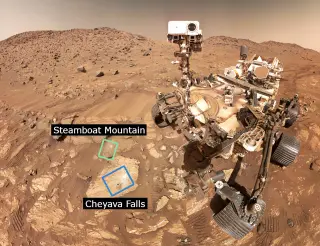
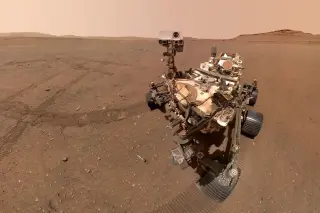
NASA’s Perseverance posted its sixth selfie from Mars, taken from the Lac de Charmes region west of Jezero Crater and assembled from 61 images by the WATSON camera as the rover continues its westward trek. In addition, a 46‑image Mastcam-Z panorama of the Arbot area provides a detailed look at ancient rock formations, including megabreccia tied to a 3.9‑billion‑year‑old Isidis Planitia impact, helping scientists study the oldest rocks the mission will examine.