
Katalyst’s Link satellite spins out of control, threatening NASA’s Swift rescue mission
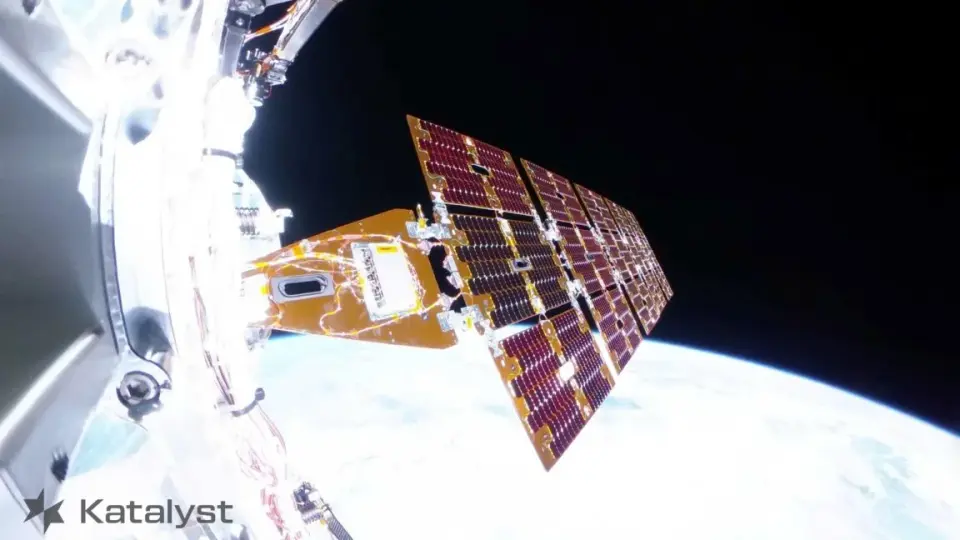
The Link satellite, launched to rescue NASA’s aging Swift telescope from orbital decay, has suffered critical attitude control failures. Two of its three reaction wheels are inoperable, and its cold gas thrusters are partially compromised, causing the spacecraft to spin and disrupt communications. Engineers are using electric thrusters to stabilize the craft, but the incident jeopardizes the timeline for capturing Swift before it burns up in Earth’s atmosphere this fall.
Key points
- Link, a commercial satellite built by Katalyst Space Technologies, experienced attitude control issues over the weekend, resulting in an uncontrolled spin and sporadic communication with ground teams.
- Preliminary investigations confirm that two of Link’s three reaction wheels are non-operable, and the cold gas thruster system has lost some functionality.
- Katalyst is currently using Link’s xenon-fueled electric thrusters, originally intended for orbit-raising maneuvers, to stabilize the spacecraft’s attitude.
- NASA is paying $30 million for this rescue mission, which aims to boost the 22-year-old Swift gamma-ray burst observatory to a higher orbit to prevent its fiery reentry.
- Swift’s orbit is decaying faster than expected due to recent solar activity, and without intervention, the telescope will burn up in the atmosphere within months.
- Katalyst plans to update Link’s guidance, navigation, and control systems to accommodate the new configuration before evaluating revised plans to approach and capture Swift.
Background
NASA selected Katalyst Space Technologies in 2026 to build and launch the Link satellite as a technology demonstration for commercial in-space servicing. The mission was designed to rescue the Neil Gehrels Swift Observatory, launched in 2004, which lacks its own propulsion system and is on a trajectory for reentry. The contract was awarded under a tight nine-month timeline, with Link launching on July 3, 2026, aboard a Northrop Grumman Pegasus XL rocket. Prior to the recent failure, the mission had reported successful deployment of solar arrays and initial firings of electric thrusters.
How outlets are covering it
Ars Technica and NASA Science emphasize the technical specifics of the failure, noting that two of three reaction wheels are inoperable and that electric thrusters are being repurposed for stabilization. AP News highlights the urgency, stating that Swift will crash back to Earth this fall and that scientific observations are currently on hold. SpaceNews frames the incident as a potential jeopardy to the high-risk mission, though its full analysis is behind a paywall. Katalyst’s principal investigator, Kieran Wilson, maintains that as long as the spacecraft can function at a fundamental level, the team has the flexibility to work through issues, while NASA’s astrophysics division director, Shawn Domagal-Goldman, previously called the attempt a success from a programmatic standpoint regardless of the outcome.
Why it matters
The failure of Link’s attitude control system tests the viability of commercial satellite servicing, a critical capability for extending the life of aging space assets. If Link cannot stabilize and capture Swift, NASA will lose a key instrument for detecting gamma-ray bursts, the most powerful explosions in the universe. The outcome will also influence future decisions on whether to invest in in-orbit servicing as a cost-effective alternative to launching new missions.
What to watch
Katalyst will continue to use electric thrusters to stop Link’s spin over the next few days. Once stable attitude is reestablished, the team will update the spacecraft’s guidance, navigation, and control systems to accommodate the loss of reaction wheels and cold gas thruster functionality. They will then evaluate revised plans to approach and capture Swift, depending on the safety of the approach and Link’s overall health. NASA will monitor the situation closely, as Swift’s orbit continues to decay due to solar activity.
- Reaction wheel failures leave Swift rescue mission spinning in orbit Ars Technica
- Commissioning Update for Spacecraft to Boost NASA’s Swift NASA Science (.gov)
- Private mission to rescue NASA’s aging telescope runs into its own trouble AP News
- Swift reboost mission encounters attitude control problems SpaceNews
- Satellite Rescue Mission WV News
Want the full story? Read the original reporting
Read on Ars Technica