
NASA Abandons Swift Rescue After Link Servicer Fails to Stabilize
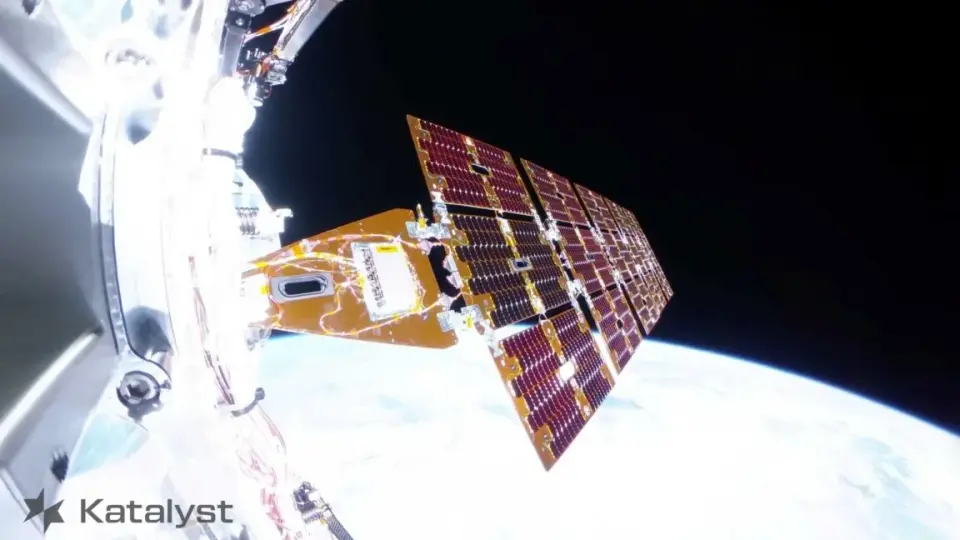
NASA and Katalyst Space Technologies have officially called off the attempt to rescue the Neil Gehrels Swift Observatory, citing unresolvable attitude control issues on the Link servicing spacecraft. While Link will still attempt a close proximity demonstration, Swift is expected to reenter Earth's atmosphere later this year, ending its 21-year mission.
Key points
- NASA and Katalyst announced on August 19, 2026, that the Link spacecraft will not capture or boost the Swift Observatory due to ongoing attitude control failures.
- Link, launched July 3, 2026, suffered the failure of two of its three reaction wheels and issues with cold gas thrusters in late July, preventing it from maintaining orientation.
- Despite the rescue failure, Link remains operational and will attempt a close-in navigation demonstration to validate technologies for future satellite servicing missions.
- Swift, a $500 million gamma-ray burst observatory launched in 2004, lacks thrusters to maintain its orbit and is expected to reenter the atmosphere later this year.
- NASA Administrator Jared Isaacman stated that while the outcome was not intended, the mission was a worthwhile 'smart risk' that advanced U.S. space industry capabilities.
Background
Swift was designed for a two-year prime mission but has operated for over 20 years, far exceeding its original lifespan. Its orbit began decaying rapidly due to increased solar activity, prompting NASA to seek a commercial rescue solution. Previous archive coverage from late July 2026 highlighted that Link had already experienced attitude control issues and intermittent communications shortly after launch, with engineers attempting to stabilize the craft using electric propulsion before the final decision to abandon the rescue was made.
How outlets are covering it
Ars Technica emphasizes the aggressive nine-month timeline and the inherent risks of the mission, noting that engineers tolerated technical risks to meet the deadline. The outlet highlights the 'high-risk, high-reward' nature of the attempt and the potential for future satellite servicing capabilities. NASA’s official statement focuses on the value of the lessons learned, praising the team for reaching the launch pad in record time and advancing in-space servicing capabilities, while acknowledging the loss of Swift’s science operations. Axios reported the cancellation but provided limited additional detail in the accessible text. All sources agree that the attitude control issues were the primary cause of the mission's failure to achieve its primary objective.
Why it matters
The failure of the Link mission marks the end of the Swift Observatory, a critical tool for detecting gamma-ray bursts, but it also serves as a significant test for commercial satellite servicing technologies. The data gathered from Link’s partial success and failure will inform future missions aimed at refueling, repairing, or upgrading satellites in orbit, potentially reducing the need for new launches and extending the life of existing assets.
What to watch
Katalyst and NASA will continue to operate Link to conduct a close-in navigation demonstration with Swift, extracting as much technical and operational value as possible before the spacecraft's end of life. NASA will prioritize finding new options to react rapidly to cosmic events using current missions to fill the gap left by Swift's reentry. The lessons learned from this mission will be applied to future satellite servicing operations.
- NASA calls off mission to rescue Swift gamma-ray observatory Ars Technica
- NASA’s Attempt to Save Its Falling Telescope Has Failed The New York Times
- Rescue mission is called off for NASA's aging Swift space telescope KCRA
- NASA aborts attempt to save dying space telescope axios.com
- NASA Updates Next Steps for Commercial Swift Boost Mission NASA (.gov)
Want the full story? Read the original reporting
Read on Ars Technica