
Roman Telescope Achieves First Light, Confirms 22-Year Mission Lifespan
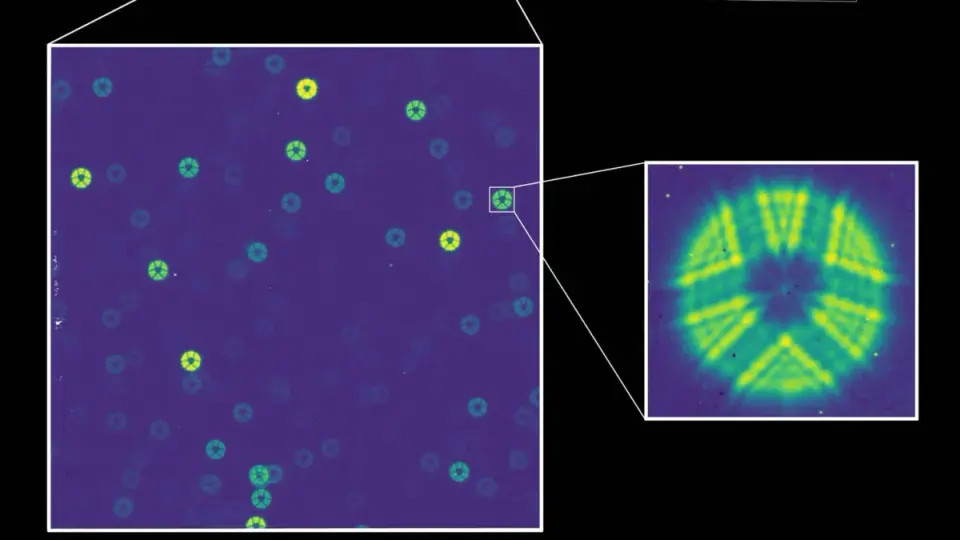
NASA's Nancy Grace Roman Space Telescope has successfully achieved 'first light,' confirming its Wide Field Instrument is operational. The $4.3 billion observatory, launched in late August, is on track for a 22-year mission due to exceptional fuel efficiency. It will soon begin detailed calibration before releasing its first science images in early 2027.
Key points
- The Wide Field Instrument (WFI), a 300-megapixel infrared camera, captured its first starlight on September 11, 2026, confirming operational status.
- The telescope's fuel reserves are sufficient for at least 22 years of operations, double the original 10-year expectation, thanks to a precise launch and lighter-than-planned mass.
- The Coronagraph Instrument, designed for direct exoplanet imaging, has also passed initial communication and thermal control tests.
- Roman is currently traveling to the Sun-Earth L2 Lagrange point, approximately 1.5 million kilometers from Earth, with first science images expected in early 2027.
- The telescope's field of view is 100 times larger than Hubble's, allowing for rapid mapping of dark matter and galactic structures.
Background
The Nancy Grace Roman Space Telescope was launched on August 30, 2026, from Kennedy Space Center aboard a SpaceX Falcon Heavy rocket. This mission follows the successful operations of the Hubble and James Webb Space Telescopes, aiming to advance understanding of dark energy, dark matter, and exoplanets. The telescope is designed to be refuelable, a feature intended to extend its operational life, though no servicing spacecraft are currently available for its distant L2 orbit.
How outlets are covering it
Gizmodo emphasizes the milestone of 'first light' and the public release of initial blurry images, highlighting the telescope's sensitivity and the excitement of its operational status. NASA's official communication focuses on the technical success of the Wide Field Instrument and Coronagraph, detailing the cooling and calibration processes. Ars Technica provides a deeper analysis of the fuel efficiency, noting that the telescope's lighter mass and precise launch trajectory have doubled its expected lifespan to 22 years, reducing the immediate need for a refueling mission. All sources agree on the telescope's operational success and its potential to significantly advance astronomical research.
Why it matters
The successful activation of the Roman Space Telescope marks a significant step in NASA's space exploration capabilities. Its wide-field imaging and exoplanet detection capabilities will provide unprecedented data on the universe's structure and the existence of life beyond Earth. The extended mission lifespan ensures long-term scientific value, making it a crucial tool for future astronomical research.
What to watch
The Roman team will continue monitoring the telescope for the next 30 days, focusing on fine-guidance system activation and optical calibration. The first science images are expected to be released by early 2027, with the telescope beginning its primary mission of mapping dark matter, studying the universe's expansion, and imaging exoplanets.
- NASA’s New $4 Billion Space Telescope Just Saw Starlight for the First Time. Here’s What It Saw Gizmodo
- NASA Activates Roman’s Primary Instrument, Checks Out Coronagraph NASA Science (.gov)
- Roman Space Telescope starts waking up as NASA powers on instruments for the 1st time Space
- NASA says new Roman telescope's lifespan could more than double, to 22 years Reuters
- The Roman telescope has enough gas for 22 years, double NASA’s expectations Ars Technica
Want the full story? Read the original reporting
Read on Gizmodo