
Roman Telescope’s 300-Megapixel Camera Captures First Starlight
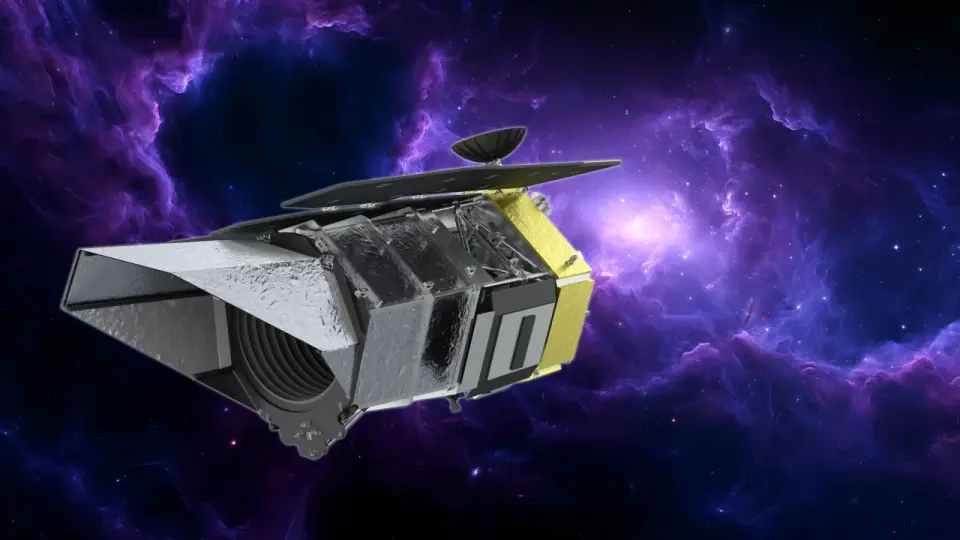
NASA’s Nancy Grace Roman Space Telescope has successfully activated its 300-megapixel Wide Field Instrument, capturing its first blurry images of starlight. The telescope is currently cooling its infrared detectors to -183 Celsius while traveling to the L2 Lagrange point, with full science operations expected to begin in early 2027.
Key points
- The Wide Field Instrument (WFI) was activated on September 11, 2026, after a 10-day decontamination and cooling period.
- Initial test images show stars as blurry halos due to the detector array being stowed and the instrument not yet fully focused.
- The telescope’s Coronagraph Instrument passed early checks, confirming remote control of its optical systems and thermal controls.
- Roman is en route to the second Sun-Earth Lagrange point (L2), approximately 1.5 million kilometers from Earth.
- The mission aims to survey 50 times more sky than Hubble in 30 years, focusing on dark energy, dark matter, and exoplanets.
Background
Following its launch on August 30, 2026, the Nancy Grace Roman Space Telescope began a months-long commissioning phase. Previous coverage noted that the telescope utilizes a donated 2-meter mirror and is designed to generate approximately 20 petabytes of data over its first five years. It is intended to work alongside ground-based surveys like the Vera C. Rubin Observatory to map the cosmos and inform future Habitable Worlds Observatory plans.
How outlets are covering it
All sources confirm the successful activation of the Wide Field Instrument and the receipt of first light. ScienceDaily and Scientific American emphasize the technical milestones, such as the cooling of 18 infrared detectors to -143 Celsius and the testing of the element wheel and focusing mechanisms. Gizmodo highlights the visual aspect of the first images, describing them as blurry 'donuts' or halos due to the lack of fine focus, and notes the telescope’s $4 billion cost and its earlier-than-planned launch. Live Science focuses on the broader scientific goals, including the discovery of thousands of new exoplanets and the study of dark matter. There is no disagreement among the outlets regarding the operational status or the timeline for full science operations in early 2027.
Why it matters
The successful activation of the Wide Field Instrument marks a critical step for one of the most ambitious space telescopes ever built. Roman’s ability to capture high-resolution, wide-field infrared images will revolutionize our understanding of dark energy and the distribution of matter in the universe. Its coronagraph will also enable the direct imaging of exoplanets, a feat that has been difficult to achieve with previous telescopes. This milestone confirms that the complex cooling and optical systems are functioning as designed, paving the way for groundbreaking scientific discoveries in 2027.
What to watch
The Wide Field Instrument will continue to cool to its final operating temperature of -183 Celsius. Engineers will test the fine-guidance system to achieve sharp focus. The Coronagraph Instrument will undergo a 30-day decontamination period. Full science operations are scheduled to begin in January 2027, with the first high-quality science images expected by early 2027.
- NASA just powered up Roman’s massive 300-megapixel camera ScienceDaily
- NASA’s New $4 Billion Space Telescope Just Saw Starlight for the First Time. Here’s What It Saw gizmodo.com
- 'We are on our way to groundbreaking science': Stars turn neon-green in first test image from NASA's Roman telescope — Space photo of the week Live Science
- Ask Ellen: Could the new Roman telescope allow us to detect aliens? WOODTV.com
- NASA’s Nancy Grace Roman Telescope glimpses its first cosmic light Scientific American
Want the full story? Read the original reporting
Read on ScienceDaily