
Roman Telescope Launches on Falcon Heavy, Leveraging Spy Satellite Tech to Probe Dark Energy
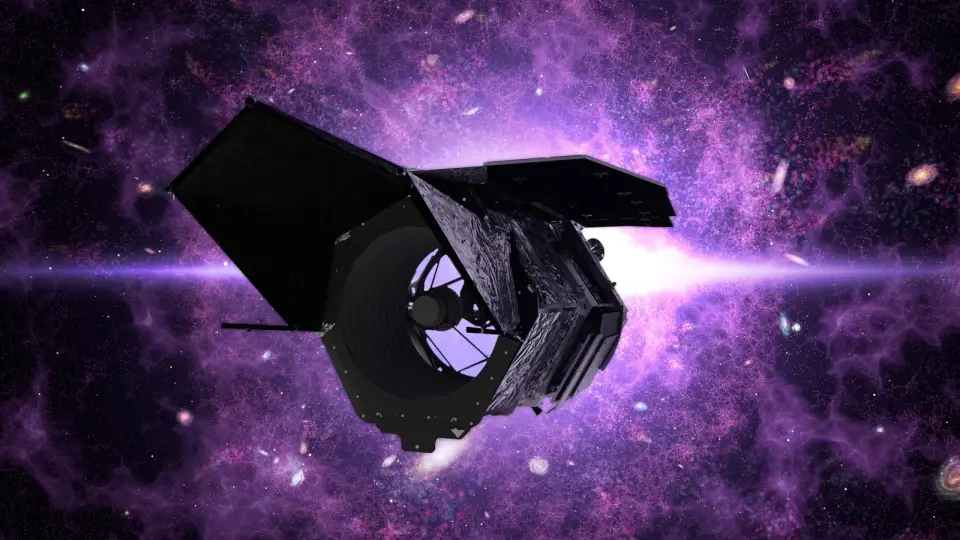
NASA's Nancy Grace Roman Space Telescope is set to launch on August 30, 2026, from Kennedy Space Center aboard a SpaceX Falcon Heavy. The observatory, which incorporates optical technology originally developed for the National Reconnaissance Office's spy satellites, will orbit at the Sun-Earth L2 point to study dark energy, map dark matter, and survey exoplanets. The mission is launching nine months ahead of schedule, following a final 'go/no go' review on August 28.
Key points
- Launch scheduled for August 30, 2026, at 7:26 a.m. EDT from Launch Complex 39A at Kennedy Space Center.
- The telescope will travel to the Sun-Earth Lagrange point 2, approximately one million miles from Earth.
- NASA utilized components from the NRO's 'Future Imagery Architecture' program, a spy satellite initiative that ended in 2005 due to cost overruns.
- The mission aims to investigate dark energy, map dark matter via gravitational lensing, and conduct a statistical census of exoplanets.
- A final Launch Readiness Review is scheduled for August 28 to determine if the launch proceeds as planned.
Background
Previous coverage established that the Roman Space Telescope is a $4 billion infrared observatory designed to survey 12% of the sky with a field of view 100 times larger than Hubble's. It features a 300-megapixel Wide Field Instrument and a coronagraph to detect exoplanets and measure the universe's expansion. The mission was originally expected to launch later in 2026 but has been accelerated by nine months.
How outlets are covering it
Space.com highlights the unexpected origin of the telescope's Optical Telescope Assembly, noting that NASA repurposed technology from the NRO's failed 'Future Imagery Architecture' spy satellite program, which was canceled in 2005 after billions in cost overruns. The Washington Post emphasizes the logistical journey of the telescope, from assembly in Maryland to transport by barge to Florida, and its role in solving the mystery of dark energy. NASA's official updates focus on the technical readiness, confirming the arrival at the SpaceX hangar on August 25 and the upcoming 'go/no go' poll. SpaceX's records confirm the Falcon Heavy launch from Kennedy Space Center, noting that one of the rocket's side boosters previously flew on the GOES-U mission.
Why it matters
The launch of the Roman Space Telescope represents a significant advancement in astrophysics, offering the first wide-field survey capable of mapping dark matter and detecting exoplanets with unprecedented precision. The successful repurposing of spy satellite technology demonstrates how defense innovations can be adapted for civilian scientific exploration, potentially reducing costs and accelerating mission timelines. This mission is critical for understanding the fundamental forces driving the universe's expansion and the distribution of matter in the galaxy.
What to watch
NASA, Roman, and SpaceX teams will conduct a Launch Readiness Review on August 28 to make the final 'go/no go' decision. If approved, the telescope will launch on August 30, 2026, at 7:26 a.m. EDT. A backup launch window is set for August 31 at 7:22 a.m. EDT. Once in orbit at L2, the telescope will begin its primary mission to survey the sky and collect data on dark energy and exoplanets.
- From spy satellite to space telescope: The unlikely origins of NASA's Roman Space Telescope Space
- Roman Space Telescope Mission SpaceX
- Inside the Nancy Grace Roman Space Telescope, NASA's next great observatory Space
- With launch of Roman telescope, NASA hopes to unlock mystery of dark energy The Washington Post
- NASA’s Nancy Grace Roman Space Telescope Arrives at Hangar NASA Science (.gov)
Want the full story? Read the original reporting
Read on Space