
Starship’s 13 Flights Prove Power, Not the Orbital Refueling Needed for Mars
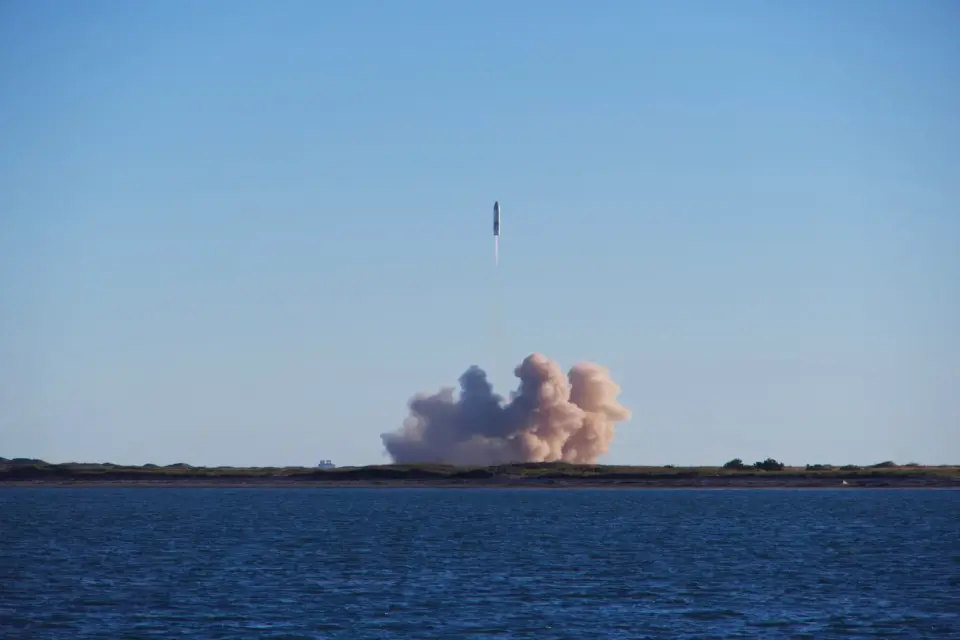
SpaceX’s Starship V3 generates 2.4 times the thrust of the Saturn V, yet after 13 test flights it has not demonstrated ship-to-ship propellant transfer. While Flight 13 on July 24, 2026, successfully deployed satellites and tested engine relights, the critical orbital refueling capability remains unproven. This gap is identified by NASA as a major hurdle for future Mars missions, as Starship must prove it can act as an interplanetary transport system, not just a powerful launcher.
Key points
- Starship V3 produces approximately 18 million pounds of thrust, compared to Saturn V’s 7.6 million pounds, but thrust does not equate to mission readiness.
- The 13th integrated test flight on July 24, 2026, successfully deployed 20 Starlink satellites and tested in-space engine relights, but did not include orbital refueling.
- A March 2024 test successfully transferred liquid oxygen within a single vehicle, but this did not involve docking two separate spacecraft in orbit.
- A March 2026 NASA Office of Inspector General report cited large-scale vehicle-to-vehicle cryogenic transfer as a significant technical challenge for the Human Landing System.
- Mars missions require Starship to function as a reusable transport system, necessitating orbital depots and rapid reuse, capabilities not yet demonstrated.
Background
Previous coverage noted that Starship Flight 13 involved a booster anomaly and a hard splashdown, though the upper stage successfully deployed satellites and tested heat shields. SpaceX has since added 24 Starlink satellites to its fleet, bringing the total to approximately 10,865. The current article clarifies that while Flight 13 advanced near-term goals like engine relights, it did not resolve the fundamental requirement for orbital propellant transfer, which remains a key milestone in SpaceX’s 2026 prospectus for deep-space missions.
Why it matters
The inability to demonstrate ship-to-ship refueling highlights a critical gap between Starship’s raw power and its operational readiness for interplanetary travel. Without this capability, Starship cannot effectively serve as the transport system required for Mars missions, as it would lack the ability to replenish propellant in orbit for the high-energy cost of leaving Earth. This technical hurdle, acknowledged by NASA, could delay the timeline for human missions to Mars and impact the broader Artemis program, which relies on SpaceX’s Human Landing System.
What to watch
SpaceX must demonstrate orbital propellant transfer between two Starships, a milestone that has slipped from March 2025 to at least 2026. Future test flights, including Flight 14, will likely focus on achieving orbital insertion and further testing of heat shields and rapid reuse. Success in these areas is essential before SpaceX can proceed with the complex logistics of a Mars campaign, which requires reliable orbital depots and the ability to produce or deliver return propellant on Mars.
Want the full story? Read the original reporting
Read on spacedaily.com