
Swift Observatory burns up over Indonesia after failed rescue mission
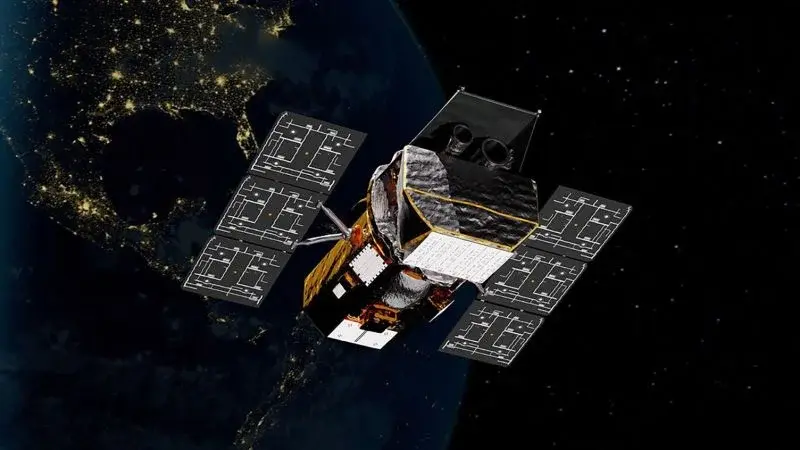
NASA's Neil Gehrels Swift Observatory reentered Earth's atmosphere over Indonesia on November 4, 2026, ending a 22-year mission that observed gamma-ray bursts for 11 times longer than planned. The 3,200-pound spacecraft burned up after a failed commercial rescue attempt by Katalyst Space, with some debris surviving reentry. NASA is now seeking proposals to potentially save the Hubble Space Telescope from a similar fate by 2032.
Key points
- Swift reentered over Indonesia around 7:39 a.m. ET on November 4, 2026, after 22 years in orbit since its November 20, 2004 launch from Cape Canaveral.
- Most of the spacecraft burned up, but some debris survived; NASA estimated a 1 in 2,100 risk of ground injury, though no confirmed land impacts were reported.
- Katalyst Space's LINK rescue mission launched in July 2026 failed after the satellite spun out of control before reaching Swift, which had decayed to 171 miles above Earth.
- Penn State researchers sent the final kill-switch command to Swift on October 20, 2026, after the spacecraft entered safe mode due to increased atmospheric drag.
- NASA issued a Request for Proposals to commercial companies to potentially extend the life of the Hubble Space Telescope, which faces a 10% chance of deorbiting by 2032 and 50% by 2033.
Background
Swift was launched in 2004 to study gamma-ray bursts, the most powerful explosions in the universe, but was also used to monitor other cosmic events, asteroids, and comets. The observatory's orbital decay accelerated due to increased solar activity as the sun reached the peak of its 11-year cycle in 2024, causing Earth's atmosphere to expand and intensify drag on the spacecraft. NASA had hoped a rescue mission could extend Swift's operating life by a decade or more, but the effort failed. The observatory had no established replacement in low-Earth orbit.
Why it matters
Swift's uncontrolled reentry highlights the challenges of managing end-of-life planning for aging space assets, as current orbital debris mitigation standards updated in 2019 mandate uncontrolled reentries have an expected casualty rate of less than 1 in 10,000. The failed rescue attempt underscores the risks and costs of extending the life of valuable space-based instruments, while NASA's solicitation for Hubble rescue proposals signals a growing interest in commercial solutions to prolong the operational life of iconic telescopes facing similar orbital decay risks.
What to watch
NASA will evaluate commercial proposals for potentially saving the Hubble Space Telescope, which faces a 10% chance of deorbiting by 2032 and 50% by 2033, with no replacement expected before the 2040s. The agency may pursue similar lifeline-extension missions for other valuable space-based instruments in the future, though the outcome of the Hubble solicitation remains uncertain.
Want the full story? Read the original reporting
Read on CNN