
Swift Observatory Ends 22-Year Mission with Final Image of Andromeda
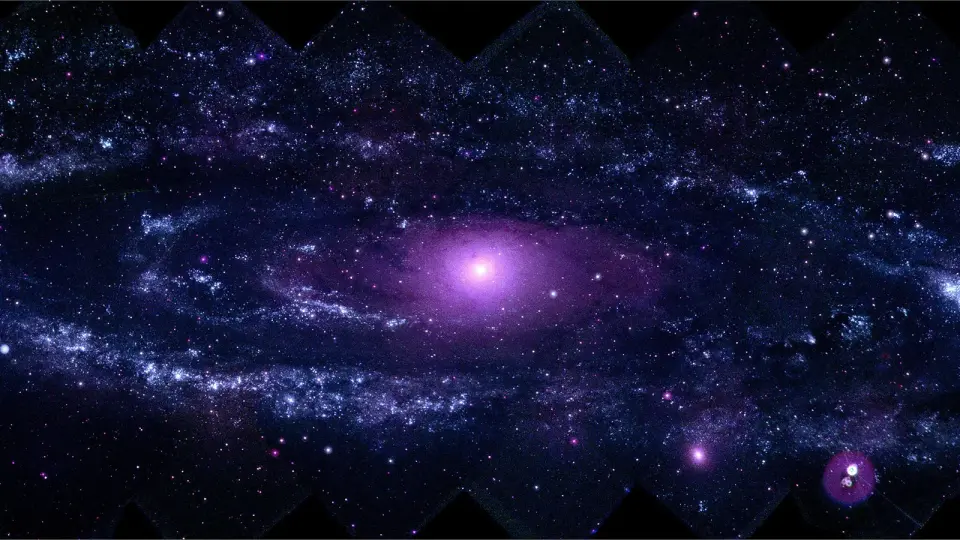
NASA’s Neil Gehrels Swift Observatory re-entered Earth’s atmosphere on November 4, 2026, ending a 22-year mission that lasted 11 times longer than planned. The telescope, which studied gamma-ray bursts and other cosmic events, burned up over Indonesia after a failed commercial rescue attempt. Its final legacy includes a detailed ultraviolet image of the Andromeda galaxy, revealing thousands of stars invisible to ground-based telescopes.
Key points
- Swift re-entered Earth’s atmosphere at 7:39 a.m. EST on November 4, 2026, over northern Sumatra, Indonesia, after a 22-year mission.
- The observatory was designed for a two-year prime mission but operated for over 20 years, observing more than 2,000 gamma-ray bursts and 1,400 supernovae.
- A $30 million rescue attempt by Katalyst Space failed in September 2026 when their LINK spacecraft suffered propulsion and orientation issues, leading to its own re-entry.
- Swift’s final significant image was a 24-hour ultraviolet exposure of the Andromeda galaxy, taken in 2008, which detected approximately 20,000 light sources, including dense star clusters.
- NASA confirmed that most of the 3,200-pound spacecraft burned up during re-entry, with a 1 in 2,100 risk of any surviving debris causing harm on Earth.
Background
Swift’s re-entry follows a series of earlier coverage from our archive detailing the telescope’s orbital decay and the failed rescue mission. The observatory had been losing altitude due to atmospheric drag, a process accelerated by recent solar activity. NASA had halted science observations in February 2026 in an attempt to slow the descent. The failed rescue by Katalyst Space, which launched its LINK spacecraft in July 2026, was described as a high-risk, high-reward effort to extend Swift’s life by another decade. The agency is now seeking proposals to potentially save the Hubble Space Telescope from a similar fate by the mid-2030s.
How outlets are covering it
Live Science emphasizes the scientific legacy of Swift, highlighting its ultraviolet image of Andromeda as a key contribution that revealed thousands of stars invisible to ground-based telescopes. NASA’s official statement focuses on the technical details of the re-entry and the observatory’s broad impact on astrophysics, noting its role in studying gamma-ray bursts, supernovae, and other cosmic phenomena. Space.com details the failed rescue mission, describing the $30 million contract with Katalyst Space and the technical issues that led to the LINK spacecraft’s failure. National Geographic provides a broader context on the emotional and cultural significance of losing space robots, comparing Swift’s demise to other lost missions like MAVEN and Cassini, and highlighting the grief felt by scientists and the public.
Why it matters
Swift’s re-entry marks the end of a highly successful mission that far exceeded its original scope, providing valuable data on gamma-ray bursts and other cosmic events. The failed rescue attempt highlights the challenges of extending the life of aging spacecraft in low Earth orbit, a problem that may affect other missions like Hubble in the future. The observatory’s final image of Andromeda underscores the importance of multiwavelength observations in astronomy, revealing details that ground-based telescopes cannot capture.
What to watch
NASA is now seeking proposals from the private sector to potentially save the Hubble Space Telescope, which faces a similar orbital decay risk by the mid-2030s. The agency is also evaluating options to extend the life of other aging spacecraft, such as the Voyager probes, which are still operating after nearly 50 years. The failed rescue mission by Katalyst Space may inform future efforts to develop more reliable spacecraft servicing technologies.
- NASA's destroyed Swift Observatory took one of the best-ever photos of bright Andromeda — Space photo of the week Live Science
- NASA’s Swift Observatory Re-Entered Atmosphere NASA Science (.gov)
- NASA's Swift space telescope crashes back to Earth after failed rescue attempt Space
- The Swift Observatory Has Perished. It's Not the First Time NASA Has Said Goodbye to a Robot. National Geographic
- A NASA Telescope Has Crashed Back to Earth The New York Times
Want the full story? Read the original reporting
Read on Live Science